
Reviewed · WEAVING & CRAFT WORKSHOPS
Day-time Bamboo weaving & Cooking Classes join-in
Bamboo turns breakfast into a craft lesson. At The Bamboo Experience near Luang Prabang, you spend about four hours learning how bamboo fits into everyday Lao life, weaving a small souvenir, preparing bamboo-based dishes, and eating the meal you helped make. The setting is a traditional-style wooden pavilion beside rice fields, with mountains and quiet countryside beyond.
I like the mix of craft and cooking, since you get both a useful cultural lesson and a proper meal. I also like the small-group format, limited to eight people, plus hotel pickup and drop-off. The main consideration is that the cooking portion may feel brief if you want a full chef-led class with many dishes.
In This Review
- Key Points Before You Book
- A Quiet Start Beside Luang Prabang’s Rice Fields
- Why Bamboo Matters in Lao Daily Life
- Weaving a Bamboo Mat or Coaster
- Cooking With Bamboo Shoots and Banana Leaves
- Lunch Tastes Better When You Help Make It
- Music and Local Connection
- Is $25 Good Value?
- Who Will Enjoy This Morning Most?
- Practical Details for a Smoother Visit
- Should You Book The Bamboo Experience?
- FAQ
- Where does the bamboo weaving and cooking experience take place?
- What time does the experience start?
- How long does the experience last?
- Is hotel pickup included?
- How many people can join the group?
- What will I make during the weaving session?
- What food is prepared during the cooking class?
- Is lunch included in the price?
Key Points Before You Book
- Bamboo is the star from start to finish: You learn how it is used in rural Lao homes, then work with it yourself in the craft session and cooking class.
- You make your own lunch: The menu can include bamboo shoot soup, bamboo shoot cooked in a banana leaf, bamboo shoot dip, rice, and other local dishes.
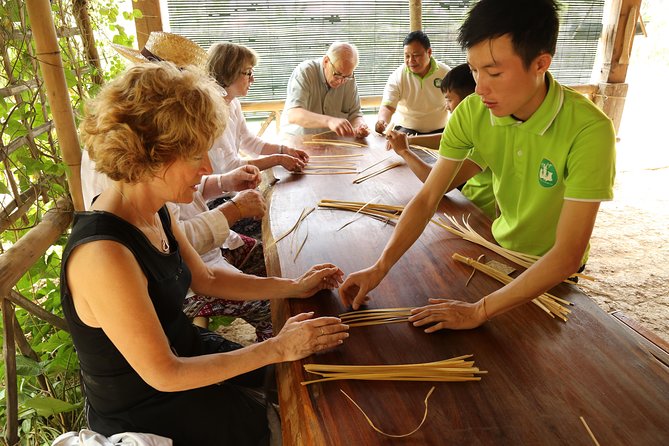
- You weave a take-home souvenir: The activity focuses on a small bamboo mat or coaster, using a traditional technique.
- The setting is part of the experience: A rustic pavilion overlooks rice fields and offers views toward the nearby mountains.
- The group stays small: A maximum of eight people makes personal help more likely, especially during weaving.
- Pickup keeps the morning simple: Round transfers are included, with an advertised 8:30 am start.
A Quiet Start Beside Luang Prabang’s Rice Fields
The morning begins with pickup for the short trip to The Bamboo Experience. The exact pickup time depends on the 8:30 am start and your location, but round transfers are included, which is useful if you do not want to arrange a tuk-tuk or taxi before breakfast.
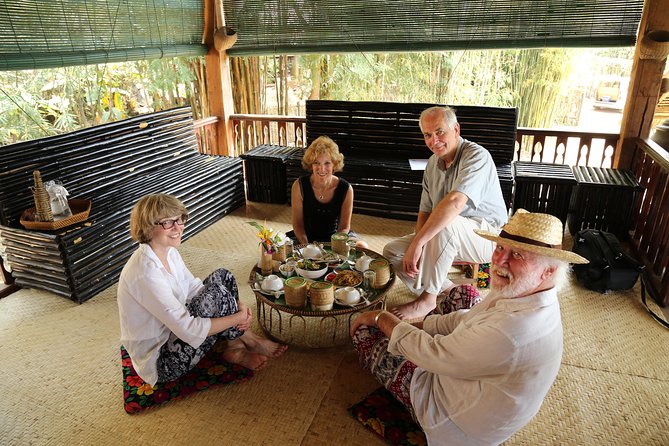
The destination is a rustic pavilion modeled on a traditional Lao house. It sits in a semi-rural setting beside rice fields, away from the busiest streets of Luang Prabang. You get a more relaxed sense of place here than you would in a hotel cooking room or a city restaurant.
The buildings are wooden and traditional in appearance. The terrace gives you space to look across the fields toward the mountains, take photographs, and slow down a little. I would bring a light layer for the morning and shoes that are easy to remove or adjust, since the setting is informal rather than polished.
The activity lasts roughly four hours. That is long enough for several hands-on sessions but short enough to fit into a busy Luang Prabang schedule. You can still leave room in your day for the old town, the market, a temple visit, or an afternoon rest.
More Craft Workshops in Luang Prabang:
- Luang Prabang: Bamboo Weaving Workshop & Cooking Class
★ 5.0 · 96 reviews - Evening Bamboo weaving & Cooking classes join-in
★ 5.0 · 17 reviews - Luang Prabang: Weaving Workshop Half-Day Experience
★ 5.0 · 9 reviews
Why Bamboo Matters in Lao Daily Life
The first lesson explains bamboo’s role in Lao culture and rural households. This is more useful than a simple introduction to the plant, because you begin to see bamboo as a practical material rather than just a decorative souvenir.
The demonstration covers the range of household objects made from bamboo in rural Lao homes. Bamboo can be woven, shaped, and used in different ways, and the session connects those household uses to the craft you will try yourself.
This background gives the rest of the morning a clear purpose. When you later handle strips of bamboo, you are not just making a coaster for your suitcase. You are working with a material that has been part of household life for generations.
The teaching style appears to be friendly and participatory. Somsay is associated with the experience, and one account describes him sharing information about life in Laos and bamboo. A village master weaver also takes part in some sessions, showing the technique with patience and plenty of smiles, even when language is limited.
That detail matters. Weaving is not instantly easy. You need to follow the pattern, keep the strips in order, and apply the right amount of pressure. The challenge is part of the fun, but you should not expect to produce a perfect piece on your first try.
Weaving a Bamboo Mat or Coaster
The weaving session is the most tactile part of the craft side. You work with prepared strips of bamboo and learn how to weave them into a small mat or coaster, using a technique practiced for centuries.
The finished object is modest, but that is part of its charm. It is light, easy to pack, and connected directly to what you learned that morning. You do not simply buy a bamboo souvenir from a shop. You make one yourself, with uneven edges and small signs of human effort likely to remain.
I like this kind of workshop because it gives you a better feel for the work behind ordinary household items. A woven piece that looks simple can require careful fingers and steady attention. The activity also works well for families because children and adults can take part at their own pace.
Do not assume the weaving will be effortless. One participant found it harder than expected, though still enjoyable enough to want to do it again. That is a fair warning: you may laugh at your first attempts, but the instructors are there to guide you.
The small group limit helps here. With no more than eight people, you have a better chance of receiving direct help when a strip goes the wrong way or the pattern begins to loosen. If you prefer watching a demonstration rather than making something, this session may feel more demanding than a standard cultural tour.
Cooking With Bamboo Shoots and Banana Leaves
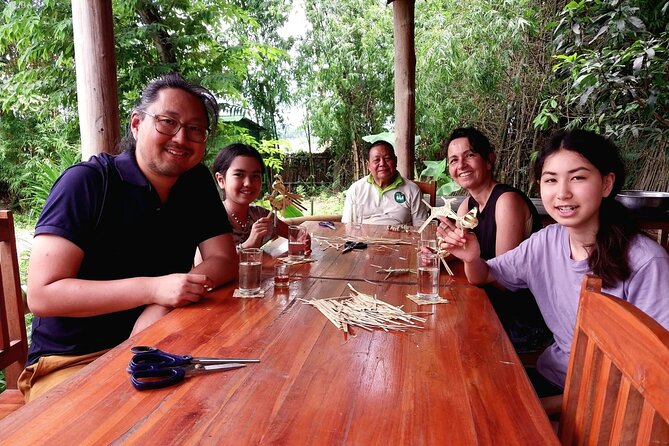
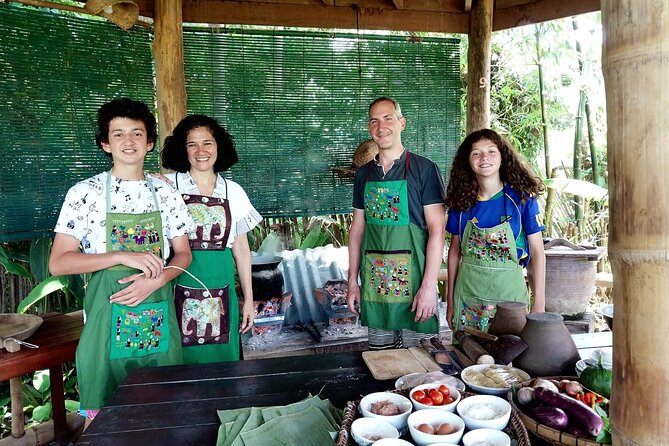
After the craft work, the focus shifts to food. Bamboo becomes the main ingredient in a hands-on Lao cooking session, with dishes such as bamboo shoot soup, bamboo shoot steamed or cooked in a banana leaf, bamboo shoot dip, and other local preparations.
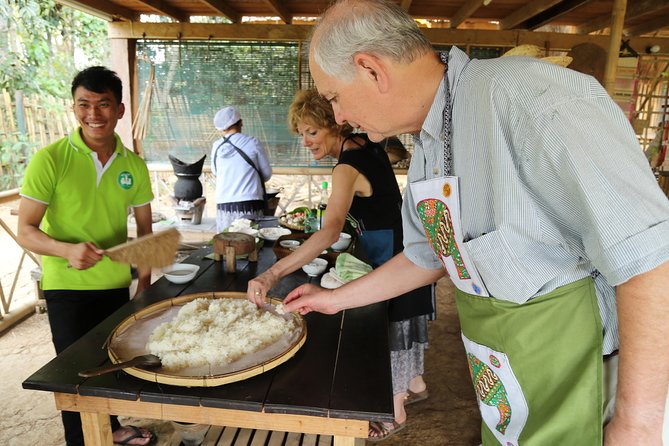
You help prepare the food rather than simply watching someone cook. The meal also includes rice, and the cooking process gives you a practical introduction to ingredients and dishes you may not have encountered before.
The use of bamboo shoots is especially helpful for understanding local food traditions. You see how one plant can provide both household materials and food. That link between the craft demonstration and the meal makes the morning feel like one connected lesson rather than two unrelated activities.
The cooking class is described as fun and interactive, but you should keep your expectations realistic. This is a short workshop, not a full-day culinary course. You will learn the basic preparation of several dishes, yet you may not spend a long time mastering every technique.
If cooking is your main reason for booking, this could be the one limitation. One participant enjoyed the class but wanted more cooking time. If you want an extended lesson with a large recipe book and several complex courses, choose a longer cooking school instead.
For a short cultural activity, however, the food session offers good value. You learn by doing, then sit down to eat the results. That is more memorable than sampling a dish without seeing how it was prepared.
More Cooking Classes in Luang Prabang:
- Luang Prabang: Evening Cooking Class & Local Baci Ceremony
★ 4.9 · 151 reviews - Luang Prabang: Cooking Class at the Former Royal Palace
★ 4.9 · 51 reviews - Tribal Cooking Class in Luang Prabang Forest and visit
★ 5.0 · 15 reviews - Traditional Market Tour and Private Laotian Cooking Class with a Local
★ 5.0 · 13 reviews
Lunch Tastes Better When You Help Make It
Lunch is included, and it is made by the group during the session. You get a chance to eat the soup, bamboo dishes, rice, and other preparations after the cooking work is finished.
I find this format especially appealing in Laos, where food is closely tied to sharing and preparation. You are not rushing through a restaurant meal between sightseeing stops. Instead, lunch becomes the final part of the lesson and a chance to talk with the people leading the activity.
The menu is not presented as a fixed restaurant-style list, so you should expect a selection of bamboo-based dishes rather than a choice of individual entrees. Alcoholic drinks are not included, and you should budget separately if you want them.
The meal also gives you time to enjoy the pavilion terrace. The rice-field views and mountain backdrop add something that a city kitchen cannot provide. Bring your camera, but remember that the setting is peaceful and informal, so the best photographs may be the simple ones: bamboo strips on a worktable, food in banana leaf, or the view from the terrace.
Music and Local Connection
The morning can include musical performances, including a charming Hmong musical item. This adds a cultural element beyond the bamboo work and cooking.
The performances are not the main reason to book, but they help round out the experience. You get a glimpse of local traditions through food, craft, household knowledge, and music in one visit.
The strongest part of the cultural exchange is the direct contact with the people leading the activities. The guides are described as friendly and well informed, and the village weaver brings practical skill to the craft lesson. Communication may sometimes rely on demonstration, smiles, and repetition, but that can be part of the appeal.
Do keep in mind that the experience is designed as a workshop, not a formal museum presentation. You will learn through conversation, demonstrations, and participation. If you want a detailed lecture with extensive historical dates, this may not be the right fit. If you prefer learning with your hands, it makes more sense.
Is $25 Good Value?
At $25, the price is strong for a four-hour activity that includes round transfers, lunch, craft materials, instruction, and a handmade souvenir. You are paying for more than a meal or a short demonstration.
The value improves if you would otherwise pay separately for transport and lunch. Pickup and drop-off remove two practical tasks, while the small group gives the morning a more personal feel than a large coach excursion.
The experience also offers several different activities for one fee:
- A cultural introduction to bamboo
- A traditional weaving session
- A Lao cooking class
- A meal prepared by the group
- Possible musical performances
- Time in a peaceful countryside setting
The price does not include alcoholic beverages or tips. Tipping is not included, so carry some local currency if you wish to thank the guides and staff. Group discounts are offered, which may make the activity even better value for families or small parties.
I would judge the price mainly by your priorities. If you want a relaxed, practical introduction to Lao food and craft, $25 is reasonable. If you want advanced cooking instruction, the class may feel too short to justify booking on culinary grounds alone.
Who Will Enjoy This Morning Most?
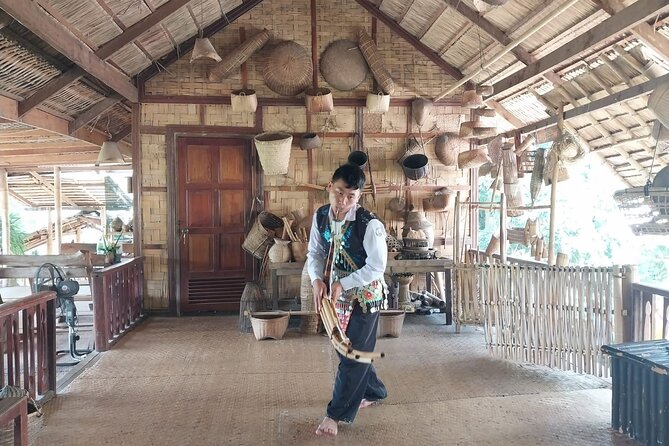
This activity suits families particularly well because the work is hands-on and varied. Children can try the weaving, help prepare ingredients, and take part in the meal rather than sitting through a long talk.
It also works for couples, solo visitors, and small groups who want a break from temples and town streets. The setting beside rice fields provides a quiet change of pace, and the maximum group size of eight helps prevent the session from feeling impersonal.
I would recommend it to you if you enjoy:
- Learning through making and tasting
- Local food that is not familiar to you
- Simple crafts with a useful result
- Short activities that fit into a larger itinerary
- Countryside views and small-group contact
You may want to skip it if you dislike group activities, have little interest in cooking, or expect a highly polished culinary school. The weaving also requires patience. It is not a passive demonstration where you simply watch an expert finish the work.
Practical Details for a Smoother Visit
The advertised start time is 8:30 am, and pickup is offered. Confirmation is received at booking, and the activity is near public transportation, though round transfers make independent transport less necessary.
The group maximum is eight people. That limit is one of the most useful details to note, especially for the weaving lesson, where individual help can make the difference between frustration and a finished coaster.
The experience requires good weather. If poor weather causes cancellation, you are offered another date or a full refund. You can cancel for a full refund up to 24 hours before the start time, but cancellations or changes made less than 24 hours ahead are not accepted.
The activity lasts about four hours, so you should have time to continue sightseeing later in the day. I would avoid scheduling something with a strict late-morning departure immediately afterward, since pickup times and rural transfers can vary.
Should You Book The Bamboo Experience?
I would book this if you want to understand Laos through ordinary materials, local food, and direct participation. The morning is friendly, affordable, and varied, with the best moments coming from the bamboo weaving, the meal you help prepare, and the peaceful setting beside the fields.
The main caution is the cooking time. It is enough for a lively introduction, but not enough for advanced instruction. The weaving can also be trickier than it first appears.
For most people spending a few days in Luang Prabang, this is a worthwhile half-day choice. Families get an activity everyone can join, food lovers get a taste of bamboo-based Lao cooking, and culture-minded visitors get a closer look at household traditions. Book it if you want to leave with both a small handmade souvenir and a better understanding of how bamboo shapes daily life in Laos.
FAQ
Where does the bamboo weaving and cooking experience take place?
It takes place at The Bamboo Experience, a rustic pavilion modeled on a traditional Lao house near Luang Prabang. The setting is next to rice fields, with views of the nearby mountains.
What time does the experience start?
The advertised start time is 8:30 am.
How long does the experience last?
The experience lasts approximately four hours.
Is hotel pickup included?
Yes. Round transfers are included, offering pickup and drop-off for the experience.
How many people can join the group?
The activity has a maximum of eight travelers.
What will I make during the weaving session?
You will weave a small souvenir mat or coaster from strips of bamboo, using a traditional technique.
What food is prepared during the cooking class?
The class can include bamboo shoot soup, bamboo shoot prepared in a banana leaf, bamboo shoot dip, rice, and other bamboo-based dishes.
Is lunch included in the price?
Yes. Lunch is included, and it is made by the participants during the cooking session. Alcoholic beverages and tipping are not included.
More Workshops
- Luang Prabang: Hmong Batik Art Workshop
★ 5.0 · 27 reviews - The Namkhan – Cooking Class
★ 5.0 · 8 reviews - Laos Cooking Class in Luang Prabang
★ 4.5 · 7 reviews - Full Day bamboo experience with cooking class & Kuang si waterfalls
★ 5.0 · 5 reviews
Just added around Luang Prabang
- Luang Prabang Night-time Explorer★ 3.5 · 3 reviews
- A Relaxing Day at the Kuang Si Falls★ 4.5 · 3 reviews
- Private Luang Prabang City Tour★ 5.0 · 3 reviews
- Luangprabang: Dinner with Lao Traditional Dance Performance★ 4.0 · 3 reviews
- Sunset Cruise in Luang Prabang with Live Performance★ 4.5 · 3 reviews
- Luang Prabang Private Full-Day Tour and Lunch★ 4.7 · 3 reviews
- Luang Prabang: Local Village & Kuang Si Falls Private Tour★ 4.9 · 3 reviews
- Luang Prabang: Mekong River Cooking Class with Hotel Pickup★ 5.0 · 3 reviews
Weaving & Craft Workshops, compared.
Luang Prabang: Bamboo Weaving Workshop & Cooking Class
Read our review →
Evening Bamboo weaving & Cooking classes join-in
Read our review →
Luang Prabang: Weaving Workshop Half-Day Experience
Read our review →
Browse the lists this tour appears in