
Reviewed · WORKSHOPS
Luang Prabang: Hmong Batik Art Workshop
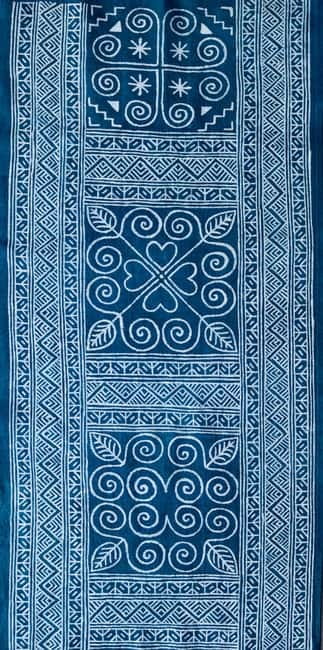
Make something blue and beautiful. This Luang Prabang workshop introduces you to traditional Hmong batik through a calm, hands-on session with a master Hmong artist. I like the patient instruction and the chance to use real tools on hand-loomed hemp fabric, rather than simply buying a finished souvenir. I also like that your artwork becomes personal, with your own choice of motifs and small changes to the design.
The main consideration is timing. Your piece is not ready immediately, so you need to return the next day to collect it. A one-hour session gives you a taste of the craft, while two to four hours allows more time for careful drawing and personal touches.
In This Review
- Key things to know before you go
- Why this batik workshop is worth your morning
- Finding Moon Love Batik beside Wat Sibounheuang
- Choosing between one and four hours
- Drawing Hmong symbols with beeswax
- Understanding the natural indigo process
- What you take home
- The value of the 22 dollar price
- Who will enjoy it most
- What could be better
- Booking and planning tips
- Should you book Moon Love Batik?
- FAQ
- Where is the Hmong batik workshop located?
- How much does the workshop cost?
- How long does the activity last?
- Is the workshop taught in English?
- Do I need artistic experience?
- What materials are included?
- Can I take my finished batik piece home?
- When can I collect the finished artwork?
- Are children allowed to join?
- Is the workshop wheelchair accessible?
- Can I cancel the booking?
- Do I have to pay when I reserve?
Key things to know before you go
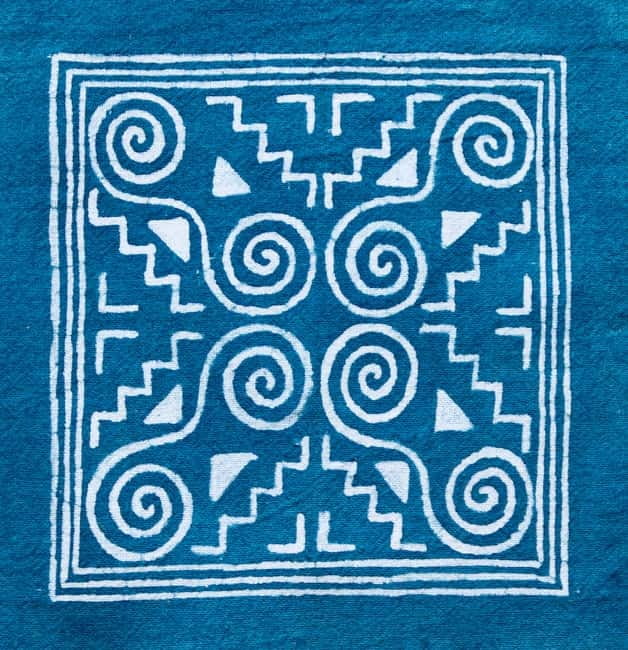
- You draw with natural beeswax: The wax protects your lines during the indigo dyeing process and later gets boiled away to reveal the pattern.
- The fabric is hand-loomed Hmong hemp: This gives the activity a direct connection to Hmong textile traditions.
- Your design can be personal: You can choose from traditional motifs and make small adjustments instead of copying a pattern without changes.
- The finished piece comes later: After dyeing, the workshop continues the indigo process and prepares the fabric for pickup the next day.
- The setting is easy to find: Moon Love Batik is next door to Wat Sibounheuang in Luang Prabang.
- The activity suits beginners: You do not need artistic training, though children under six cannot take part.
Why this batik workshop is worth your morning
Luang Prabang gives you many ways to look at Lao culture: temples, markets, food, river views, and village excursions. This workshop gives you a quieter form of contact. You sit down, listen, draw, and learn how a Hmong textile takes shape one careful line at a time.
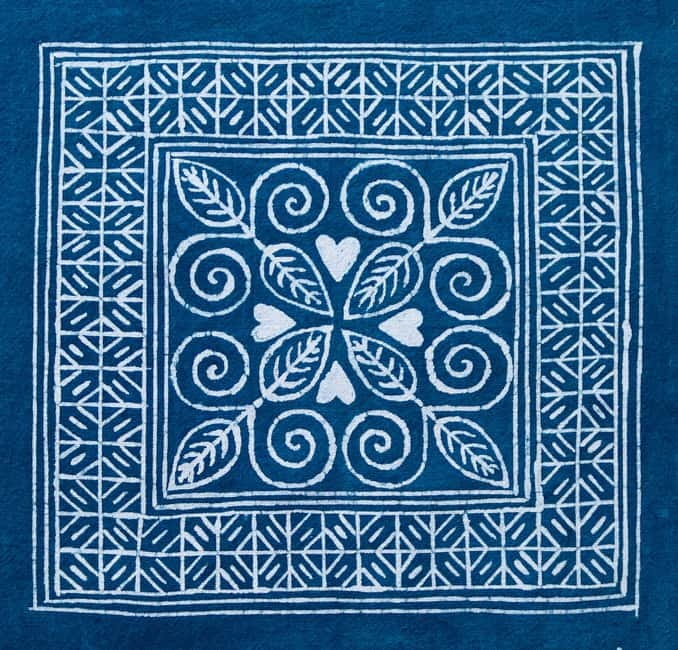
I especially like the way the activity combines craft and cultural explanation. The traditional Hmong symbols are not just decorative filler. The instructor explains their meanings, so your pattern has a story behind it. You also get a better sense of the work involved in making the blue-and-white textiles often associated with Hmong clothing and household goods.
The mood is relaxed. One-hour sessions work well if you want a short creative break between sightseeing stops. A two-hour option gives you more breathing room, and longer sessions are useful if you want to make more changes or work at a slower pace.
This is not a polished show where someone demonstrates a craft while you watch from a distance. You use the tools yourself. You put beeswax onto hemp fabric, make decisions about the pattern, and see how dye changes the finished result. That small amount of effort is what gives the souvenir its value.
More tours and river days worth a look
- Luang Prabang: Evening Cooking Class & Local Baci Ceremony
★ 4.9 · 151 reviews - Luang Prabang: Bamboo Weaving Workshop & Cooking Class
★ 5.0 · 96 reviews - Luang Prabang: Cooking Class at the Former Royal Palace
★ 4.9 · 51 reviews
Finding Moon Love Batik beside Wat Sibounheuang
The workshop is at Moon Love Batik, next door to Wat Sibounheuang in Luang Prabang. The location is listed on Google Maps, and searching for Moon Love Batik should bring up the correct place.
I would save the map location before setting out. Luang Prabang is pleasant to explore on foot, but small businesses can be easy to miss when you are looking for a particular doorway. Using Wat Sibounheuang as a nearby landmark makes the final approach simpler.
The supplied information does not specify transport, group size, or hotel pickup, so you should not expect those services unless they are confirmed separately. Plan to make your own way to the workshop and allow enough time to find the entrance.
English instruction is available. That matters here because the session depends on understanding both the drawing method and the meaning of the symbols. The named instructors include Mi and Mee in the activity feedback, and the teaching is repeatedly praised for being friendly, patient, and clear.
Choosing between one and four hours
The activity lasts from one to four hours, depending on the option you select. This range is useful because not every visitor wants the same level of involvement.
A one-hour session is best if you want an introduction and a manageable souvenir. You can learn the basic technique, draw your design, and leave the later dye work to the artist. This short format has been enough for beginners to make a finished piece they were happy to collect the following day.
The one-hour option does have a limit. You will have less time to make changes, ask extended questions, or work slowly through a more detailed motif. If you already know you enjoy textile crafts, the short session may feel rushed.
A two-hour session offers a better middle ground for most people. You have time to select a motif, understand the lines, make small adjustments, and work without watching the clock too closely. A two-hour morning was enough for one couple to enjoy the process at an easy pace.
The full four-hour option should suit anyone who wants a more unhurried session. The information does not promise a larger finished textile or a different product at that length, so check exactly what your chosen duration includes. The extra time is most valuable for careful drawing, conversation, and learning more about the method.
Drawing Hmong symbols with beeswax
The first active stage is drawing with natural beeswax on high-quality, hand-loomed Hmong hemp fabric. You use traditional Hmong batik tools, rather than ordinary pens or paintbrushes.
The process is approachable. You can choose from traditional motifs and follow the lines, with room for small changes that make the pattern your own. That is good news if you do not think of yourself as artistic. Several people found the activity easy to begin, and one important point is worth repeating: you do not need advanced craft skills.
Still, the lines matter. Work slowly and avoid treating the fabric like a sketchpad. The design you make with the wax will control what remains undyed later. A rushed line cannot simply be erased like pencil.
The wax itself is central to the craft. It creates a barrier on the fabric, protecting parts of the hemp when the material goes into the indigo. The result is not instant, which gives the workshop a nice sense of cause and effect. You make a pale wax drawing, then wait to see how it becomes part of a strong blue design.
This stage is also where the instructor’s patience helps most. Mi has been praised for speaking excellent English and offering careful, friendly assistance. Mee has also been singled out for kind instruction. Names can vary by session, but you can expect English guidance from the workshop team.
A different idea for your next Laos day:
- Luang Prabang: Cruise to Pak Ou Caves & Kuang Si Waterfalls
★ 5.0 · 1,769 reviews - Luang Prabang: Cruise to Pak Ou Caves & Kuang Si Waterfalls
★ 4.8 · 1,360 reviews - Half Day Mekong Cruise to Pak Ou Caves (Morning / Afternoon)
★ 4.6 · 290 reviews - Luang Prabang: UNESCO World Heritage City Highlights Tour
★ 4.6 · 201 reviews
Understanding the natural indigo process
After the wax drawing is complete, you take part in the natural indigo dyeing process. The fabric is dyed so the areas without wax absorb the blue color, while the wax-covered lines resist it.
The artist continues the dye process after your session to achieve a deeper blue. This is an important practical detail. You are not expected to complete every stage yourself, and the final color may develop after you leave.
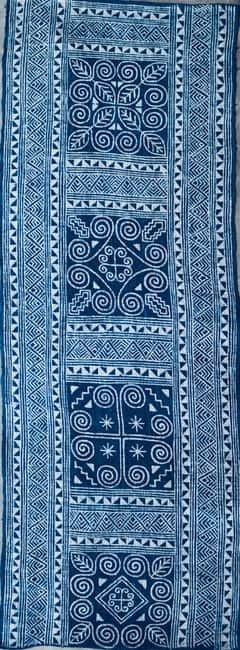
The wax is then boiled away. Once removed, it reveals the pattern you created. The contrast between the indigo and the protected lines is the small payoff at the end of the process. It also helps you understand why traditional batik requires patience rather than speed.
You should not expect to walk out with a dry, finished textile. The piece needs time for the dyeing and finishing work. You can pick it up the next day, so plan your Luang Prabang schedule accordingly. If you are leaving town immediately after the workshop, this is the most important point to check before booking.
What you take home
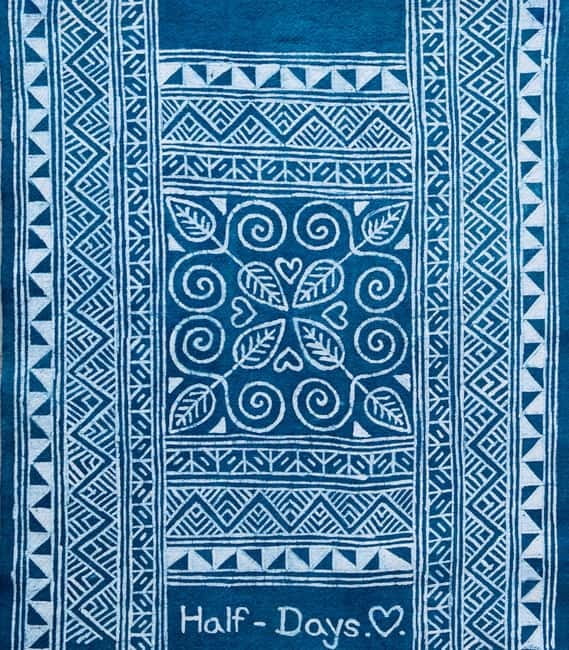
Your completed batik art piece is included in the activity. The fabric can become part of a sewing project, such as a pillow cover or tote bag, or you can hang it on a wall as a small piece of Hmong-inspired textile art.
The exact size and final format are not specified, so do not book this expecting a finished garment or a large household textile. Think of it as a handmade fabric panel that you can use creatively later.
That flexibility is part of the appeal. A mass-produced souvenir can remind you where you went, but it usually says little about your own time there. This piece carries your design decisions, even if your lines are not perfect. In fact, small irregularities are part of its charm.
The next-day collection also gives the activity a second moment. You return to see the result after the artist has completed the indigo work and removed the wax. If you enjoy process, that delayed reveal is a pleasure. If you prefer to leave Luang Prabang right after an activity, it is an inconvenience.
The value of the 22 dollar price
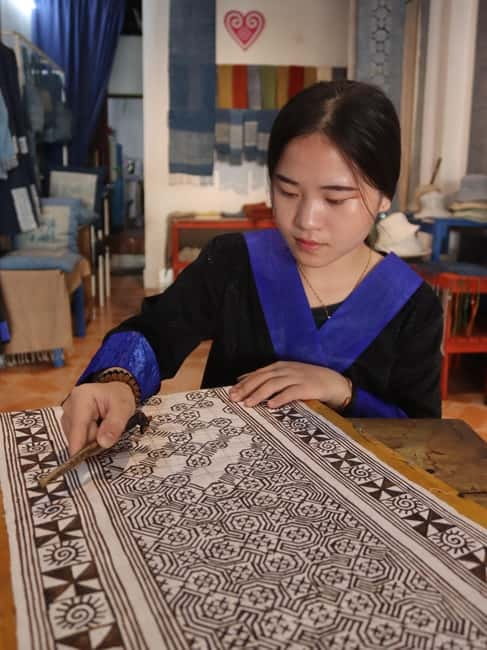
At $22 per person, this is a fair price for a hands-on cultural activity. The fee includes instruction from a master Hmong batik artist, authentic tools and materials, hand-loomed Hmong hemp fabric, the natural indigo dye process, and the finished art piece.
The value is not only in the fabric. You are also paying for access to a traditional skill, explanations of Hmong symbols, and guidance through a process that would be difficult to understand from a shop display. The finished souvenir is useful, but the lesson is what makes the cost reasonable.
The price looks strongest for couples, friends, and solo visitors who want an activity with a physical result. It is also a good choice if you have already spent several days looking at temples and markets and want something that asks you to participate.
The value is weaker if you only want a quick purchase. A shop visit would be faster, and you would not need to return the next day. Book this because you want to make something, not simply because you want blue fabric.
Who will enjoy it most
This workshop fits adults, older children, couples, and anyone who likes quiet creative activities. It is especially friendly to beginners. You can follow the traditional lines, ask questions in English, and receive help as you work.
It also suits people who do not consider themselves crafty. The activity has enough structure to guide you, and you can make small changes without inventing an entire design from nothing. One participant even found it approachable for a husband who was not skilled at crafts.
The session may be a good early activity in Luang Prabang. It gives you an introduction to Hmong culture and textile work before you encounter related patterns in shops or village settings. One person particularly liked it as a relaxed way to begin a trip.
Children under six are not suitable for the workshop. The supplied information does not give a maximum age or explain special activities for young children, so families should focus on the stated minimum age and consider whether a child can sit patiently while drawing.
Wheelchair access is available. Details about the exact route, doorway, or restroom facilities are not provided, so you may want to confirm those practical points directly if you need specific accessibility arrangements.
What could be better
The biggest limitation is the delay before collection. You need to return the next day, and the workshop does not solve that problem for you. Keep this in mind if Luang Prabang is only a one-night stop.
The short session can also limit your choices. One hour is enough to learn the basics, but it may not allow much experimenting. If your main goal is a highly detailed design, select a longer option and ask what level of detail is realistic.
The information also does not state the group size. A small class could allow more individual attention, while a larger class might feel less personal. Since the quality of instruction is a major reason to book, this is worth asking about if class atmosphere matters to you.
Finally, the finished work will reflect your own hand. That is the point, but perfectionists should adjust their expectations. The best result is not necessarily the most exact one. It is the piece that shows you took part.
Booking and planning tips
Reserve a time that leaves room in your schedule the following day for pickup. Do not place the workshop just before a departure unless the provider confirms another collection arrangement.
If you are unsure about the duration, choose two hours. It gives you more time than the introductory session without committing your whole day. A longer option makes sense if you want to ask many questions or spend extra time adjusting the motif.
Save Moon Love Batik on Google Maps and use Wat Sibounheuang as your nearby reference point. Wear something comfortable for a seated craft activity, though no special clothing requirement is provided.
The activity offers free cancellation up to 24 hours in advance for a full refund. You can also reserve now and pay later, which helps if your Luang Prabang schedule is still changing.
Should you book Moon Love Batik?
Book it if you want a calm, practical cultural experience and a souvenir that you helped create. The strongest points are the kind English instruction, traditional materials, simple entry for beginners, and the chance to learn what Hmong symbols and indigo dyeing mean.
Choose the two-hour option if you want the safest balance of time and value. Pick one hour if your schedule is tight, and consider four hours only if you enjoy slow, detailed craft work.
Skip it if you cannot return the next day, need a finished item immediately, or would rather spend your time on a fast market visit. For everyone else, $22 buys more than a piece of blue cloth. It buys a lesson, a conversation, and a handmade reminder of Luang Prabang that carries your own slightly wobbly lines.
FAQ
Where is the Hmong batik workshop located?
Moon Love Batik is in Luang Prabang, next door to Wat Sibounheuang. You can find it on Google Maps by searching for Moon Love Batik.
How much does the workshop cost?
The listed price is $22 per person.
How long does the activity last?
The available duration is between one and four hours. Starting times and exact options depend on availability.
Is the workshop taught in English?
Yes. English instruction is available.
Do I need artistic experience?
No. The activity is suitable for beginners, and you can follow traditional lines and receive help from the artist.
What materials are included?
The workshop includes authentic batik tools and materials, natural beeswax, high-quality hand-loomed Hmong hemp fabric, and the natural indigo dyeing process.
Can I take my finished batik piece home?
Yes. A completed batik art piece is included. You can use it for a sewing project or hang it on a wall.
When can I collect the finished artwork?
You can pick up the completed piece the day after the dyeing session.
Are children allowed to join?
Children under six are not suitable for this activity. The provided information does not specify policies for children aged six or older.
Is the workshop wheelchair accessible?
Yes, the activity is listed as wheelchair accessible. Specific details about the access route are not provided.
Can I cancel the booking?
Yes. You can cancel up to 24 hours in advance for a full refund.
Do I have to pay when I reserve?
No. A reserve-now, pay-later option is available.
Just added around Luang Prabang
- Private Luang Prabang City Tour★ 5.0 · 3 reviews
- A Relaxing Day at the Kuang Si Falls★ 4.5 · 3 reviews
- Luang Prabang Night-time Explorer★ 3.5 · 3 reviews
- Luangprabang: Dinner with Lao Traditional Dance Performance★ 4.0 · 3 reviews
- Sunset Cruise in Luang Prabang with Live Performance★ 4.5 · 3 reviews
- Luang Prabang Private Full-Day Tour and Lunch★ 4.7 · 3 reviews
- Luang Prabang: Local Village & Kuang Si Falls Private Tour★ 4.9 · 3 reviews
- Luang Prabang: Mekong River Cooking Class with Hotel Pickup★ 5.0 · 3 reviews
Workshops, compared.
Luang Prabang: Evening Cooking Class & Local Baci Ceremony
Read our review →
Luang Prabang: Bamboo Weaving Workshop & Cooking Class
Read our review →
Luang Prabang: Cooking Class at the Former Royal Palace
Read our review →
Day-time Bamboo weaving & Cooking Classes join-in
Read our review →
Evening Bamboo weaving & Cooking classes join-in
Read our review →
Traditional Market Tour and Private Laotian Cooking Class with a Local
Read our review →
Luang Prabang: Weaving Workshop Half-Day Experience
Read our review →
Browse the lists this tour appears in