
Reviewed · COOKING CLASSES
Tribal Cooking Class in Luang Prabang Forest and visit
Cooking starts with a walk into the wild. This five-hour experience combines Khmu food traditions with a short forest outing, hands-on cooking, and a simple meal made from plants and materials connected to rural Laos. I like the chance to learn directly from a local facilitator, and I like that you make your own bamboo chopsticks and drinking glass to take home. One point needs care: the experience is described as forest cooking, but some arrangements may include a farm-based setting rather than gathering everything in primary forest.
I also like the private format. Your group gets the guide’s full attention, which matters when you are handling bamboo, machetes, fire, and unfamiliar ingredients. Guide Peng is praised for his farming knowledge, while another account spells his name Pheng, so confirm the guide’s name when you book. The main drawback is that the activity may not suit anyone seeking a polished cooking school with a fixed kitchen, neat counters, and a formal recipe booklet.
In This Review
- Key Points Before You Book
- What This Luang Prabang Cooking Experience Is Really About
- From Naga Lodge to the Rural Setting
- The Ten-Minute Walk Into the Forest
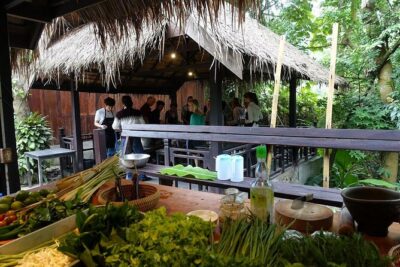
- A Bamboo Platform and a Kitchen Without Walls
- Gathering Ingredients and Learning What Grows Nearby
- Starting the Fire and Cooking a Lao Meal
- Making Souvenirs You Can Actually Use
- What Makes the Guide Important
- Is $78.08 a Good Value?
- Who Will Enjoy This Most?
- Timing, Pickup, and Cancellation
- Final Recommendation: Book It If You Want to Cook the Local Way
- FAQ
- Where does the cooking class begin?
- How long does the experience last?
- Is pickup available?
- Is the tour private?
- Does the experience include lunch?
- How long is the walk into the forest?
- Can I take anything home?
- What is the cancellation policy?
Key Points Before You Book
- A short 10-minute forest walk leads to the cooking area, making this more active than a standard Luang Prabang cooking class.
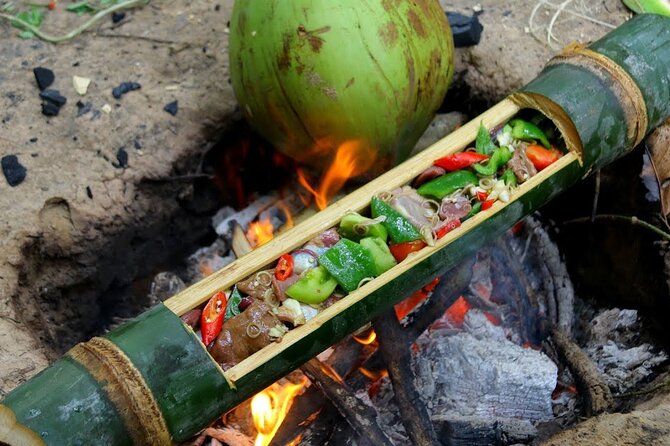
- Khmu cooking methods use bamboo, stone, fire, banana leaves, and other available natural materials.
- You gather or collect ingredients along the route, though the setting may be a farm or village area as well as forest.
- You make bamboo utensils, including chopsticks and a drinking glass that you can keep.
- The tour is private, with transportation, water, snacks, lunch, and cooking equipment included.
- The price is $78.08 per person, and free cancellation is available up to 24 hours before departure.
What This Luang Prabang Cooking Experience Is Really About
This is not simply a lesson in making a few Lao dishes. It is an introduction to the way food, forest materials, farming, and practical village skills fit together.
The cooking class takes place outside a conventional kitchen. Instead of arriving at a counter lined with gas burners and measuring spoons, you learn how bamboo can become a cooking vessel, utensil, roof covering, cup, or plate. Stone and other natural materials also have a role.
That makes the experience especially useful if you want more than a quick meal and a recipe to take home. You get a clearer idea of how cooking works when tools and ingredients must be found, prepared, and adapted locally.
The cultural focus is the Khmu tribe, one of the major ethnic communities associated with northern Laos. The activity presents food preparation through the skills of a local Khmu facilitator. I would treat this as a small, personal introduction rather than a complete lesson in Khmu culture. The experience is only about five hours, but that is enough time to connect food with daily life in a memorable way.
More Cooking Classes in Luang Prabang:
- Luang Prabang: Evening Cooking Class & Local Baci Ceremony
★ 4.9 · 151 reviews - Luang Prabang: Bamboo Weaving Workshop & Cooking Class
★ 5.0 · 96 reviews - Luang Prabang: Cooking Class at the Former Royal Palace
★ 4.9 · 51 reviews
From Naga Lodge to the Rural Setting
The meeting point is Naga Lodge Eco Resort in Ban Xieng Mouark, Luang Prabang. Pickup is offered, and private transportation is included, which makes the start easier if you are staying elsewhere in town.
The route takes you away from the usual historic center and toward a more rural setting. Depending on the day’s plan, you may stop along the way to collect ingredients or visit farming and village areas before reaching the cooking place.
That part matters. The experience is not only about what happens at the cooking platform. The movement between town, farms, village life, and the forest helps show where the food comes from. You are not just given a basket of prepared herbs. You may see how ingredients are collected and handled before they reach the fire.
The exact balance between forest and farm appears to vary. The experience description presents primary forest gathering, while one account found the activity was based at a farm. I would ask for clarification before booking if the forest setting is your main reason for going.
The Ten-Minute Walk Into the Forest
The walk into the forest takes about 10 minutes. That is short enough for most people who are comfortable on an uneven outdoor path, yet long enough to change the mood completely.
You learn about edible plants along the way and help collect ingredients for the meal. This gives the walk a clear purpose. You are not simply taking a scenic stroll before the cooking begins. The plants become part of the lesson, and the guide can explain how local people identify and use them.
The description refers to primary forest, though the actual setting may include cultivated land or a farm. You should therefore expect a nature-based outing, not a remote wilderness expedition. The short walk also means the activity is accessible to people who want an outdoor experience without committing to a full-day trek.
Wear clothes that can handle dirt, smoke, and plant contact. Closed shoes are a sensible choice. Since the class involves outdoor work and fire, this is not the place for your smartest holiday outfit.
A Bamboo Platform and a Kitchen Without Walls
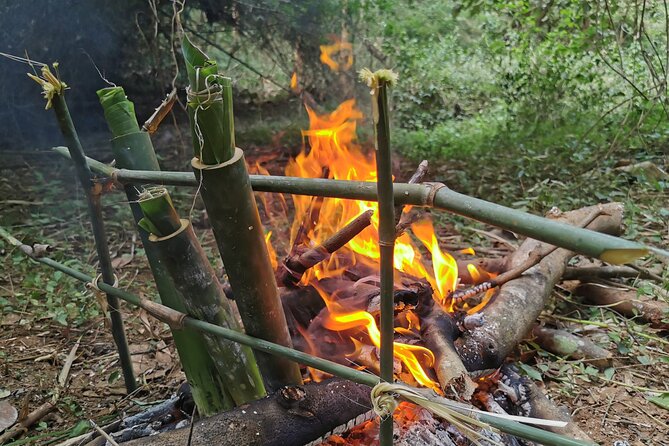
The cooking area is described as a small bamboo platform, or carbet, in a forest clearing. One memorable part of the experience is using machetes to prepare bamboo and make shelter from rain.
This is where the class becomes much more hands-on than a normal cooking demonstration. You are not watching a guide work while standing safely behind a counter. You take part in preparing the cooking space and the tools.
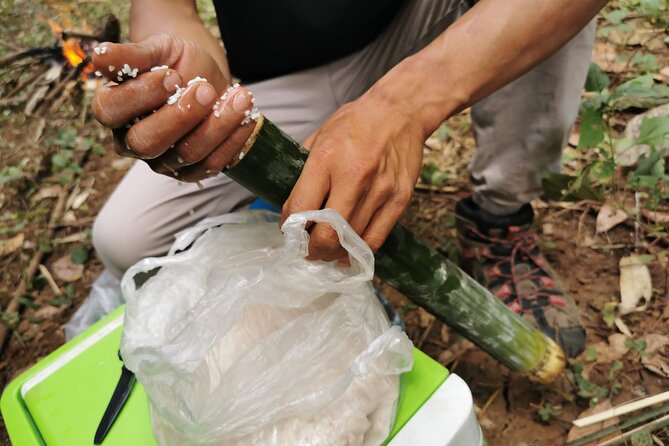
Bamboo is central to Laotian cooking and daily life. Here, you use it in several ways:
- Cooking equipment
- Eating chopsticks
- A drinking glass
- Plates or serving materials
- Parts of the shelter
The bamboo utensils are a particularly good touch. You make your own chopsticks and glass, then take them home as souvenirs. They are more meaningful than a mass-produced magnet because you made them during the class and saw how a local material can serve several purposes.
Use care with the machete. The tool is part of the traditional process, but it is also sharp. Follow the guide’s instructions closely, and do not rush the cutting work. The class is about learning practical skills, not proving how quickly you can split bamboo.
More tours and river days worth a look
- Day-time Bamboo weaving & Cooking Classes join-in
★ 5.0 · 38 reviews - Luang Prabang: Hmong Batik Art Workshop
★ 5.0 · 27 reviews - Evening Bamboo weaving & Cooking classes join-in
★ 5.0 · 17 reviews - Traditional Market Tour and Private Laotian Cooking Class with a Local
★ 5.0 · 13 reviews
Gathering Ingredients and Learning What Grows Nearby
The plants and ingredients are part of the story. You learn which edible plants can be used in local dishes, then collect some of what you will cook.
The activity may include banana leaves, herbs, and produce from farms or nearby areas. One account describes harvesting fresh banana leaves, starting fires, and preparing food from ingredients connected to local farms and villages. These details help you understand that the meal is built from basic materials rather than a prearranged restaurant menu.
The information available does not provide a fixed list of dishes. That is worth knowing. You should not book this expecting a guaranteed menu of specific Lao classics. The food may depend on what is available that day, the season, and what the guide chooses to demonstrate.
For me, that uncertainty is part of the appeal. A fixed menu is useful if you want to recreate the dishes at home. A flexible menu is more faithful to the setting, where cooking follows the ingredients at hand.
You should tell the provider about dietary needs before the activity. No specific dietary substitutions are promised, so do not assume that vegetarian, vegan, allergy-friendly, or other special meals are available.
Starting the Fire and Cooking a Lao Meal
The class includes lunch and snacks, and you cook the meal yourself using the supplied tools and utensils. The outdoor setting makes the basic acts of cooking more visible: preparing materials, managing heat, wrapping or placing food, and sharing the finished meal.
Starting the fire from scratch is one of the most useful parts. It turns lunch into a practical lesson. You see how much work goes into producing a meal when there is no electric stove waiting at the press of a button.
The guide’s role is important here. Peng is described as a farmer with a strong understanding of local food and village life. That kind of background can add more value than a formal chef’s title, because the class is about food gathered and prepared in a rural setting.
The meal itself is likely to be simple, fresh, and connected to the ingredients collected during the outing. Do not expect a restaurant-style presentation. You are eating food prepared in the same place where you learned how the tools and ingredients come together.
Rain can change the feel of the activity. The bamboo shelter helps, and preparing cover from rain is part of the experience described by one participant. Still, an outdoor class is more exposed to weather than an indoor school. Bring a light rain layer if conditions look unsettled.
Making Souvenirs You Can Actually Use
The bamboo cup and chopsticks are not a side activity added to fill time. They reinforce the main lesson: cooking in this setting depends on making useful objects from nearby materials.
You learn to shape the bamboo into something that works at the meal. Then you can take the finished pieces home. The process may require patience, especially if you are not used to using a machete or working with raw bamboo.
I like this aspect because it gives you a physical reminder of the day. You can explain where the cup came from and how you made it. It also gives children and adults a clear task during the class, though the outdoor tools mean younger participants need close supervision.
The activity may also include other practical skills. One account describes learning to make a trap from available materials. That suggests the class can reach beyond cooking into basic forest and village techniques, although you should not assume a specific trap-building lesson is guaranteed.
What Makes the Guide Important
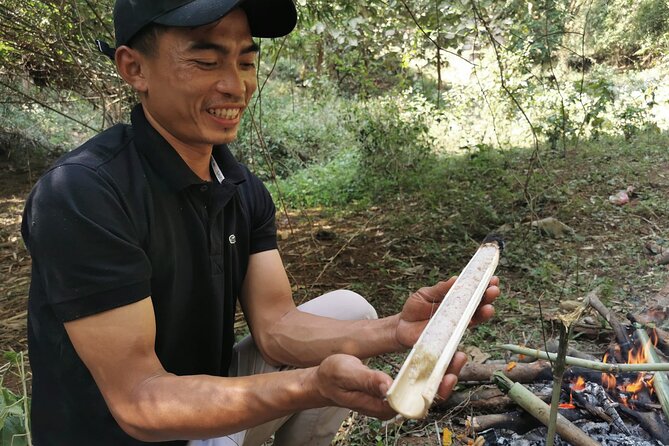
A good guide can turn a basic outdoor meal into a useful cultural exchange. This class depends heavily on explanation, patience, and safe instruction.
Peng is praised for his farming background and his ability to explain where ingredients come from. Another account refers to Pheng, likely a spelling variation or another guide. Either way, the strongest part of the experience appears to be the personal connection with the local facilitator.
Because the tour is private, you can ask questions as you go. If you want to know how a plant is used at home, why bamboo is preferred, or how a dish changes with available ingredients, you have room to ask.
The private format also works well for different skill levels. You can slow down during the cutting work, ask for help with the fire, or spend more time learning about plants. In a large class, those small questions are easy to lose.
Is $78.08 a Good Value?
At $78.08 per person, this costs more than a basic two-hour cooking class in Luang Prabang. The price makes more sense when you count what is included: private transportation, bottled water, snacks, lunch, cooking tools, a forest or farm outing, and roughly five hours of instruction and activity.
You are paying for a full half-day rather than just a meal lesson. The bamboo work and ingredient gathering add time and labor. Private participation also has real value if you want a slower pace or personal instruction.
The price may feel high for a solo visitor. One person had to pay for two participants because the booking system did not offer a solo option. Check the current booking terms directly before paying if you are alone.
For two people or a small private group, the value is stronger. You get transport, food, instruction, and a distinctive activity that combines cooking with outdoor skills. I would not choose it for the cheapest possible meal class. I would choose it if you want a day with more substance than a standard demonstration.
Who Will Enjoy This Most?
I would recommend this experience to you if you enjoy:
- Hands-on activities
- Rural and village settings
- Learning by doing
- Traditional food preparation
- Short walks in nature
- Small private tours
- Simple meals made with local materials
It is a good choice for couples, families with older children, and friends who want a shared task. The bamboo cup and chopsticks give you something concrete to work on, while the food keeps the activity connected to Laos rather than turning it into a generic craft lesson.
You may prefer another class if you want air conditioning, a polished kitchen, exact recipes, or a guaranteed list of dishes. This experience is also less suitable if you dislike smoke, dirt, outdoor heat, machete work, or uncertain weather.
The forest description should be another factor in your decision. If you specifically want untouched primary forest, ask how much of the day will take place there and how much will happen on a farm. If you mainly want a rural food experience, the farm setting may work perfectly well.
Timing, Pickup, and Cancellation
The activity lasts about five hours and begins at Naga Lodge Eco Resort in Ban Xieng Mouark. Pickup is offered, and the day ends back at the meeting point.
You receive booking confirmation at the time of booking unless you reserve within one day of departure. A last-minute booking is subject to availability, with confirmation sent as soon as possible.
This is a private activity, so only your group takes part. That is a useful advantage in a practical class where you may need individual help.
Free cancellation is available if you cancel at least 24 hours before the local start time. Cancellation within 24 hours is not refunded, and changes during that period are not accepted. The activity also requires a minimum number of participants. If the provider cancels because that minimum is not reached, you can choose another date or experience, or receive a full refund.
Final Recommendation: Book It If You Want to Cook the Local Way
I would book this class if you want an active, personal introduction to rural Lao food and Khmu skills. The best parts are the short forest walk, the ingredient gathering, the bamboo tools, the outdoor fire, and the chance to learn from a local guide such as Peng.
I would pause before booking if your main goal is a formal cooking course or if you expect every minute to take place in untouched forest. Confirm the setting, solo pricing, and any dietary needs first.
For the right person, this is more than lunch. It is a lesson in how food is gathered, how bamboo becomes a kitchen, and how much skill can fit into a simple outdoor meal.
FAQ
Where does the cooking class begin?
It begins at Naga Lodge Eco Resort in Ban Xieng Mouark, Luang Prabang 06000, Laos.
How long does the experience last?
The activity lasts approximately five hours.
Is pickup available?
Yes. Pickup is offered, and private transportation is included.
Is the tour private?
Yes. Only your group participates in the activity.
Does the experience include lunch?
Yes. Lunch, snacks, and bottled water are included.
How long is the walk into the forest?
The walk to the cooking area takes approximately 10 minutes.
Can I take anything home?
Yes. You make bamboo eating chopsticks and a bamboo drinking glass, which you can take home.
What is the cancellation policy?
You can cancel for a full refund up to 24 hours before the experience start time. Cancellations or changes made within 24 hours are not refunded or accepted.
Just added around Luang Prabang
- A Relaxing Day at the Kuang Si Falls★ 4.5 · 3 reviews
- Luang Prabang Night-time Explorer★ 3.5 · 3 reviews
- Private Luang Prabang City Tour★ 5.0 · 3 reviews
- Luangprabang: Dinner with Lao Traditional Dance Performance★ 4.0 · 3 reviews
- Sunset Cruise in Luang Prabang with Live Performance★ 4.5 · 3 reviews
- Luang Prabang Private Full-Day Tour and Lunch★ 4.7 · 3 reviews
- Luang Prabang: Local Village & Kuang Si Falls Private Tour★ 4.9 · 3 reviews
- Luang Prabang: Mekong River Cooking Class with Hotel Pickup★ 5.0 · 3 reviews
Cooking Classes, compared.
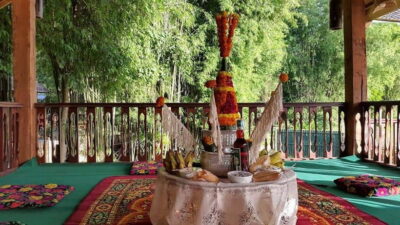
Luang Prabang: Evening Cooking Class & Local Baci Ceremony
Read our review →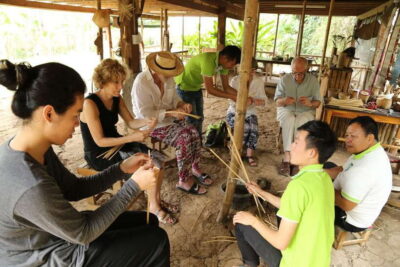
Luang Prabang: Bamboo Weaving Workshop & Cooking Class
Read our review →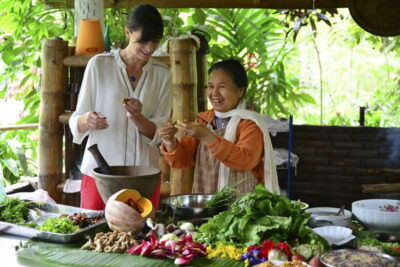
Luang Prabang: Cooking Class at the Former Royal Palace
Read our review →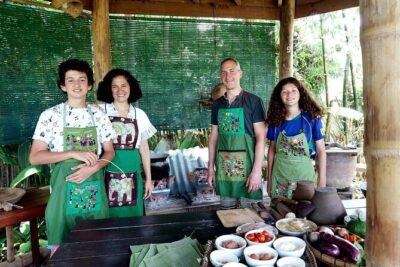
Day-time Bamboo weaving & Cooking Classes join-in
Read our review →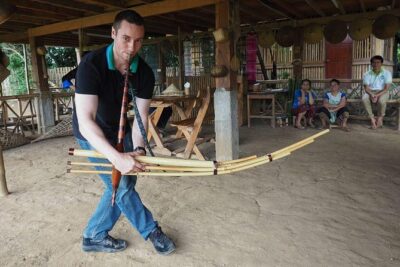
Evening Bamboo weaving & Cooking classes join-in
Read our review →
Traditional Market Tour and Private Laotian Cooking Class with a Local
Read our review →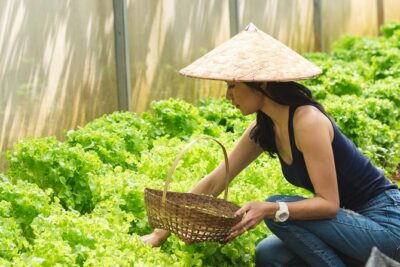
Browse the lists this tour appears in