
Reviewed · COOKING CLASSES
Luang Prabang: Evening Cooking Class & Local Baci Ceremony
Some evenings teach you more than museums. This four-hour experience combines a local market visit, hands-on Lao cooking, a family-hosted Baci ceremony, dinner, and traditional music in one compact outing. I especially like the warm home setting and the chance to learn directly from local people rather than simply watch a staged demonstration. The main consideration is that this is a cultural exchange as much as a cooking class, so anyone wanting a highly structured lesson with a wide menu may find the format a little loose.
At $51 per person, the price covers hotel transport, an English-speaking host, market touring, cooking, dinner, the ceremony, and music. I like that the group is limited to six people, which makes it easier to ask questions and take part in the preparation. You should also know that the open-air cooking area and village setting mean limited mobility can be a problem, and respectful clothing is required for the ceremony.
In This Review
- Key points at a glance
- Why this four-hour evening feels different
- The 4:00 PM hotel pickup and ride beyond town
- The local market: learning ingredients before cooking
- Cooking five Lao dishes in a charcoal kitchen
- Dinner in the traditional Lao style
- Understanding the Baci ceremony with local elders
- Hmong music and the khene finale
- What the $51 price really covers
- Who should book this experience
- Practical advice for a smoother evening
- Should you book the Luang Prabang cooking class and Baci ceremony?
- FAQ
- What time does the experience begin?
- How long does the activity last?
- Is hotel pickup included?
- How many people are in the group?
- Is the cooking class conducted in English?
- What food do you cook?
- What should I wear to the Baci ceremony?
- Are alcoholic drinks included?
Key points at a glance
- A real market stop first: You visit a local food market and learn how herbs, produce, meat, and other ingredients fit into everyday Lao cooking.
- Five dishes, not just a demonstration: You help prepare a traditional home-cooked dinner, with examples including soup, sticky rice, dips, salad, fish, pork, and other Lao staples.
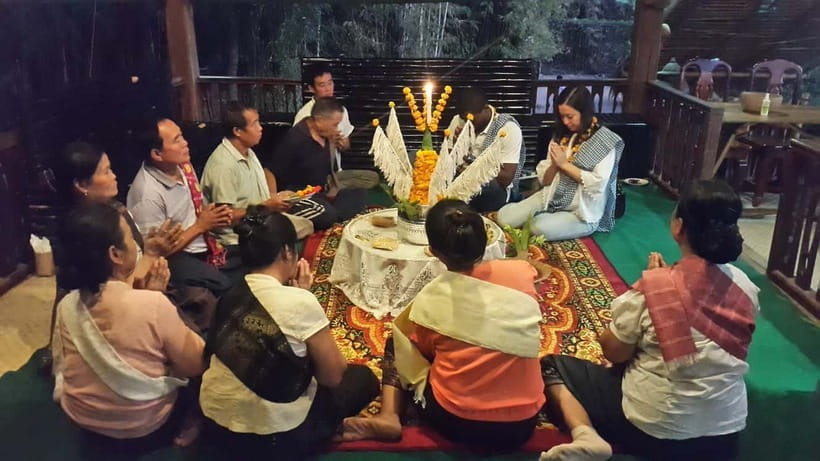
- A meaningful Baci ceremony: Local elders offer blessings, chants, food, and ceremonial strings in a family setting.
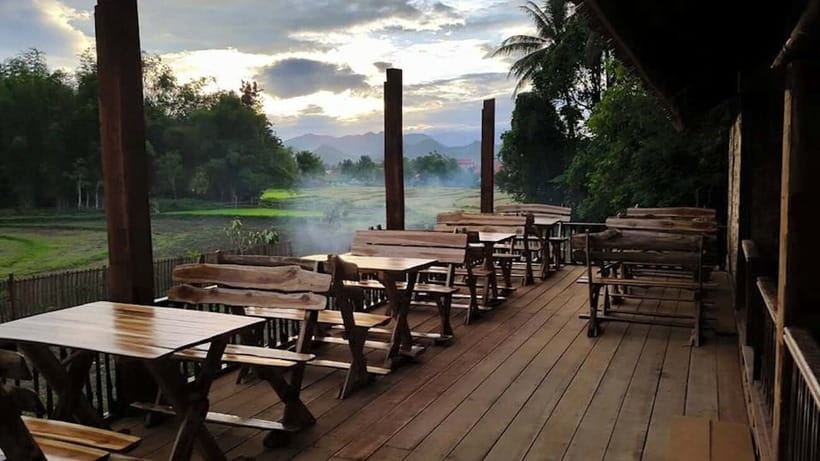
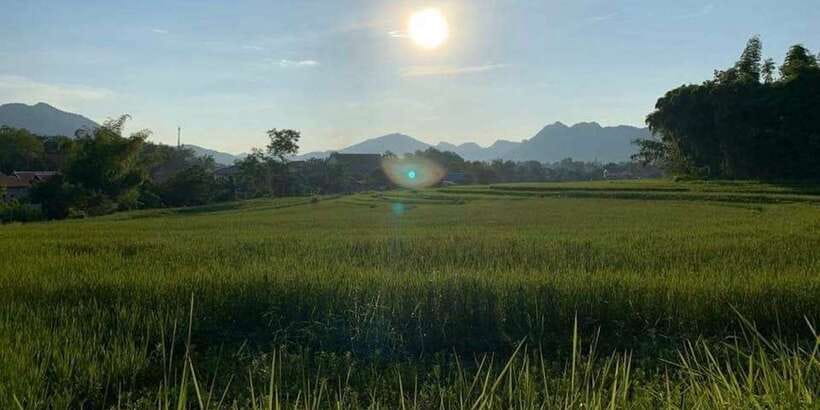
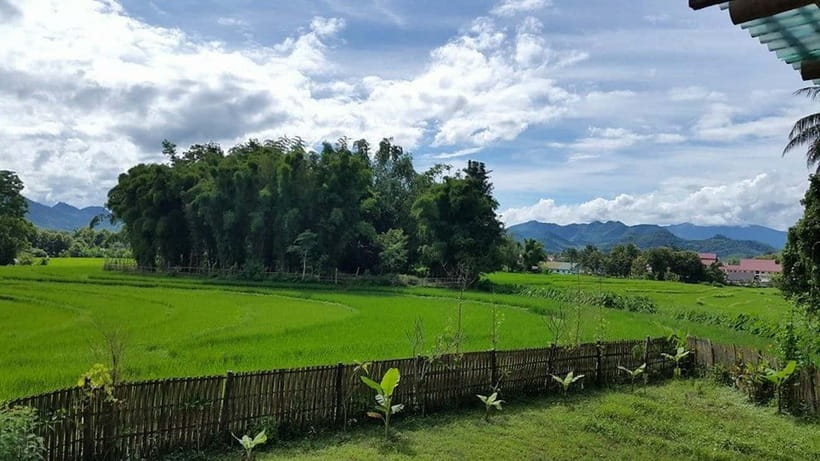
- A beautiful rural setting: The cooking pavilion is modeled on a traditional Lao house and looks over rice fields and surrounding hills.
- Music after dinner: A local musician performs in Hmong traditional clothing, with the khene, a traditional Lao instrument, featured on some evenings.
- Small-group attention: With no more than six participants, the evening feels personal rather than mass-produced.
Why this four-hour evening feels different
Many cooking classes in Southeast Asia follow a familiar pattern: market, chopping lesson, meal, goodbye. This one adds two cultural moments that change the pace and tone of the evening.
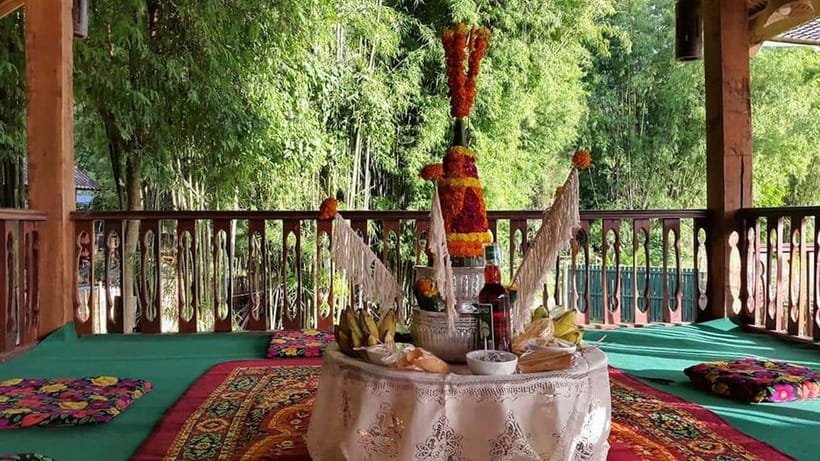
The Baci ceremony is the heart of the experience. In Lao culture, Baci can mark a marriage, homecoming, birth, recovery from illness, a mother’s recovery after childbirth, a festival, or the arrival of monks at a temple. It can happen at any time of year, although it is traditionally preferred before noon or sunset.
Here, you are not simply told about the ceremony from a distance. You sit with local elders and take part in a blessing. Chants, food, small drinks, and white strings tied around the wrist may form part of the ritual. You should treat this moment with care. It is not a colorful interlude added for photographs. The host explains what is happening, but the meaning comes from the family and community taking the time to welcome you.
The evening also works well because the activities do not feel rushed. You move from market to kitchen, then from ceremony to dinner and music. Four hours gives enough room for conversation, though the schedule may shift slightly depending on transport and the pace of the cooking.
More Cooking Classes in Luang Prabang:
- Luang Prabang: Bamboo Weaving Workshop & Cooking Class
★ 5.0 · 96 reviews - Luang Prabang: Cooking Class at the Former Royal Palace
★ 4.9 · 51 reviews - Day-time Bamboo weaving & Cooking Classes join-in
★ 5.0 · 38 reviews
The 4:00 PM hotel pickup and ride beyond town
Pickup begins at about 4:00 PM from hotels in Luang Prabang city. You are asked to wait in the lobby five minutes before the scheduled time, and hotel drop-off is included at the end.
That transport matters. The cooking location is outside the center, in a small village setting with views across rice fields. You do not need to arrange a taxi or work out your own route after dark. It also turns the activity into a complete afternoon and evening plan rather than a class you must reach independently.
The experience is not designed for wheelchair users or people with mobility impairments. Pregnant women are also advised not to book. Comfortable shoes are a sensible choice, especially since the activity includes a market visit, a move between cooking areas, and time in a rustic pavilion.
The local market: learning ingredients before cooking

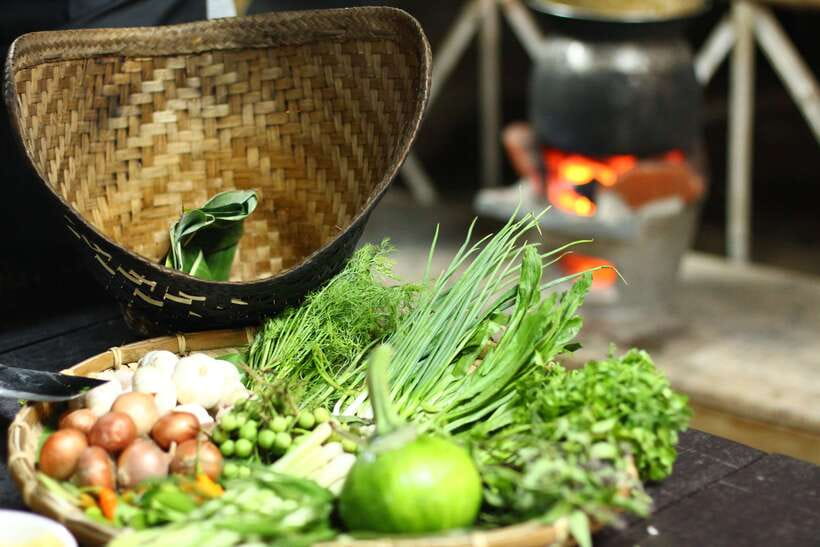
The first stop is a local food market. This is more useful than arriving at the kitchen and finding bowls of ingredients already measured out.
Your English-speaking host explains the fresh produce, herbs, and other foods used in daily Lao meals. The market is also a window into ordinary life in Luang Prabang Province. You can ask about unfamiliar items and see how food shopping works before the ingredients appear in your dinner.
The market portion is one of the strongest parts for curious cooks. It gives you a better sense of why Lao food tastes the way it does, rather than presenting dishes as a list of exotic names. You may learn which herbs add fragrance, how sticky rice fits into a meal, and how several simple ingredients are combined into dips, soups, salads, and main dishes.
One small limitation is worth noting. The amount of market explanation may depend on the guide and the group’s questions. If you want a long, detailed tour of every stall, say so early. The main purpose is to shop and understand the ingredients used later, not to provide a full market study.
Cooking five Lao dishes in a charcoal kitchen
After the market, you continue to the cooking location and help prepare five typical dishes. This is a home-style meal, not a polished restaurant kitchen. Some sessions use a basic outdoor cooking area with charcoal burners and clay stoves, which adds a practical sense of how food has traditionally been prepared.
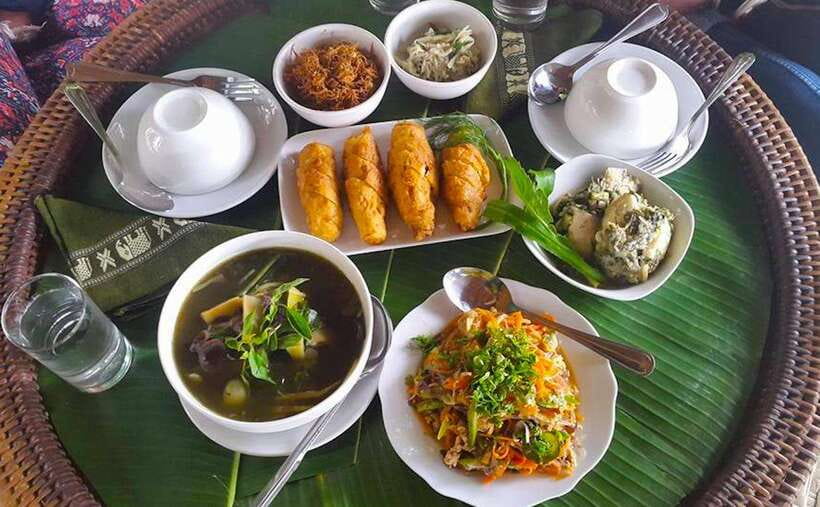
The exact menu can vary, but dishes described during the experience have included pumpkin soup, pork, fish, sticky rice, tomato dip, eggplant dip, salad, and food cooked in banana leaves. One evening included fish, meat, soup, salad, and two dips. The point is not to master one signature dish. You build a full Lao dinner with several textures and flavors.
I like this format because it makes the meal feel generous and complete. Sticky rice can anchor the table, while soup, dips, vegetables, and meat or fish give you different ways to eat. You are not left with a tiny tasting plate after spending hours in the kitchen.
The class is hands-on, but it may not have the precise, step-by-step structure of a professional culinary school. The family helps you with the work, and the small group makes it possible to participate. Still, one participant wanted more choice about what to cook and more instruction. If you are an experienced home cook, you may wish for more technical detail. If you are mainly after food, culture, and a relaxed evening, the informal approach is likely a plus.
Vegetarians can be accommodated according to the experience information, but you should make your dietary needs clear when booking. Alcoholic drinks are not included, and outside food and drinks are not allowed.
More tours and river days worth a look
- Luang Prabang: Hmong Batik Art Workshop
★ 5.0 · 27 reviews - Evening Bamboo weaving & Cooking classes join-in
★ 5.0 · 17 reviews - Tribal Cooking Class in Luang Prabang Forest and visit
★ 5.0 · 15 reviews - Traditional Market Tour and Private Laotian Cooking Class with a Local
★ 5.0 · 13 reviews
Dinner in the traditional Lao style
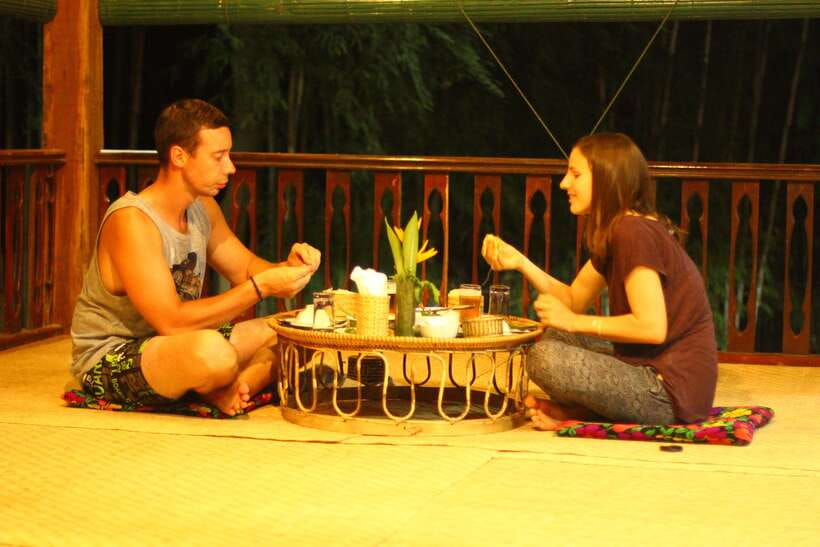
Once the food is ready, you eat together with the local family and other participants. This shared meal is a key part of the evening, since the cooking has a clear purpose: you sit down and eat what you helped prepare.
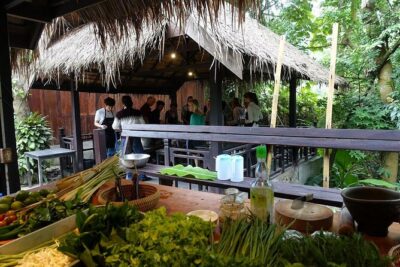
The setting is a rustic pavilion modeled on a traditional Lao house. Open sides allow you to look across rice fields toward the surrounding hills, and the late afternoon light can make the location especially appealing. Some evenings have included a sunset view, though exact conditions depend on the season and weather.
The family atmosphere is more important than decoration. You are welcomed into a working household and encouraged to talk, try the food, and take part. Several participants found the hosts friendly, patient, and funny, with guides such as Si, Somsay, Sam, and Chian praised for explaining the food and customs clearly. The provider is Wander Laos Tour Co., Ltd., and the experience has earned a 4.9 rating from 151 reviews, with 96 percent giving it a perfect score.
You should arrive ready to eat a substantial meal. The food has been described as fresh, tasty, and filling, with options for mild or spicy preferences in at least some sessions. The exact dishes and cooking roles are not fixed in the supplied details, so do not expect to choose every course in advance.
Understanding the Baci ceremony with local elders
The Baci ceremony gives the evening its emotional weight. It is a Lao custom connected with good fortune, spiritual balance, welcome, and important changes in a person’s life. The host explains the tradition before local elders lead the ceremony.
You may hear singing and chanting, receive a blessing, and have white strings tied around your wrists. Some sessions have included small treats and a taste of local rice whiskey. You should not assume that every ceremony will follow exactly the same script. Baci is a living custom, and its form can change with the family, occasion, and group.
Covered knees and shoulders are required. This is both a practical rule and a sign of respect. Wear light, comfortable clothing that meets those requirements, since the evening can still be warm.
The ceremony is personal, but it is also a moment where cultural manners matter. Follow the host’s instructions about sitting, receiving strings, eating, and taking photographs. You may be invited to sing a song from your own country or share something with the family. That exchange is optional in spirit, but being willing to participate helps keep the mood friendly.
The ceremony may be the most memorable part for you, or it may feel outside your usual travel routine. Either response is fair. The important point is to approach it with humility, not as a performance staged solely for entertainment.
Hmong music and the khene finale
After dinner, local musicians perform traditional music. The performance may include a musician in Hmong traditional clothing and the khene, a Lao mouth organ made from bamboo pipes. Some sessions have also included singing, dancing, and a chance to try the instrument.
This closing segment is short enough to avoid becoming a concert that dominates the evening. Instead, it gives you another glimpse of local culture after the meal. The rice fields and open pavilion provide a quiet backdrop, especially as daylight fades.
I like that the music is connected to the family setting. You are not being sent to a separate theater after dinner. The performance feels like part of the welcome. If you enjoy active instruction, ask whether you may try the instrument. Participation has been offered on some evenings, but it should not be treated as guaranteed.
What the $51 price really covers
At $51 per person, this is not the cheapest way to eat dinner in Luang Prabang. You could buy a meal for much less. The value comes from the number of elements bundled into the evening.
Your price includes:
- Hotel pickup and return within Luang Prabang city
- An English-speaking host
- A local market visit
- A cooking class using fresh ingredients
- Five typical Lao dishes
- A home-cooked dinner
- The Baci ceremony
- Traditional musical performance
Transport alone adds convenience, while the small group keeps the evening from feeling like a bus tour. You are also paying for time with the family, the food purchased for the class, and the work involved in arranging the ceremony and performance.
For me, the price makes the most sense if you value cultural contact and a full evening program. It makes less sense if you only want recipes or a quick meal. A recipe handout is not listed as included, and one participant specifically wished for copies to recreate the dishes at home. Bring a phone or small notebook if the host allows you to record ingredients and methods.
Who should book this experience
I would point this activity toward food lovers, first-time visitors to Laos, couples, solo visitors, and families with older children who can manage the setting and ceremony respectfully. It suits you especially well if you want to understand how food connects with family life, village customs, and hospitality.
The small group limit of six is useful for solo participants. You are more likely to get involved in chopping, stirring, asking questions, and talking with the hosts than you would in a large class.
You may want another type of cooking class if you need a fully fixed menu, printed recipes, professional kitchen equipment, or detailed culinary instruction. You should also skip this experience if you cannot comfortably walk or sit in a traditional setting, or if covered shoulders and knees are difficult for you.
Practical advice for a smoother evening
Wear comfortable clothes that cover your shoulders and knees from the start. That way, you do not need to change before the Baci ceremony.
Comfortable shoes are important. The activity includes the market, transport to a village location, and movement around a rustic cooking area. Wheelchair access is not available, and the experience is not suitable for people with mobility impairments.
Bring your curiosity and an appetite, but do not bring outside food or drinks. Alcoholic drinks are not included. If you are vegetarian, mention it in advance, since the cooking can be adapted but the standard menu may include meat or fish.
The experience is in English and includes a live guide. Pickup is available from hotels in Luang Prabang city, not necessarily from every property outside the city area. Check your pickup point when reserving.
Cancellation is flexible up to 24 hours before the activity for a full refund. You can also reserve and pay later, which helps if your Luang Prabang schedule is still moving around.
Should you book the Luang Prabang cooking class and Baci ceremony?
Book it if you want more than a recipe lesson. The strongest reasons are the family welcome, the local market, the full meal, and the chance to receive a Baci blessing from local elders. The music, rice-field setting, and small group add plenty without making the evening feel overproduced.
Do not book it expecting a formal culinary course or a completely customizable menu. The cooking is informal, the ceremony requires respectful participation, and the setting is rustic rather than highly accessible.
For $51, I think this is a strong choice for a first visit to Luang Prabang. It combines food, hospitality, music, and Lao custom in a way that can stay with you long after the last bowl is cleared.
FAQ
What time does the experience begin?
Hotel pickup begins at about 4:00 PM. You should wait in your hotel lobby five minutes before the scheduled pickup time.
How long does the activity last?
The experience lasts four hours, including the market visit, cooking class, dinner, Baci ceremony, music, and return transfer.
Is hotel pickup included?
Yes. Pickup and drop-off are included for hotels in Luang Prabang city.
How many people are in the group?
The activity is limited to six participants.
Is the cooking class conducted in English?
Yes. The live tour guide and host communicate in English.
What food do you cook?
You help prepare five typical Lao dishes using local ingredients. Examples described for the experience include soup, sticky rice, dips, salad, fish, pork, and food cooked in banana leaves. The exact menu can vary.
What should I wear to the Baci ceremony?
Wear clothing that covers your knees and shoulders. Comfortable clothes and shoes are recommended for the full evening.
Are alcoholic drinks included?
No. Alcoholic drinks are not included, and outside food and drinks are not allowed.
Just added around Luang Prabang
- Private Luang Prabang City Tour★ 5.0 · 3 reviews
- A Relaxing Day at the Kuang Si Falls★ 4.5 · 3 reviews
- Luang Prabang Night-time Explorer★ 3.5 · 3 reviews
- Luangprabang: Dinner with Lao Traditional Dance Performance★ 4.0 · 3 reviews
- Sunset Cruise in Luang Prabang with Live Performance★ 4.5 · 3 reviews
- Luang Prabang Private Full-Day Tour and Lunch★ 4.7 · 3 reviews
- Luang Prabang: Local Village & Kuang Si Falls Private Tour★ 4.9 · 3 reviews
- Luang Prabang: Mekong River Cooking Class with Hotel Pickup★ 5.0 · 3 reviews
Cooking Classes, compared.
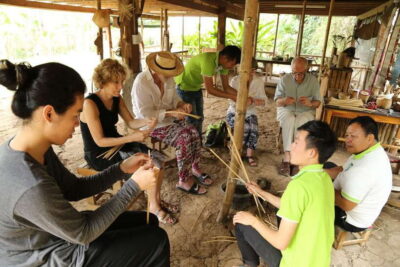
Luang Prabang: Bamboo Weaving Workshop & Cooking Class
Read our review →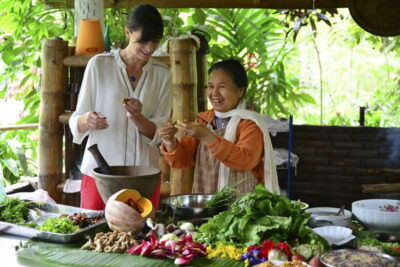
Luang Prabang: Cooking Class at the Former Royal Palace
Read our review →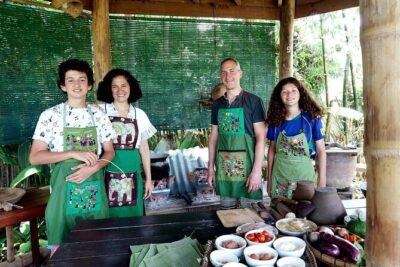
Day-time Bamboo weaving & Cooking Classes join-in
Read our review →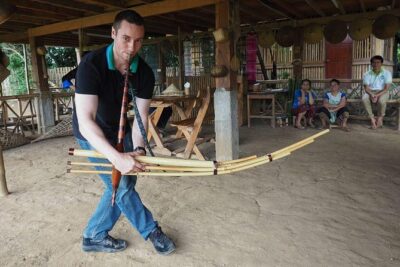
Evening Bamboo weaving & Cooking classes join-in
Read our review →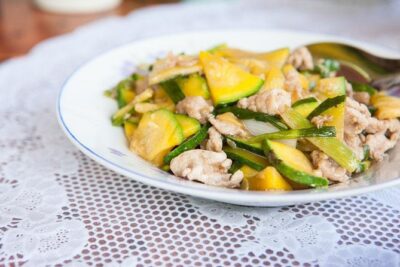
Traditional Market Tour and Private Laotian Cooking Class with a Local
Read our review →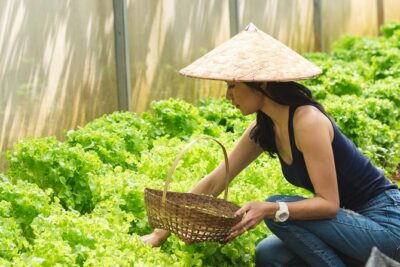

Full Day bamboo experience with cooking class & Kuang si waterfalls
Read our review →Browse the lists this tour appears in