
Reviewed · WEAVING & CRAFT WORKSHOPS
Luang Prabang: Weaving Workshop Half-Day Experience
Slow down and make something by hand. This Luang Prabang workshop offers a close look at Lao textile traditions through a practical lesson with the Weaving Sisters, two local artisans who teach you to use a Katu backstrap loom. I especially like the small group limit of four and the fact that you leave with a handmade item, not just a few photographs.
The workshop also gets high marks for the patience and kindness of its instructors, Doi and Dom. You can choose a project that suits your time and skill, from two bracelets or bookmarks to a belt, camera strap, guitar strap, or bag strap. The main consideration is that weaving is harder than it first appears, so this is a hands-on craft lesson rather than a quick souvenir stop.
In This Review
- Key points to know before booking
- Meeting the Weaving Sisters on Khounkhampheng Road
- How the Katu backstrap loom works
- Choosing the right project for your half-day
- Learning patterns and Lao textile heritage
- The teaching style: patient, friendly, and hands-on
- Snack break and the rhythm of the session
- Is $70 good value?
- Who will enjoy this experience most?
- Practical booking advice for Luang Prabang
- Should you book the Weaving Sisters workshop?
- FAQ
- Where does the Luang Prabang weaving workshop meet?
- How long does the weaving workshop last?
- How much does the workshop cost?
- Do I need previous weaving experience?
- What can I make during the class?
- Is a finished item included?
- Is food included?
- What language is the workshop taught in?
- How many people can join the workshop?
Key points to know before booking
- You work on a Katu backstrap loom: Learn a traditional method that uses your body and feet as part of the weaving process.
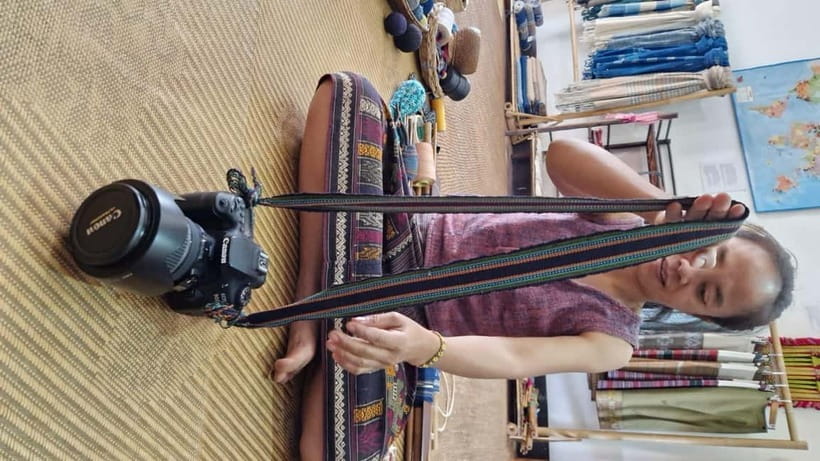
- You make a useful keepsake: Options include bracelets, bookmarks, a mini-wall hanging, headband, belt strap, camera strap, guitar strap, or bag strap.
- The group is limited to four people: That matters when you need help with threads, tension, or the loom.
- Doi and Dom teach in English: Their patient guidance is a major part of the experience.
- A snack is included: Past participants specifically appreciated fresh fruit during the class.
- No weaving experience is needed: Beginners are welcome, though the craft takes concentration and steady practice.
Meeting the Weaving Sisters on Khounkhampheng Road
You meet at The Weaving Sisters on Khounkhampheng Road in Luang Prabang. The address is listed as ຄູນຄຳແພງ, Khounkhampheng Road, Luang Prabang. Since no hotel pickup is included in the information provided, plan to reach the meeting point independently and allow enough time to find it.
The workshop is taught in English by the Weaving Sisters, Doi and Dom. Their role is more than simply showing you which thread goes where. They introduce you to the method, help you correct mistakes, and explain the cultural meaning behind patterns as you work.
That personal contact is what makes this better than buying a finished textile in a shop. A shop can show you beautiful cloth. Here, you get a small look at the skill, patience, and body control needed to produce it.
The group size is limited to four. I see this as one of the strongest features because weaving can become confusing quickly when the threads, loom, and foot position all need attention at once. A large class would make it harder to ask for help. With only a few people, you should have a better chance to receive direct guidance.
More Craft Workshops in Luang Prabang:
- Luang Prabang: Bamboo Weaving Workshop & Cooking Class
★ 5.0 · 96 reviews - Day-time Bamboo weaving & Cooking Classes join-in
★ 5.0 · 38 reviews - Evening Bamboo weaving & Cooking classes join-in
★ 5.0 · 17 reviews
How the Katu backstrap loom works
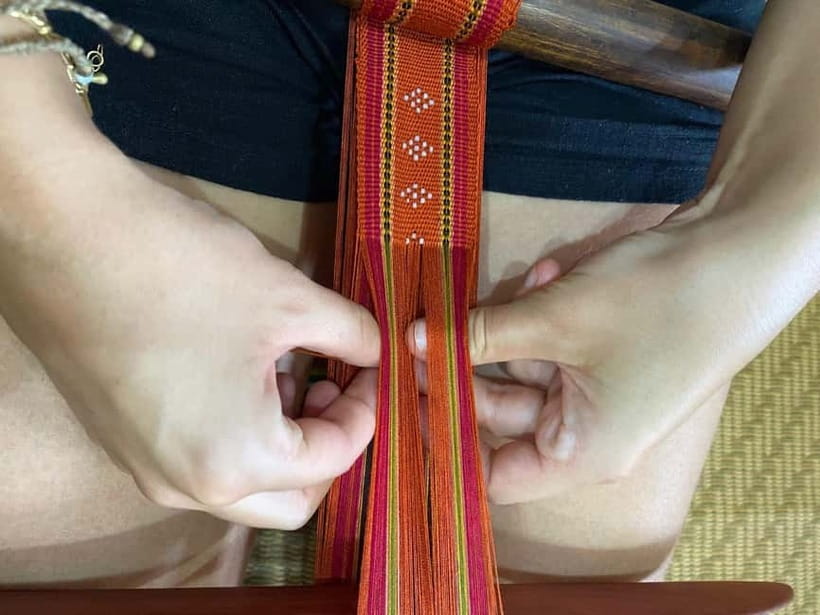
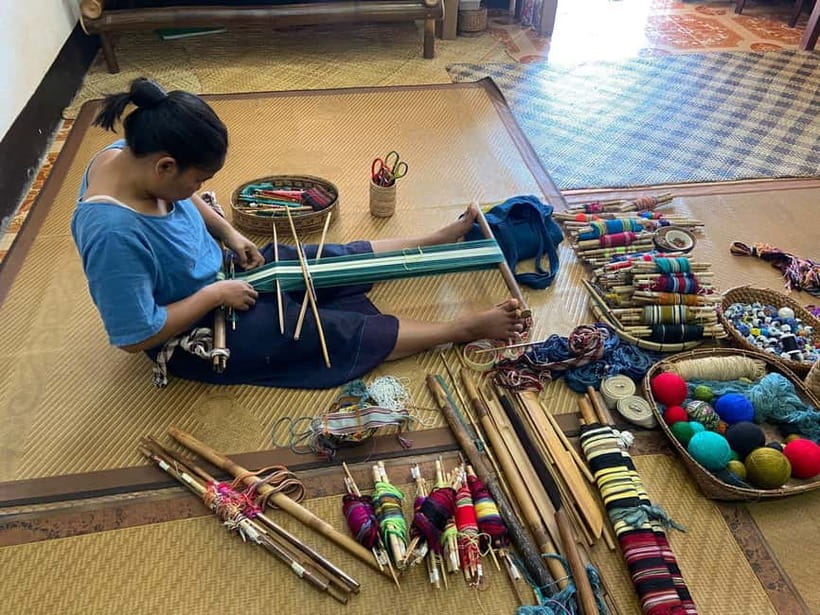
The heart of the class is the Katu backstrap loom. This is not a modern table loom that you operate with a simple forward and backward motion. The setup connects the loom to your body, and your feet also help control the work.
That arrangement gives you a physical sense of how traditional weaving is done. You are not just watching an artisan perform a demonstration. You are learning how posture, tension, rhythm, and hand movement work together.
At first, the process may feel awkward. One participant described it as harder than it looks, which is useful advice to keep in mind. You may need repeated help with the threads or with keeping the pattern even. That is normal here, especially if this is your first time weaving.
The effort is part of the appeal. Once you begin to understand the rhythm, the activity can become calm and focused. One participant described the process as insightful and meditative. I would choose this workshop if you enjoy crafts that reward patience rather than speed.
The lesson also gives you a better respect for finished Lao textiles. A belt or strap may look simple when it is hanging in a shop, but the workshop shows you how much control is needed to produce a neat strip of woven fabric. Even a small finished piece carries the memory of the time you spent making it.
Choosing the right project for your half-day
You can select a project from several options. The available choices include:
- Two bracelets
- Two bookmarks
- A mini-wall hanging
- A headband
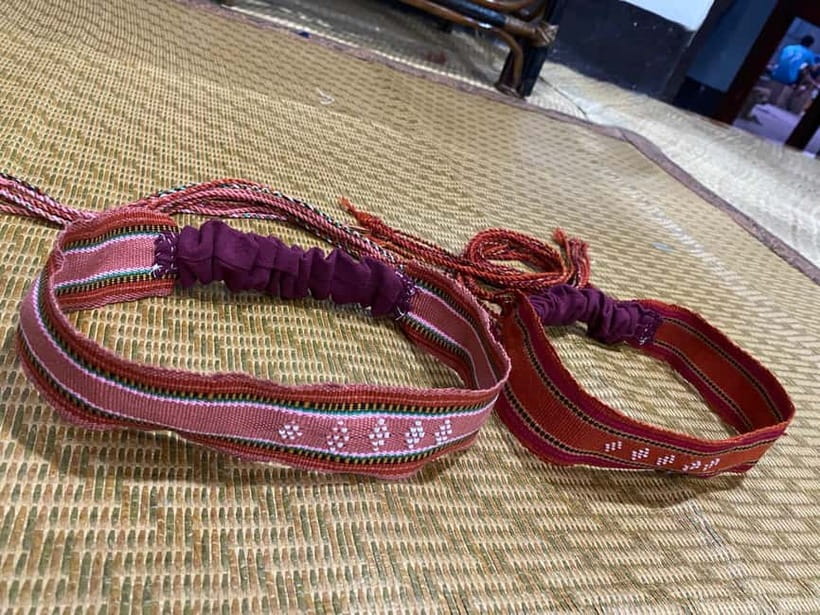
- A traditional belt or belt strap
- A camera strap
- A guitar strap
- A bag strap
The smaller projects are likely the sensible choice if you want an easier introduction or prefer a compact souvenir. Bracelets and bookmarks also make practical gifts, and the option to make two gives you something to keep and something to share.
A mini-wall hanging is a good choice if you want the finished piece to serve as a display item. A headband offers another wearable option without the longer length of a belt or strap.
The camera strap, guitar strap, and bag strap require more material and may suit you if you want something particularly useful after the workshop. The traditional belt or belt strap has a direct connection to Lao dress and textile customs, making it a strong choice if your main interest is local craft.
The exact project you choose may affect how much weaving you complete during the session. The information describes the experience as half a day, but the booking details also label the duration as one day, so check the available start time and current schedule before booking. The important point is that this is a substantial workshop, not a brief ten-minute activity.
You receive one handcrafted piece as part of the experience. One participant reported leaving with two pieces each, but the listed inclusion is one handcrafted piece, so I would treat one finished item as the guaranteed amount. Ask the Weaving Sisters about the current project options if making more than one item is important to you.
Learning patterns and Lao textile heritage
The Weaving Sisters connect the practical lesson to the heritage behind the patterns. This gives the activity more meaning than simply selecting bright thread and producing a souvenir.
The workshop has a specific connection to the Katu people and their weaving traditions. You learn about that culture while handling the loom yourself, which helps the information stick. It is one thing to hear that weaving has cultural value. It is another to struggle with the same basic movements and gain a small sense of the discipline involved.
The session is not presented as a formal museum lecture. Its strength is the combination of explanation and practice. You learn a point about the pattern, then continue working with your hands. That balance should suit you if you prefer active cultural experiences over long spoken presentations.
I also like that the finished object remains tied to the lesson. Each time you use the strap, wear the headband, or see the wall hanging, you have a reminder of the people who taught you and the technique you tried. It is a more personal souvenir than a mass-produced item.
Still, you should keep your expectations realistic. A beginner’s piece may not look perfectly even. The value is in learning the method and creating something yourself, not in producing a flawless textile on your first attempt.
More tours and river days worth a look
- Luang Prabang: Evening Cooking Class & Local Baci Ceremony
★ 4.9 · 151 reviews - Luang Prabang: Cooking Class at the Former Royal Palace
★ 4.9 · 51 reviews - Luang Prabang: Hmong Batik Art Workshop
★ 5.0 · 27 reviews - Tribal Cooking Class in Luang Prabang Forest and visit
★ 5.0 · 15 reviews
The teaching style: patient, friendly, and hands-on
The strongest praise for this activity centers on the instructors. Doi and Dom are described as patient, kind, sweet, and helpful. Those qualities matter because a backstrap loom can feel confusing when you first sit down.
You should expect to receive help whenever you need it. One participant specifically appreciated support with the technique as well as fresh fruit during the session. Another praised the instructors’ English, which should make it easier to ask questions and follow explanations.
The English instruction is useful for both the craft and the cultural context. You can ask why a pattern is used, how the loom is arranged, or what a particular item represents. The provided information does not promise a full historical lecture, so think of this as an informal conversation with local artisans rather than a museum-style guided tour.
The small group also makes the teaching feel more personal. With a maximum of four people, the sisters can watch your progress and step in when your tension slips or your movements need adjustment. I would value that more here than in many larger craft classes, because a small mistake can affect the next several rows.
Snack break and the rhythm of the session
A snack is included, and fresh fruit has been provided during the workshop. This is a modest detail, but it fits the slower pace of the activity. You are spending several hours concentrating on a physical skill, so a break gives you a chance to relax and talk with the instructors.
Do not book this expecting a packed schedule of several attractions. The workshop itself is the main event. You spend the session learning, weaving, asking questions, and gradually building your chosen item.
That makes it a good change of pace in Luang Prabang. After temples, markets, and sightseeing, sitting down to work with thread can feel refreshingly simple. It also gives you time to focus on one place and one skill rather than moving from stop to stop.
The exact starting times depend on availability. Since the information does not provide a fixed daily schedule, check the date and start time when you reserve. This is especially important if you are fitting the class around other activities in Luang Prabang.
Is $70 good value?
At $70 per person, this is not the cheapest way to buy a Lao textile. If your only goal is to take home a strap or bracelet, you can likely find finished crafts elsewhere for less.
The price makes more sense when you count the instruction, materials, snack, small group, and finished piece together. You are paying for time with two artisans, the chance to use a traditional loom, and the guided process of making something yourself. That is a different product from a ready-made souvenir.
The group limit of four adds value. A larger class could offer a lower price, but you might receive less direct help. Here, the instructors can spend more time correcting your technique and answering questions.
The included materials also simplify the experience. You do not need to buy thread, prepare a loom, or know which tools to bring. You arrive as a beginner and work toward a finished item with guidance.
I would recommend the workshop at this price if you care about local craft, enjoy learning by doing, or want a souvenir with a personal story. I would skip it if you are mainly seeking a cheap purchase, a quick activity, or a polished handmade product made by an expert.
Who will enjoy this experience most?
This workshop suits first-time weavers as well as craft enthusiasts. You do not need prior experience, and the instructors are prepared to guide beginners through the process.
I would particularly suggest it for:
- Couples who want a shared activity, since you can work side by side in a very small group
- Solo visitors who enjoy meeting local artisans
- People interested in textiles, design, and traditional crafts
- Families with older participants who can manage the physical setup
- Anyone looking for a quieter cultural activity in Luang Prabang
- Visitors who prefer making a souvenir rather than buying one
It may not suit anyone who needs wheelchair access, since the experience is not suitable for wheelchair users. It is also not suitable for people over 75 years old. The activity involves a body-connected loom and footwork, so the physical setup is an important consideration.
If you have limited patience for careful, repetitive work, you may find the class slow. The craft demands attention, and mistakes are part of the process. If you enjoy the satisfaction of gradually improving, that same quality will likely be the reason you remember it.
Practical booking advice for Luang Prabang
You can cancel up to 24 hours before the activity for a full refund. A reserve-now, pay-later option is also available, which helps if your Luang Prabang schedule is still changing.
The experience is listed at The Weaving Sisters on Khounkhampheng Road. Transportation is not listed as included, so do not assume a transfer from your hotel. The instructor language is English, and the class is limited to four participants.
Bring a willingness to learn rather than a demand for perfection. Wear something that allows you to sit and work comfortably, although specific clothing guidance is not provided. Since the exact start times vary, confirm your chosen time before finalizing the rest of your day.
The snack is included, but the information does not describe dietary choices. If you have food restrictions, ask ahead rather than assuming the snack will meet your needs.
Should you book the Weaving Sisters workshop?
I would book this if you want a personal connection to Lao craft and like the idea of leaving Luang Prabang with something made by your own hands. The small group, English-speaking instructors, and patient help from Doi and Dom give beginners a fair chance to enjoy the process.
The best reason to go is not the finished belt, bracelet, or strap alone. It is the chance to feel how a Katu backstrap loom works, learn why patterns matter, and spend a half-day focused on a traditional skill.
Skip it if you want a fast, effortless souvenir or if the physical setup is unsuitable for you. For everyone else, $70 is a fair price for instruction, materials, a snack, and a handmade piece with a story attached.
FAQ
Where does the Luang Prabang weaving workshop meet?
The meeting point is The Weaving Sisters on Khounkhampheng Road, Luang Prabang. The address is also provided in Lao as ຄູນຄຳແພງ.
How long does the weaving workshop last?
The experience is described as a half-day workshop. The booking information also labels the duration as one day, so check the available starting time and schedule for your chosen date.
How much does the workshop cost?
The price is $70 per person.
Do I need previous weaving experience?
No. The workshop is suitable for beginners, and no prior weaving experience is required.
What can I make during the class?
You can choose from options including two bracelets, two bookmarks, a mini-wall hanging, a headband, a traditional belt or belt strap, a camera strap, a guitar strap, or a bag strap.
Is a finished item included?
Yes. The experience includes one handcrafted piece, along with all materials needed for weaving.
Is food included?
Yes. A snack is included. Fresh fruit has also been provided during the workshop.
What language is the workshop taught in?
The instructor language is English. Doi and Dom are described as speaking very good English.
How many people can join the workshop?
The workshop is a small-group experience limited to four participants.
Just added around Luang Prabang
- A Relaxing Day at the Kuang Si Falls★ 4.5 · 3 reviews
- Luang Prabang Night-time Explorer★ 3.5 · 3 reviews
- Private Luang Prabang City Tour★ 5.0 · 3 reviews
- Luangprabang: Dinner with Lao Traditional Dance Performance★ 4.0 · 3 reviews
- Sunset Cruise in Luang Prabang with Live Performance★ 4.5 · 3 reviews
- Luang Prabang Private Full-Day Tour and Lunch★ 4.7 · 3 reviews
- Luang Prabang: Local Village & Kuang Si Falls Private Tour★ 4.9 · 3 reviews
- Luang Prabang: Mekong River Cooking Class with Hotel Pickup★ 5.0 · 3 reviews
Weaving & Craft Workshops, compared.
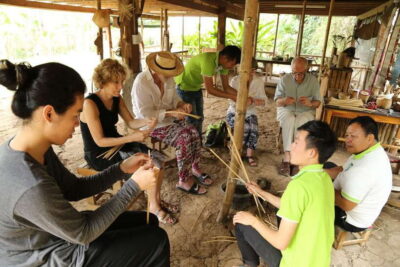
Luang Prabang: Bamboo Weaving Workshop & Cooking Class
Read our review →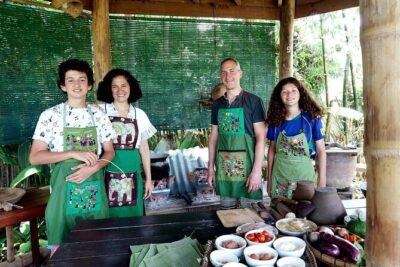
Day-time Bamboo weaving & Cooking Classes join-in
Read our review →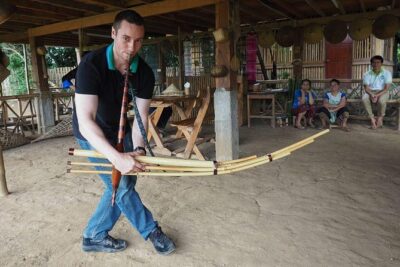
Evening Bamboo weaving & Cooking classes join-in
Read our review →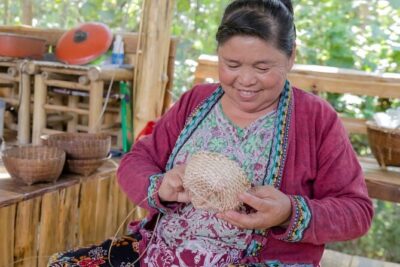
Browse the lists this tour appears in