
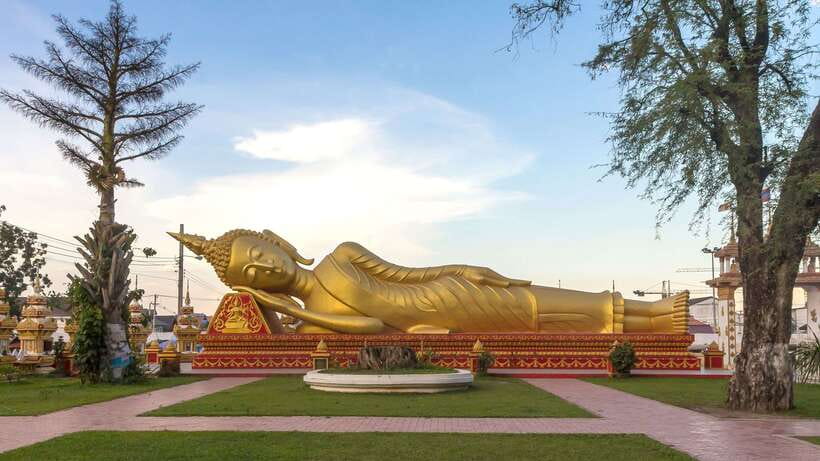
Reviewed · EVENING EXPERIENCES
Vientiane: Private Full-day Must-See Sights & Sunset Tour
Vientiane takes its time. This eight-hour private outing works well because it pairs the capital’s major sights with the city’s easygoing pace, from Wat Sisaket’s thousands of Buddha images to an orange Mekong sunset. I especially like the private format and the way the day covers both important monuments and ordinary city streets. The hotel pickup, admissions, transport, water, and cool towel also keep the day simple.
The main consideration is communication. One Finnish customer found the guide’s English difficult to follow at times, although another American customer praised the guide’s excellent English and detailed explanations. Guide quality may vary, so this is best for you if you value a private car and a flexible-feeling day more than a perfectly uniform guiding style.
The route gives you a useful first look at Vientiane without making the capital feel like a checklist. You see temples, a monument, a market, and the Mekong, with lunch in the middle and a sunset finish.
In This Review
- Key details at a glance
- Why this is a useful first day in Vientiane
- Wat Sisaket and its 6,800 Buddha icons
- Wat Prakeo and the story of the Emerald Buddha
- Patuxay, Vientiane’s Arc de Triomphe
- Lunch and Vientiane’s slower streets
- Talad Sao, where the old market meets the mall
- Sunset beside the Mekong River
- What the $149 price includes
- Guide quality and the private format
- Timing, comfort, and practical planning
- Who should book this Vientiane day tour?
- Should you book it?
- FAQ
- How long does the Vientiane tour last?
- What language does the guide speak?
- Is hotel pickup included?
- Which temple does the tour visit first?
- How many Buddha icons are at Wat Sisaket?
- What is Wat Prakeo used for today?
- What is Patuxay?
- Does the tour visit Talad Sao Market?
- Is lunch included in the price?
- What is included besides the guide and transport?
- Can I cancel for a full refund?
- Can I reserve now and pay later?
Key details at a glance
- Wat Sisaket holds more than 6,800 Buddha icons: Its cloister wall is the visual heart of the morning, with figures in many sizes gathered around the temple.
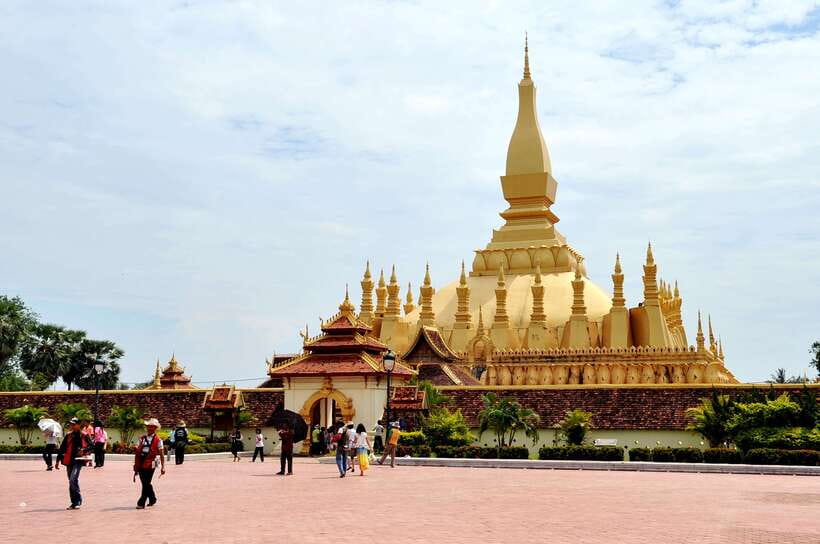
- Wat Prakeo connects Vientiane with royal and religious history: The former home of the Emerald Buddha now functions as a museum.
- Patuxay explains Laos’ road to independence: The monument is often compared with Paris’ Arc de Triomphe, but its meaning is distinctly Lao.
- Talad Sao combines old and new shopping: You can move between a modern mall and the original market area.
- The Mekong provides a calm final stop: Sunset is the day’s closing scene, with the water turning orange near the horizon.
- The private price is $149 per person: That includes an English-speaking guide, transport, hotel pickup and drop-off, admissions, permits, water, and a cool towel.
Why this is a useful first day in Vientiane
Vientiane is not a city you need to attack at full speed. Its appeal is the contrast between important national monuments and quiet stretches of urban life. This tour understands that rhythm. You move from a temple filled with Buddha images to a monument about national identity, then slow down for lunch, local streets, shopping, and the river.
I like the variety. Some city tours give you only temples, while others rush through a market and call the job done. Here, each stop offers a different way to understand the capital. Wat Sisaket shows religious practice and craftsmanship. Wat Prakeo brings in royal history. Patuxay gives you a national symbol. Talad Sao shows daily commerce. The Mekong closes the day with scenery rather than another building.
Because the outing is private, you can ask questions as you go. That matters in Vientiane, where a guide’s explanation can make the difference between seeing an old structure and understanding why it matters. The guide is listed as English-speaking, and one highly positive account singled out the guide’s cultural explanations, site stories, lunch help, and steady supply of water.
The eight-hour length is also practical. You have enough time for the core sights without turning the day into a frantic race. Still, eight hours is a full day, and temple visits plus a market walk can feel tiring in the heat. The included water and cool towel are small but welcome touches.
More tours and river days worth a look
- Luang Prabang: Afternoon Kuang Si Waterfalls & Sunset Cruise
★ 4.6 · 158 reviews - Luang Prabang: Evening Cooking Class & Local Baci Ceremony
★ 4.9 · 151 reviews - Luang Prabang Evening Food Tour by Tuk-Tuk
★ 4.5 · 68 reviews
Wat Sisaket and its 6,800 Buddha icons
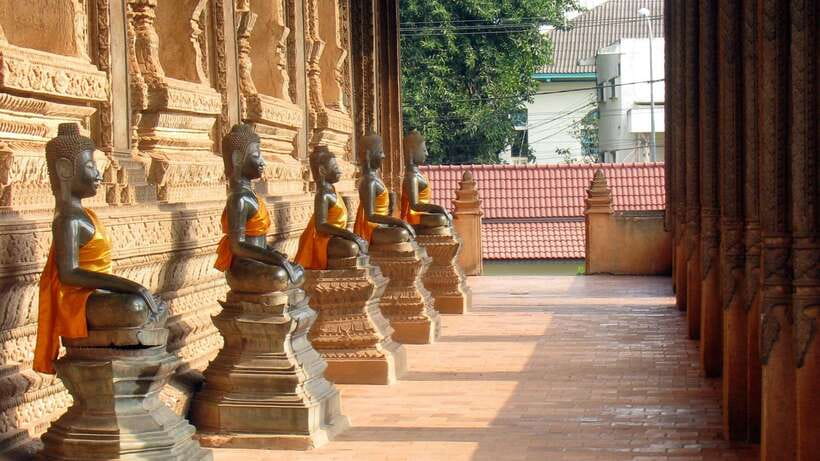
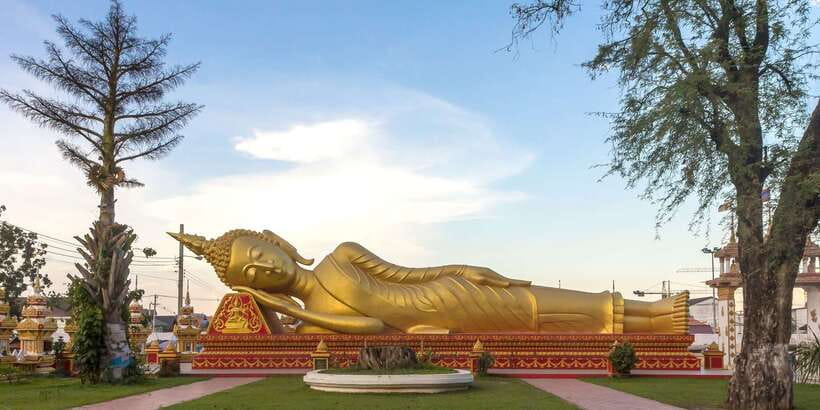
Your morning begins at Wat Sisaket, described as Vientiane’s oldest surviving Buddhist temple. The main draw is its cloister wall, which holds more than 6,800 Buddha icons of different sizes.
That number gives you a sense of what makes the site special. Instead of seeing one large statue and moving on, you encounter row after row of small and medium figures. The effect is more intimate than grand. Look closely at the arrangement and give yourself time to notice how many forms are gathered in one place.
This is also a useful stop for seeing the temple as a living religious setting. You may see local people praying in the morning. That moment can tell you more about daily practice than a long lecture. Your guide can help explain what you are seeing, but you should also leave room for quiet observation.
I would begin the day here with an open schedule in your head. The temple rewards attention, not speed. If you are interested in Buddhist art, this will probably be your favorite stop. If you prefer large monuments and dramatic viewpoints, it may feel more subdued, but that calm is part of the appeal.
Dress and behavior still matter at a working temple. The supplied information does not specify a dress code, so confirm local expectations with your guide before entering. As a general practical point, modest clothing and respectful conduct are sensible at religious sites.
Wat Prakeo and the story of the Emerald Buddha
Next comes Wat Prakeo, a former temple connected with the Emerald Buddha. It now functions as a museum, which changes the experience from active worship to a more historical presentation.
The site helps place Vientiane within the wider story of mainland Southeast Asia. The Emerald Buddha is no longer held here, but the building’s former role gives the stop particular weight. You are not simply looking at another ornate temple. You are seeing a place once associated with one of the region’s best-known religious images.
This is where a good guide can add real value. The available information says the tour explains the complex history of Laos, and one customer specifically praised the guide for sharing stories and cultural information at the sites. Ask questions if you want more context about the temple’s former function, the museum displays, or the movement of important religious objects.
Do not expect Wat Prakeo to feel identical to Wat Sisaket. The two stops work best together. Wat Sisaket offers the strongest visual display of Buddha icons, while Wat Prakeo gives you a different window into royal and religious power.
Patuxay, Vientiane’s Arc de Triomphe
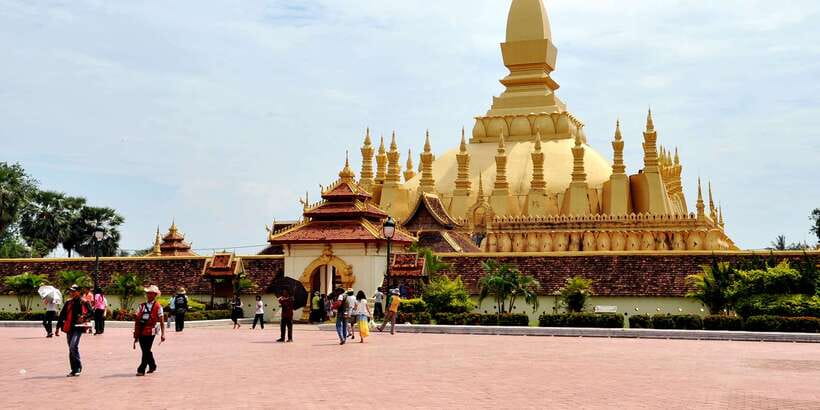
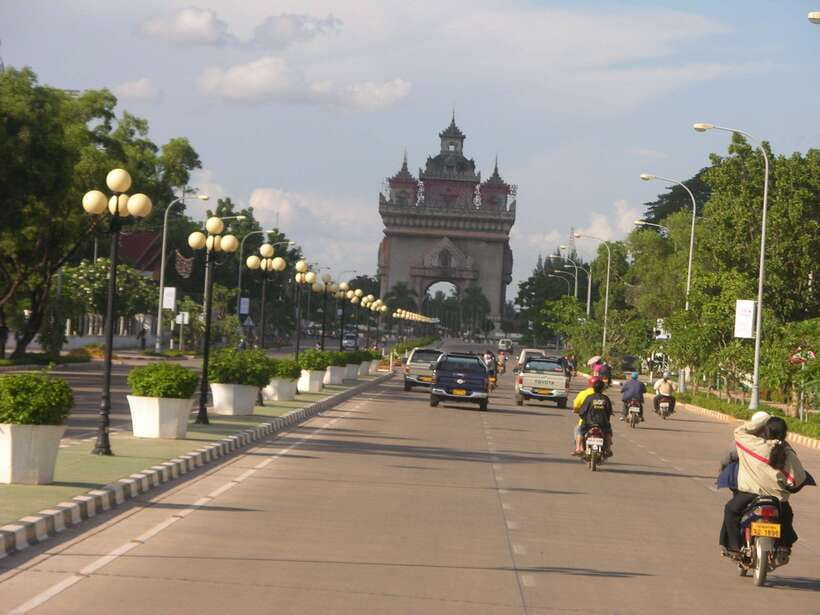
Patuxay is the most obvious landmark on the route. It is often called Vientiane’s own Arc de Triomphe because of its broad form and monumental purpose, but the comparison only goes so far.
The monument is tied to Laos’ resilience and independence. That makes it more than a photo stop. Your guide can explain the symbolism and help connect the structure to the country’s difficult path through modern history. The supplied details describe Laos’ past as complex, and Patuxay is the place where that complexity comes into view most clearly.
I like this stop because it balances the temple visits. After looking at religious architecture, you shift to a national monument that speaks about identity and independence. It also gives you a simple visual marker for understanding Vientiane: the capital is quiet in tone, but its public symbols carry serious meaning.
The drawback is that the experience depends heavily on explanation. From a distance, Patuxay can seem like a familiar monumental arch. Without context, you might take a few photographs and miss the point. Stay with the guide’s story here rather than treating it as a quick roadside pause.
A different idea for your next Laos day:
- Vientiane Cultural Tour with Private Guide
★ 5.0 · 80 reviews - Vientiane: Cultural Tour with Buddha Park and Patuxay
★ 4.6 · 74 reviews - Vientiane: Half-Day City Tour with Patuxai and Buddha Park
★ 4.5 · 57 reviews - Vientiane Cuisine & Culture: The Hungry Tuk Tuk
★ 4.5 · 53 reviews
Lunch and Vientiane’s slower streets
Lunch comes after the morning’s main sights. It is not included as a stated cost, so plan to cover your own meal. One customer praised the guide for ordering a fantastic lunch, which suggests that the guide may help you choose or arrange food, but you should treat the meal itself as a personal expense.
This break matters. Vientiane’s relaxed character is easier to appreciate when you are not racing from one admission gate to the next. A private day also gives you a chance to tell the guide what you want from lunch, within the limits of the tour’s schedule.
Afterward, you walk through the city’s laid-back streets and pass several attractive temples before reaching Talad Sao. The supplied details do not name each temple, so do not expect a fixed list of minor stops. Think of this section as a chance to see the capital between major sights.
I enjoy this kind of transition. It lets you notice the city at street level, where the experience is less about one famous building and more about how the center feels. The pace is described as easygoing, which suits Vientiane. You are given time to absorb the change from formal sightseeing to ordinary movement through town.
Walking can also be the most tiring part of a full day, especially after a morning of temple visits. Comfortable shoes and a willingness to move at a moderate pace will help. Since this is a private tour, you can raise timing concerns with your guide rather than being locked into a large group’s rhythm.
Talad Sao, where the old market meets the mall
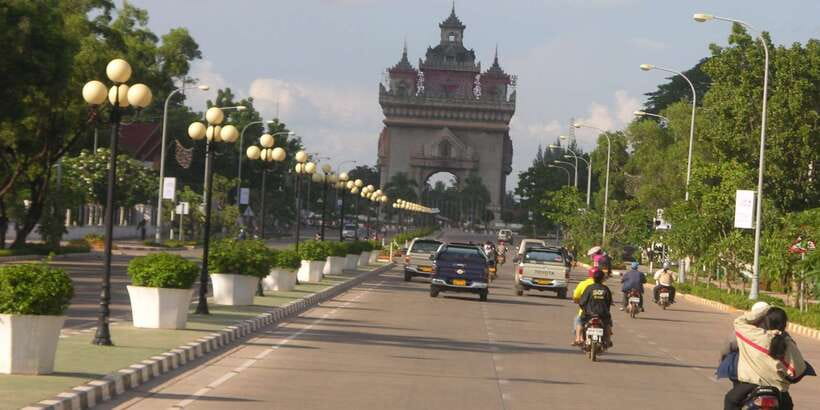
Talad Sao is Vientiane’s central market and has two distinct sections: a modern shopping mall and the original market area. That split makes it more interesting than a single-purpose shopping stop.
The modern section offers a more orderly retail setting. The original market is the place to browse a wider mix of goods and get a better feel for local trade. The information provided does not specify exact products, prices, or shopping rules, so go with curiosity rather than a fixed shopping list.
This is a good place to compare the capital’s different sides. The temples show older religious traditions. Patuxay represents national memory. Talad Sao brings you into present-day commerce, where the city is practical and busy with everyday buying and selling.
You should keep personal expenses in mind here. The tour covers admissions and travel permits, but purchases are yours to pay for. If you find something worth buying, ask the guide about prices or local customs before committing. The private format makes those small questions easier to handle.
The market may not be the highlight for you if you dislike shopping or prefer carefully interpreted historic sites. It is still useful as a change of pace, especially after several monuments. You can browse without needing to turn the stop into a major buying mission.
Sunset beside the Mekong River
The day finishes at the Mekong River, where the sunset is expected to paint the water orange as the sun drops below the horizon. This is a smart ending. After a full day of temples, museums, monuments, walking, and shopping, the river gives you time to slow down.
Sunset conditions are never guaranteed. Weather and timing affect the view, and the provided details do not promise a specific riverfront venue or exact sunset hour. Still, the final stop is built around one of Vientiane’s most appealing natural scenes.
I like that the tour does not finish at the last museum. You get a visual ending and a moment to think back over the day. The Mekong is not just a pretty backdrop here. It gives the capital a sense of space after the tighter streets and buildings of the city center.
Bring a little patience. The sunset may develop gradually rather than arrive as an instant burst of color. This is the time to put away the camera for a few minutes and simply watch the river.
What the $149 price includes
At $149 per person, this is not the cheapest way to see Vientiane. The value depends on how much you appreciate private transport, a dedicated guide, and a full day arranged around your hotel.
The price includes:
- Hotel pickup and drop-off in Vientiane
- An English-speaking guide
- Transport during the day
- Admissions and travel permits
- A bottle of water
- A cool towel
Lunch and personal purchases are not included. That distinction is important when setting your budget. You should also provide the exact hotel pickup location when booking, since pickup is included only from a hotel in Vientiane.
For a solo visitor, $149 may feel high. For two or more people sharing a private experience, the price can make more sense because the cost is listed per person but the format is private. You are paying for convenience and individual attention, not only for entry to the sights.
The strongest value comes from the coverage. In one day, you see the city’s oldest surviving Buddhist temple, a former temple museum, the Patuxay Monument, several city temples, Talad Sao, and the Mekong at sunset. If you were already planning to arrange transport and separate admissions yourself, compare the total cost and effort before deciding.
Guide quality and the private format
The English-speaking guide is central to the day. One customer praised excellent English, detailed site stories, cultural explanations, lunch assistance, and regular water. Another found the guide’s English hard to understand at times. That difference is worth taking seriously.
It does not mean the experience will be poor. It means you should ask questions, request clarification when needed, and avoid pretending to understand a point if you do not. A private setting gives you a better chance to do that without slowing down a whole group.
A guide named Pat received especially strong praise for being professional and extremely well informed. If you can request Pat, it may be worth asking, though the available details do not confirm that guide assignments can be guaranteed.
The private format is especially useful for couples, families, and small groups who want to move at their own pace. It also helps if you have limited time in Vientiane and want the main sights handled in one day. If you prefer meeting a large mix of people or keeping costs as low as possible, a private tour may not be the right fit.
Timing, comfort, and practical planning
The experience lasts eight hours, with morning pickup and a sunset finish. Starting times depend on availability, so check before you book. Because the final view is tied to sunset, the timing of the day matters more than it would on a standard morning sightseeing trip.
Hotel pickup and drop-off remove one of the main hassles of visiting several sites. You do not need to work out separate rides between the temples, monument, market, and river. Transport permits and admissions are also handled within the price.
The water and cool towel are useful in a warm city, but they do not replace sensible preparation. Wear comfortable clothing and shoes for temple visits and walking. Keep some money aside for lunch and personal expenses, especially at Talad Sao.
The cancellation terms are friendly: you can cancel up to 24 hours ahead for a full refund. You can also reserve now and pay later, which helps if your Vientiane plans are still changing.
Who should book this Vientiane day tour?
I would choose this tour if you want a broad introduction to Vientiane in one organized day. It suits you especially well if you value history, temples, a little shopping, private transport, and a scenic end.
It is also a good fit for a first visit. The route gives you enough background to decide which parts of the capital deserve a slower return visit. You will see the major religious and national symbols without giving up the chance to walk through ordinary streets.
Families and couples may appreciate the private setup. So may anyone who wants to ask many questions or adjust the pace. The tour also works well for a short stay, since it gathers the city’s key sights into eight hours.
I would hesitate if your main goal is food, nightlife, or a long shopping session. Talad Sao is included, but it is only one part of the day. I would also think twice if you dislike full-day tours or need guaranteed guide fluency. The guide’s English appears to be excellent in some cases and less easy to understand in another.
Should you book it?
Book this tour if you want Vientiane’s main sights explained and connected in one private day, with the convenience of hotel pickup and a Mekong sunset at the end. The strongest parts are the 6,800-plus Buddha icons at Wat Sisaket, Patuxay’s national meaning, and the balanced mix of temples, streets, market, and river.
At $149 per person, it offers fair value for people who want a dedicated guide and included transport, admissions, water, and permits. Before confirming, check the starting time, budget separately for lunch and purchases, and ask whether Pat is available if that matters to you. If those points suit your plans, this is a practical and appealing introduction to Laos’ relaxed capital.
FAQ
How long does the Vientiane tour last?
The tour lasts eight hours.
What language does the guide speak?
The live guide speaks English.
Is hotel pickup included?
Yes. Pickup and drop-off are included from a hotel in Vientiane. You need to provide the pickup location.
Which temple does the tour visit first?
The morning begins at Wat Sisaket, described as Vientiane’s oldest surviving Buddhist temple.
How many Buddha icons are at Wat Sisaket?
The cloister wall houses more than 6,800 Buddha icons in different sizes.
What is Wat Prakeo used for today?
Wat Prakeo once held the Emerald Buddha and now functions as a museum.
What is Patuxay?
Patuxay is a monument associated with Laos’ resilience and independence. It is often compared with the Arc de Triomphe in Paris.
Does the tour visit Talad Sao Market?
Yes. Talad Sao includes a modern shopping mall and the original market area.
Is lunch included in the price?
No. Personal expenses are not included, so lunch is not covered by the stated tour inclusions.
What is included besides the guide and transport?
The price includes admissions, travel permits, a bottle of water, a cool towel, hotel pickup, and hotel drop-off.
Can I cancel for a full refund?
Yes. You can cancel up to 24 hours in advance for a full refund.
Can I reserve now and pay later?
Yes. The tour allows you to reserve your place and pay later.
Just added around Vientiane
- Vientiane: Lao Cultural Attire Rental Experience★ 5.0 · 3 reviews
- Vientiane Private Lao Cooking Class with Market Tour★ 4.0 · 3 reviews
- Vientiane Day Trip By Bike To Tad Moon Waterfall★ 4.5 · 3 reviews
- Vientiane: Half-Day City Tour – Morning or Afternoon★ 4.0 · 3 reviews
- Vientiane: Art, Culture, & Inspiration Guided Day Tour★ 5.0 · 3 reviews
- Vientiane Private Walking Tour With A Guide (Private Tour)★ 4.5 · 3 reviews
- Private Tour Vientiane – VangVieng by Express Train★ 5.0 · 4 reviews
- Half Day Exploring the Charms of Vientiane and hotel pickup★ 4.9 · 4 reviews
Evening Experiences, compared.
Luang Prabang: Afternoon Kuang Si Waterfalls & Sunset Cruise
Read our review →
Luang Prabang: Evening Cooking Class & Local Baci Ceremony
Read our review →
Luang Prabang: Mekong Sunset Cruise & Lao Tasting Dinner
Read our review →
From Chiang Rai : 2 Day 1 Night Slow Boat to Luang Prabang
Read our review →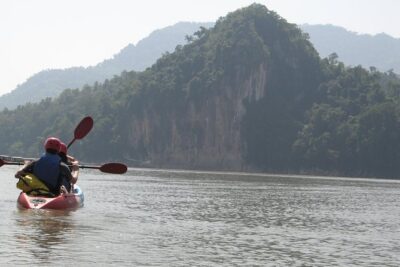
Full day / Half Day Kayaking and Pak Ou Caves with optional sunset cruise
Read our review →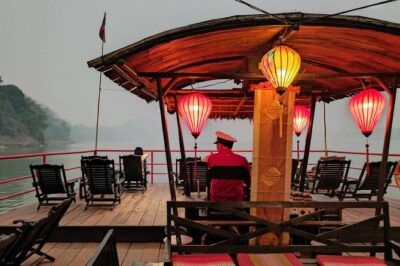
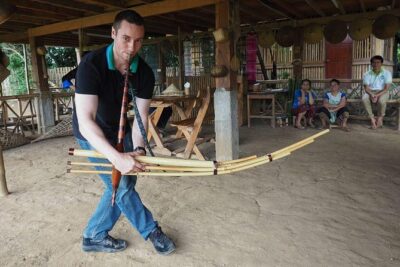
Evening Bamboo weaving & Cooking classes join-in
Read our review →Browse the lists this tour appears in