Reviewed · PRIVATE
Plain of jars private tour
The jars are only part of the story. This private day tour from Phonsavan connects the three main Plain of Jars sites with a recycled-war-metal spoon village and the ruins of Muang Khoun, giving you a wider view of Xiangkhouang Province than a quick visit to Site 1 alone. I like the sensible route, which saves the largest jar site for later, and I like having an English or Thai-speaking guide to explain the archaeology and answer questions about local life.
I also like that the $110 per person price covers an air-conditioned vehicle, lunch, entrance fees, tax, and a private group. That makes the cost easier to justify, especially if you value your own pace. The main consideration is the spoon village. It is an unusual stop, but the products are made by recycling war material, so you may find the subject more sobering than charming.
The guide meets you at your Phonsavan hotel at 8:30 AM. From there, you spend the day on rural roads and short walks through rice fields and open hilltop sites. The schedule is full, but it gives you a useful mix of archaeology, local industry, old religious buildings, and countryside views.
In This Review
- Five details that shape the day
- Why the Plain of Jars deserves a full day
- Ban Naphia and the difficult story behind the spoons
- Site 3: rice fields before the jars
- Site 2 near Ban Nakho and the Phousalato views
- A local lunch and the value of a private vehicle
- Muang Khoun: ruins between the jar fields
- Site 1, the largest field with 334 jars
- Wat Hai Heen and the return to Phonsavan
- Is $110 per person fair?
- Who will like this tour most?
- Final decision: book or skip?
- FAQ
- Where does the Plain of Jars private tour begin and end?
- How long does the tour last?
- Which Plain of Jars sites are included?
- Is lunch included?
- Are entrance fees included in the price?
- What languages does the guide speak?
Five details that shape the day
- Three jar sites in one day: You visit Site 3, Site 2, and Site 1, each with a different setting and feel.
- Site 1 has 334 jars: This is the largest and most famous stop, best saved for the afternoon.
- Ban Naphia makes 1,000 spoons daily: The village turns recycled war material into household goods for local markets.
- Site 3 includes a rice-field walk: Your guide explains rice planting as you walk toward the jars.
- Muang Khoun adds wartime and royal-era context: Wat Phia Wat and That Foun show what remains of the former provincial capital.
- The private format keeps the day flexible: You travel in an air-conditioned vehicle with your own group, rather than following a large coach party.
Why the Plain of Jars deserves a full day
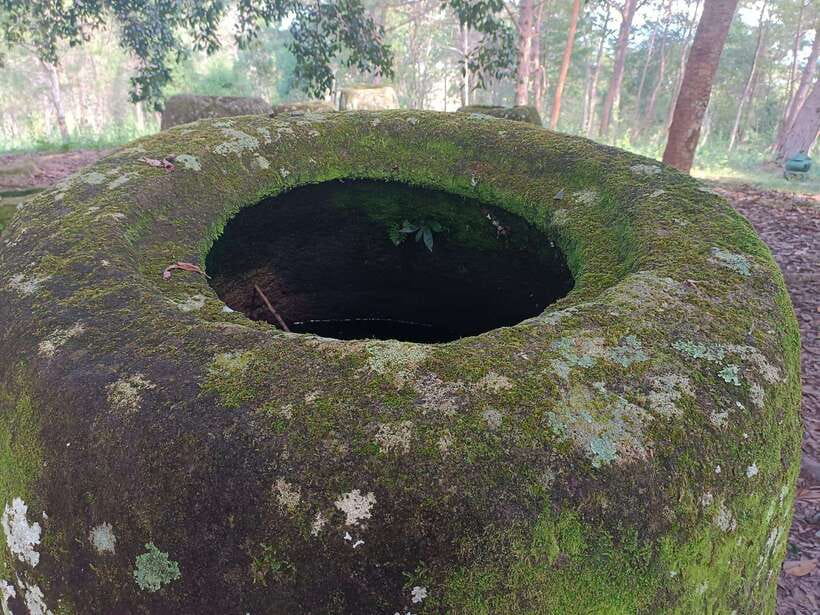
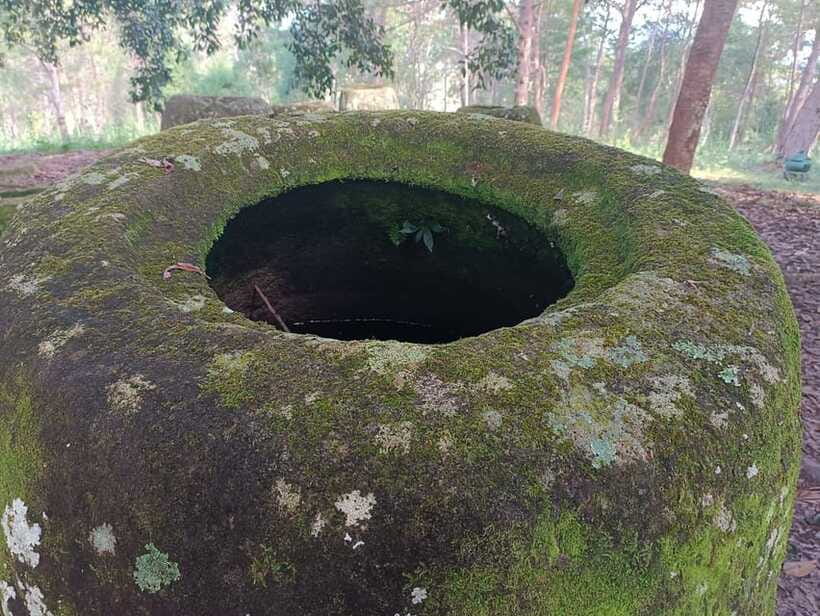
The Plain of Jars is the largest archaeological site in Laos, spread across Xiangkhouang Province rather than gathered in one compact location. More than 1,000 stone jars are scattered across the wider area, with the main public sites separated by roads and countryside.
That geography matters. You are not simply walking into one field, taking a few photographs, and leaving. Each site has a different setting, and the journey between them helps you understand how spread out the area is. I find that useful because the jars can seem mysterious in isolation. Seeing three groups, plus the surrounding villages and former capital, gives the day more shape.
This is also a tour where a guide adds real value. The guide speaks English or Thai and explains the archaeological setting, local customs, rice planting, and questions about the country and its people. The guide’s willingness to discuss subjects beyond the jars is especially useful during the drives, when the road time becomes part of the experience.
The day is private, but the supplied information does not give a maximum group size. You should confirm the number of people in your booking if that matters to you. Private travel usually makes it easier to pause for questions and keep the pace comfortable, but the tour still follows a fairly tight timetable.
More Plain of Jars tours:
- Plain of jars tour with local guide
★ 4.5 · 8 reviews - Plain of jars share group tour
★ 5.0 · 4 reviews - 3 Days The Plain of Jars and Xieng Khouan (Depart from Luang Prabang)
★ 5.0 · 3 reviews
Ban Naphia and the difficult story behind the spoons
Your first major stop is Ban Naphia, a village known for spoon making. Families produce about 1,000 spoons each day and sell them at local markets. The craft gives you a direct look at a small village economy, with household production connected to everyday trade.
The unusual part is the raw material. The spoons are made by recycling war material. That adds a serious layer to what might otherwise be a simple handicraft stop. You can look at the work as practical reuse, but it also points to the long shadow left by conflict in Xiangkhouang Province.
I would approach this stop with curiosity rather than treating it as a standard shopping break. You can buy handicrafts if you wish, but personal purchases are not included in the tour price. Soft drinks are also extra, so carry some local currency for small expenses.
The village visit lasts about an hour. That is enough time for a guided look without taking over the day. If your main reason for coming is the archaeological site, this will probably be the least essential stop. If you want to understand how local families turn difficult material into useful goods, it becomes a thoughtful addition.
Site 3: rice fields before the jars
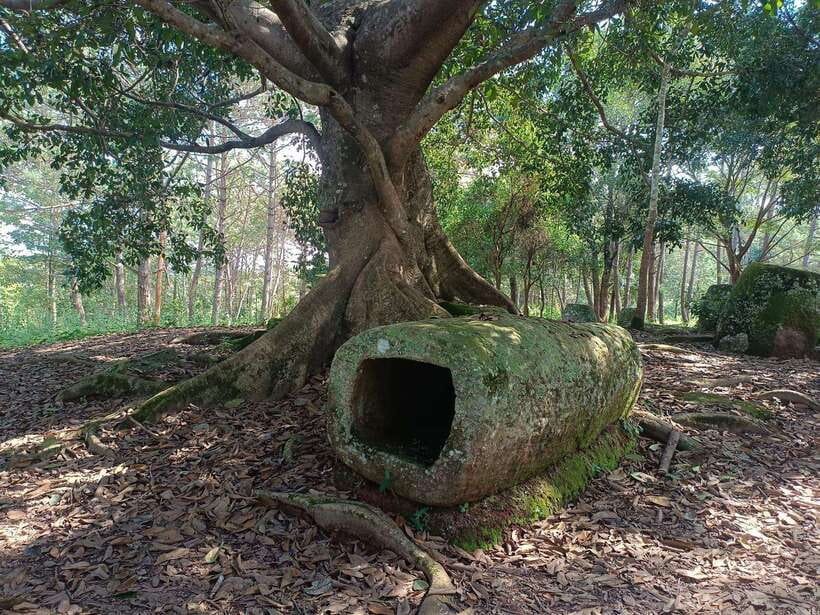
At about 10:00 AM, you reach Plain of Jars Site 3 near Ban Xieng Di. The drive from Ban Naphia takes about 10 minutes, followed by a walk through rice fields toward the jar area.
This is one of the most appealing parts of the route because the approach matters. You are not dropped beside the stones and sent straight to a viewing area. Instead, the guide explains rice planting as you walk, linking the archaeological site with the farming life around it.
The guided visit lasts about an hour. The rice-field walk also means you should wear shoes suited to uneven ground. The supplied details do not specify the walking distance or trail surface, so you should not assume it is a paved path throughout.
Site 3 works well early in the day. You have enough time to look closely at the jars and ask questions before the larger crowds or afternoon heat become a concern, though no crowd levels are provided. The setting near Ban Xieng Di gives this stop a more local, open-air feeling than a quick roadside attraction.
Site 2 near Ban Nakho and the Phousalato views
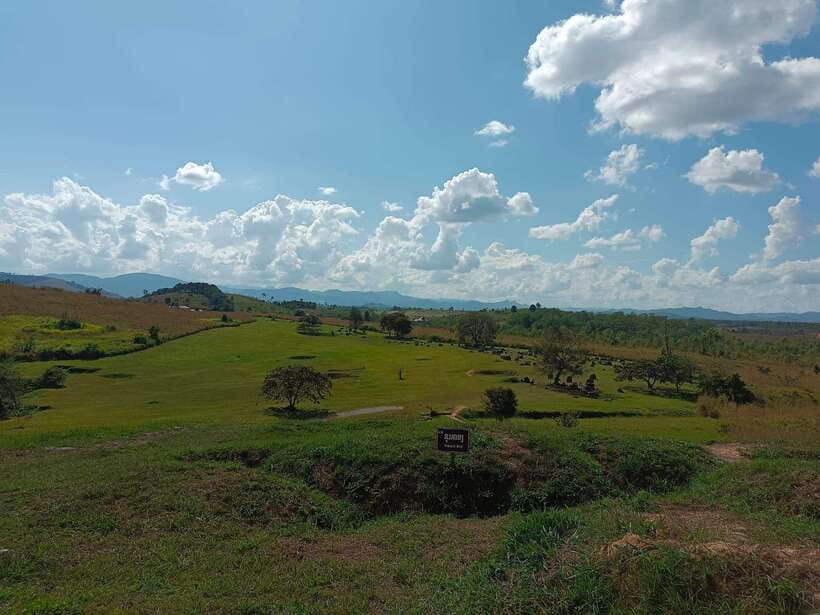
The next jar stop is Site 2 near Ban Nakho. The site is located on two hills of the Phousalato mountain area and includes about 100 jars.
That hilltop setting is the main reason to pay attention here. The jars are important, but the broad views from the two hills help you see how the sites relate to the surrounding countryside. I would give yourself time to pause between explanations instead of rushing from one jar to the next.
The guided visit lasts about an hour, followed by lunch at a local restaurant in Ban Nakho at around 12:30 PM. Lunch is included and follows a local menu. The information does not specify the dishes, so you should expect the meal to be selected for the group rather than choosing from a detailed included menu.
Site 2 is a good midpoint stop. By this stage, you have seen a smaller site and learned about the local setting. The restaurant break then gives you a natural pause before the afternoon’s historical stops and the largest jar field.
More tours and river days worth a look
- Vientiane Cultural Tour with Private Guide
★ 5.0 · 80 reviews - Luang Prabang Private Minivan
★ 4.5 · 36 reviews - Vientiane: Private Full-Day Tour with Buddha Park and Lunch
★ 4.8 · 33 reviews - Private Tour: Vientiane City Tour Full Day with Buddha Park
★ 4.5 · 32 reviews
A local lunch and the value of a private vehicle
Lunch at Ban Nakho is included in the $110 price, along with entrance fees, tax, and transport. Those inclusions reduce the need to arrange each part of the day separately, which is useful in a province where the attractions are spread out.
The air-conditioned vehicle is another practical advantage. You spend several hours moving between sites, villages, and Muang Khoun, so a cool vehicle makes the schedule easier to manage. The tour begins and ends in Phonsavan, with hotel pickup included when you provide the correct address.
The private arrangement is most useful if you like asking questions or want the guide to spend more time at a particular jar site. It may be less important if you are only looking for the lowest possible price. The $110 rate is per person, so the value improves when you are sharing the private vehicle with companions.
Muang Khoun: ruins between the jar fields
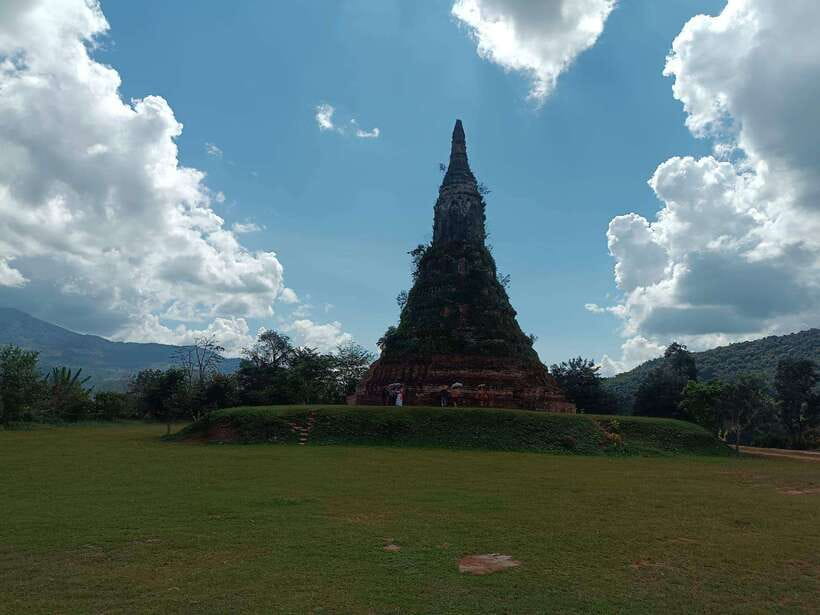
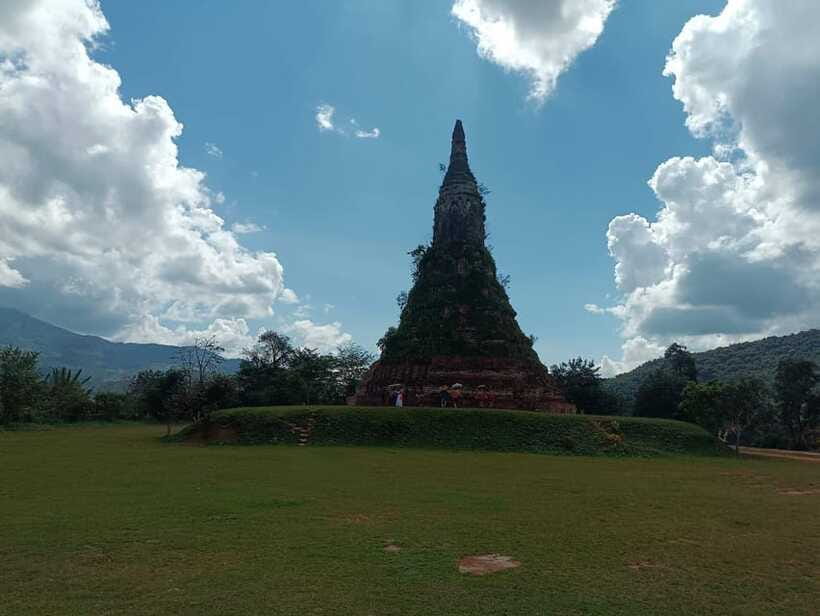
After lunch, the route turns to the former capital of Xieng Khouang Province. At around 2:30 PM, you visit the ruins of Muang Khoun, including Wat Phia Wat and That Foun.
These sites add a different kind of history to the day. The jars belong to an ancient archaeological tradition, while Muang Khoun brings you closer to the region’s more recent religious and political past. The ruins also show damage and remains connected with the Vietnam War period.
Wat Phia Wat is scheduled for about 20 minutes, as is That Foun. That is not a long time, so you should expect a concise visit rather than an extended architectural study. Still, these short stops break up the jar sites and help explain why the province cannot be understood through archaeology alone.
The old capital stop was praised for its interest and for the scenery along the road around Phonsavan. I agree with the logic of including it. After several hours focused on stone jars, a ruined temple and stupa give your eyes and mind something different to consider.
Site 1, the largest field with 334 jars
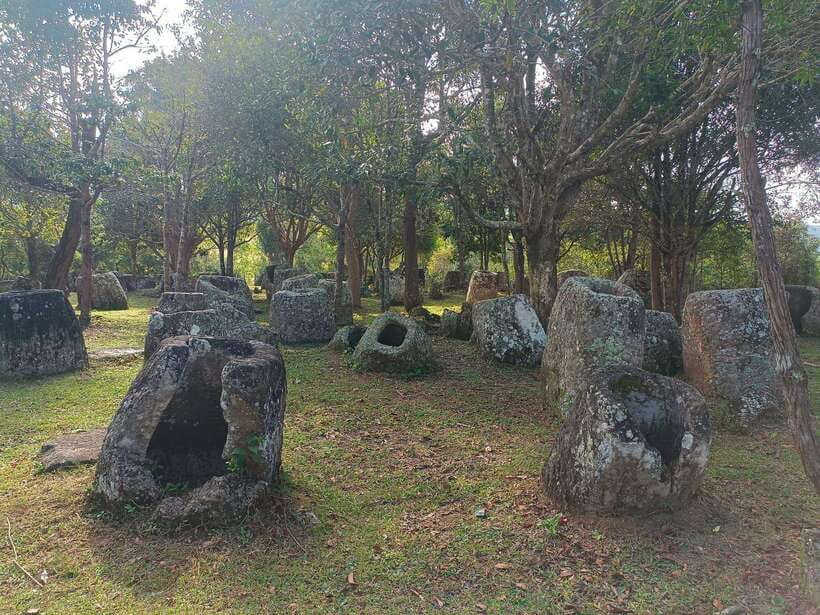
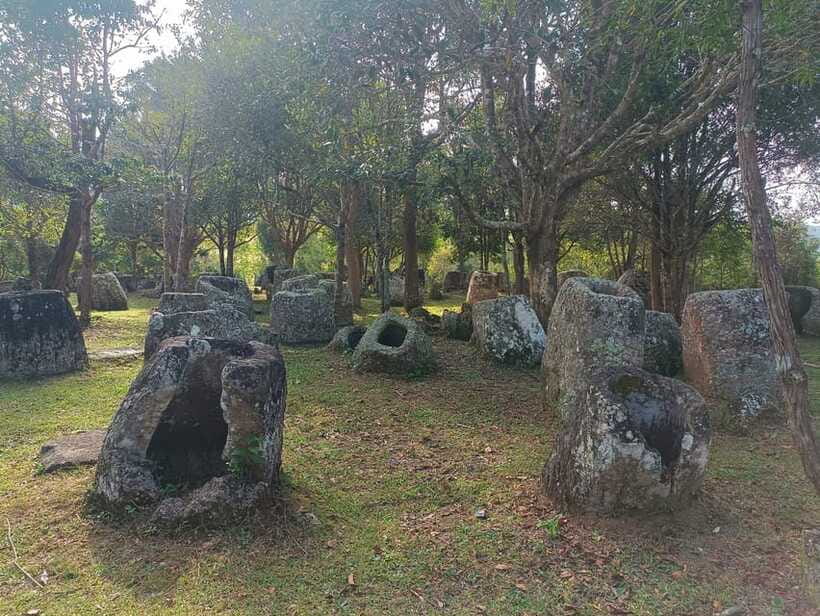
At about 3:50 PM, you reach Plain of Jars Site 1. This is the largest site on the route and contains 334 jars.
Saving Site 1 for last is a smart choice. You first learn the basic story at Sites 3 and 2, then arrive at the biggest concentration with a better sense of what you are looking at. The scale should make more sense after seeing the smaller groups.
The guided visit lasts about an hour. That gives you time to walk among the jars, listen to the explanation, and take in the setting without treating the stop as a rushed photo opportunity. Since the site is the main reason many people come to Phonsavan, this hour is an important part of the tour’s value.
You should also keep your expectations measured. The tour information gives the number of jars and the site sequence, but it does not provide a full explanation of their exact age, original use, or construction. Those are questions worth asking your guide. The guide is described as especially open to questions about archaeology, Laos, and local people, which makes the private format more useful here.
Wat Hai Heen and the return to Phonsavan
After Site 1, the vehicle passes Wat Hai Heen, also called Thonghaiheen Xaiyalam Temple. The schedule allows a short visit to the large Buddha statue before returning to Phonsavan, though the itinerary labels this stop as a pass-by rather than a full guided visit.
That distinction matters. Do not plan on a long temple tour here. It is a brief final look, likely useful as a quiet close to a long day rather than another major attraction.
The planned return is after 4:45 PM, but no exact arrival time is given. Road conditions and the amount of time spent at each stop can affect the end of the day. If you have an evening flight, train, or fixed dinner reservation, leave some room rather than booking everything tightly.
Is $110 per person fair?
For a one-day private tour, $110 per person is a reasonable price when the group has several people. You receive an air-conditioned vehicle, hotel pickup, a local-menu lunch, entrance fees, tax, and a live guide. Buying those pieces separately could involve extra transport planning and uncertainty over entrance costs.
The price is less compelling for a solo person who wants the cheapest possible way to see the jars. The private format is the reason for much of the cost, not just the archaeological admission. If you are traveling with family or friends, the price makes more sense because you share the vehicle while keeping a private guide.
The booking terms are also practical. You can reserve now and pay later, and cancellation is free up to 24 hours before the tour for a full refund. The tour is valid for one day, with starting availability checked at booking.
Who will like this tour most?
I would recommend this experience to you if you want more than the headline attraction. It suits visitors who enjoy archaeology but also want village life, farming context, religious ruins, and a look at how local families make and sell goods.
It is also a good match if you prefer asking questions as you go. The guide speaks English or Thai, and the private group setup gives you a better chance to shape the conversation than a large shared excursion.
You may want a different plan if you only want Site 1, dislike a full day on the road, or have no interest in the spoon-making village and former capital. The schedule includes several stops, and the appeal comes from the combination. Skipping half the route would remove much of what makes the tour worthwhile.
Final decision: book or skip?
Book this tour if you have one day in Phonsavan and want the Plain of Jars presented as part of Xiangkhouang’s wider story. The strongest features are the three jar sites, the thoughtful order of visits, the archaeological guidance, and the private air-conditioned transport.
I would book it especially for a small group that values comfort and conversation. I would think twice only if the $110 price is beyond your budget or if the recycled-war-material spoon village feels uncomfortable to you. For most people with a full day available, the mix of 334 jars at Site 1, the hill views at Site 2, the rice-field walk at Site 3, and the Muang Khoun ruins makes this a well-rounded introduction to the province.
FAQ
Where does the Plain of Jars private tour begin and end?
The tour begins with pickup in Phonsavan and returns to Phonsavan at the end of the day. Hotel pickup is included when you provide the correct address.
How long does the tour last?
The tour is valid for one day. Pickup is scheduled for 8:30 AM, and the final listed stop begins at about 4:45 PM before the return to the city.
Which Plain of Jars sites are included?
You visit Plain of Jars Site 3 near Ban Xieng Di, Site 2 near Ban Nakho, and Site 1, the largest site with 334 jars.
Is lunch included?
Yes. Lunch at a local restaurant in Ban Nakho is included and follows a local menu.
Are entrance fees included in the price?
Yes. Entrance fees, all listed fees, and tax are included. Soft drinks and personal purchases, including handicrafts, are not included.
What languages does the guide speak?
The live guide is available in English or Thai.
Just added around Laos
- Vientiane: Lao Cultural Attire Rental Experience★ 5.0 · 3 reviews
- A Relaxing Day at the Kuang Si Falls★ 4.5 · 3 reviews
- Luang Prabang Night-time Explorer★ 3.5 · 3 reviews
- Private Luang Prabang City Tour★ 5.0 · 3 reviews
- Luangprabang: Dinner with Lao Traditional Dance Performance★ 4.0 · 3 reviews
- Nongkhiaw boat trip to Muang Ngoi★ 3.8 · 3 reviews
- Vientiane Private Lao Cooking Class with Market Tour★ 4.0 · 3 reviews
- Vang Vieng: Paragliding Experience with Hotel Pickup★ 5.0 · 3 reviews
Private, compared.
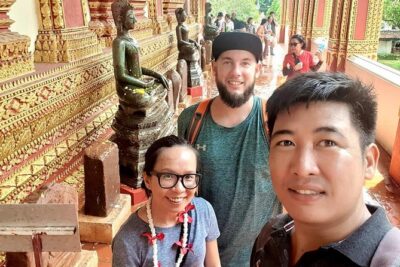

Vientiane: Private Full-Day Tour with Buddha Park and Lunch
Read our review →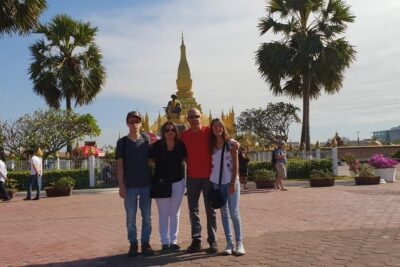
Private Tour: Vientiane City Tour Full Day with Buddha Park
Read our review →
Private Tour Full-day Morning Market, Villages and Scenic Kuang Si Waterfall
Read our review →Vientiane Private Full-Day Tour with Buddha Park and Lunch
Read our review →
Private Tour: Pak Ou Cave and Kuang Si Waterfall Tour from Luang Prabang
Read our review →