
Reviewed · FOOD & DRINK
Luang Prabang Plates Food Tour with 15+ Tastings
Breakfast is where Luang Prabang gets real. This four-hour morning food tour takes you beyond hotel buffets and into the city’s working kitchens, market stalls, bakeries, and street-side eateries. I like the 15-plus tastings, which give you a broad introduction to Lao food, and the mix of walking and tuk-tuk travel, which keeps the morning moving without making you march across town.
I also like the small groups, capped at eight people, and the chance to meet long-established vendors rather than simply eating dishes prepared for tourists. The main catch is dietary: this tour is not suitable for vegans or vegetarians, and it is also unsuitable for people with severe allergies, halal diets, or celiac disease. Even those with a mild restriction should speak with the operator before booking.
In This Review
- Key points to know before booking
- Why morning is the right time for this food tour
- Starting beside the Mekong at Pasaniyom Traditional Café
- Nine to 10 stops through Luang Prabang’s food routine
- The morning market: ingredients before they reach the plate
- Meeting long-established vendors and local eateries
- The brick-oven bakery invitation
- The tuk-tuk section and the second half of the route
- What $45 buys you
- Dietary restrictions and practical limits
- Who will enjoy this morning most?
- Should you book the Luang Prabang Plates Food Tour?
- FAQ
- How long does the Luang Prabang Plates Food Tour last?
- Where does the tour begin?
- Where does the tour finish?
- How many food tastings are included?
- How many stops does the tour make?
- Is transportation included?
- Is the tour suitable for vegetarians or vegans?
- Can people with mild gluten or lactose intolerance join?
- What happens if it rains?
Key points to know before booking
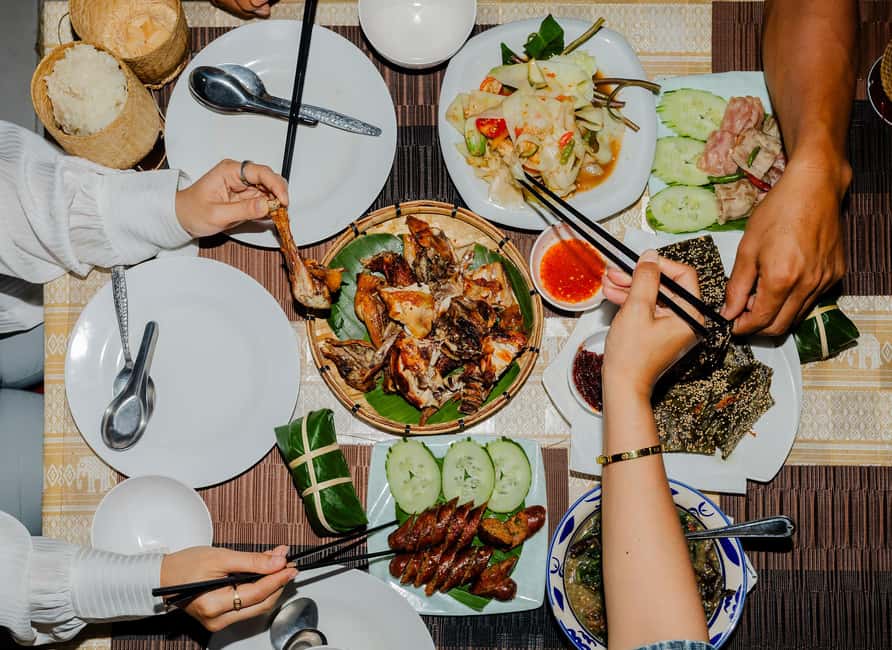
- More than 15 tastings make this one of the fullest introductions to Lao food in Luang Prabang.
- The morning timing matters: you visit markets and food stalls while local buying, cooking, and eating are underway.
- Nine to 10 stops create a moving meal through the old city rather than one sit-down restaurant visit.
- A traditional brick-oven bakery offers a rare look at wood-fired bread making and local French-influenced food culture.
- Small groups of up to eight make it easier to ask questions and keep the pace personal.
- A tuk-tuk ride covers the second half, linking food stops beyond the easiest walking area.
Why morning is the right time for this food tour
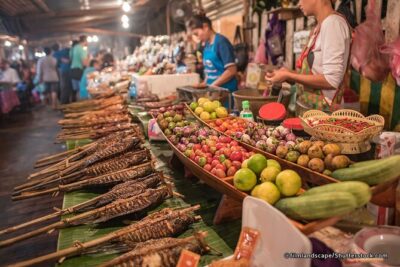
Luang Prabang changes character as the day begins. After the morning alms ritual, pots start simmering, grills heat up, and market sellers lay out fruit, vegetables, herbs, and spices. That timing gives you a look at food as part of daily life, not just as a restaurant product.
The tour begins at around the time this activity is taking shape. You meet opposite Pasaniyom Traditional Café beside the Mekong, on the riverside sidewalk. The meeting point is central and easy to reach from many hotels, but hotel pickup is not included, so allow enough time to arrive without rushing.
The food is the main attraction, but the setting matters just as much. A stall serving breakfast to local workers tells you more about everyday Luang Prabang than a polished restaurant menu. You get to see what is cooked early, what is eaten fresh, and how ingredients move from market tables into bubbling pots.
You should skip your hotel breakfast. That is not a suggestion to be taken lightly. With 15 or more tastings over four hours, this is a full meal, and probably several meals in miniature.
More Food Tours in Luang Prabang:
- Luang Prabang Evening Food Tour by Tuk-Tuk
★ 4.5 · 68 reviews - Luang Prabang: Mekong Meals Food Tour with 15+ Tastings
★ 4.9 · 58 reviews - Mekong Meals Food Tour with 15+ Tastings
★ 5.0 · 37 reviews
Starting beside the Mekong at Pasaniyom Traditional Café
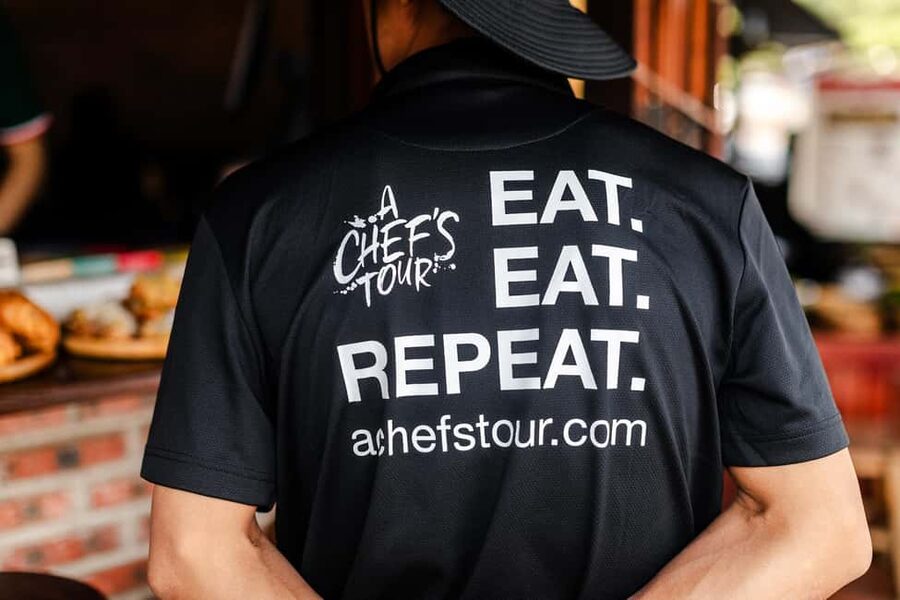
The first meeting point is opposite Pasaniyom Traditional Café, beside the Mekong River. An A Chef’s Tour host usually wears a black polo shirt and waits on the riverside sidewalk.
The opening part is on foot. You start with food and drink in the central area, then make your way through streets and market lanes. Coffee and tea are included at the beginning, along with bottled water. Those small touches are useful because the morning includes plenty of stops, and regular bathroom breaks are available during the route.
Your guide is an important part of the experience. Guides named in recent bookings include Mone, Toun, Latda, and Bounleua. The strongest guide feedback points to clear English, warmth, energy, and a willingness to explain both food and local customs. Latda, in particular, was praised for an animated style, while Toun was noted for being accommodating and for explaining Lao food and culture clearly.
Because the group is limited to eight, you should have room to ask what you are eating and why it matters. If fewer people book, the experience can become even more personal. One morning had only one participant, effectively turning the tour into a private outing.
Nine to 10 stops through Luang Prabang’s food routine
This is not a tour where you sit down for one large meal and then return to the hotel. It works as a moveable feast, with nine to 10 stops spread around the old city.
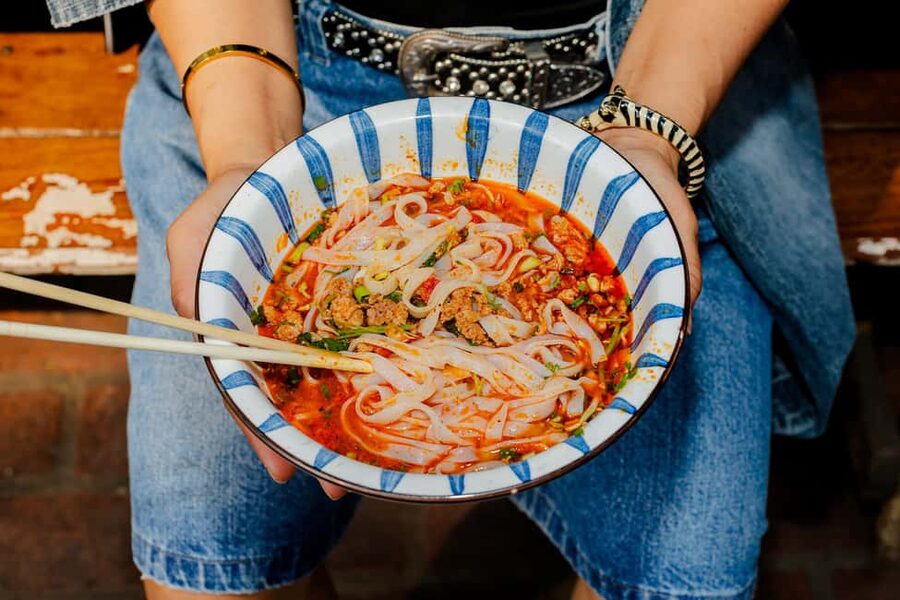
The exact order and dishes can vary, since the tour follows working vendors and fresh food. That is a strength, though it means you should not expect a fixed restaurant-style menu. You may encounter smoky khao soy noodles, fried mungbean cakes, herby soups, spicy salads, charcoal-grilled chicken, and other Lao breakfast foods.
The value of this format is variety. A single dish can give you a pleasant taste of Laos, but 15 or more small portions help you notice the range of textures and seasoning. You can compare noodles with grilled food, crisp snacks with soft soups, and fresh herbs with smoky meat.
The portions are generous enough that you should arrive very hungry. One group of four found there was so much food that sharing some tastings between two people might have been enough. That is good news for anyone who wants a substantial brunch, but it also raises a practical point: if you dislike food waste, tell your guide early and take smaller portions when possible.
Fresh preparation is another advantage. You are not simply being handed food that has been sitting out for hours. One particularly useful detail is that some dishes are obtained fresh from the vendors during the visit. That can mean more waiting at certain stops, but it also gives you a better sense of how the food is actually prepared and served.
The morning market: ingredients before they reach the plate
The market visit helps connect the tastings to the ingredients behind them. You walk among sellers handling fruit, vegetables, herbs, and spices while local buying and selling is underway.
This is a good point in the tour to pay attention to your guide rather than rushing from stall to stall. The market is not presented only as a photo stop. It shows you the raw materials and shopping habits that support Luang Prabang’s kitchens.
For you, the benefit is context. When you later taste a soup, salad, noodle dish, or grilled item, you have already seen some of the ingredients in their everyday setting. That makes the food easier to understand, especially if Lao cuisine is new to you.
The market can also be the less polished part of the morning. Expect real streets, food handling, and the ordinary activity of a local market. Comfortable shoes are a must, and an umbrella or rain jacket is wise. The tour runs in wet weather as well as dry, and some street-side stops are exposed.
A different idea for your next Laos day:
- Luang Prabang: Cruise to Pak Ou Caves & Kuang Si Waterfalls
★ 5.0 · 1,769 reviews - Luang Prabang: Cruise to Pak Ou Caves & Kuang Si Waterfalls
★ 4.8 · 1,360 reviews - Half Day Mekong Cruise to Pak Ou Caves (Morning / Afternoon)
★ 4.6 · 290 reviews - Luang Prabang: UNESCO World Heritage City Highlights Tour
★ 4.6 · 201 reviews
Meeting long-established vendors and local eateries
The tour makes a point of using street vendors and local food businesses with deep roots in the community. The phrase generations-old is important here. You are not only visiting places chosen for convenience, but food sellers whose work is part of the city’s daily rhythm.
That gives the morning a useful human element. Your guide can introduce the people behind the food, explain what they serve, and help bridge the language gap. The best moments are likely to be the simple ones: watching a vendor work, hearing how a dish fits into breakfast, and then tasting it while it is fresh.
You should keep an open mind about texture and seasoning. Lao food can be herby, smoky, spicy, savory, and unfamiliar in combinations that may not resemble the food served in tourist-oriented restaurants. The tour is designed to show local cuisine as it is commonly prepared, not to soften every dish for outside tastes.
The experience is also useful beyond the four hours. Several people returned to food stalls or eateries they discovered on the route for another breakfast. Pay attention to locations and names if you find a dish you want to revisit independently.
The brick-oven bakery invitation
The bakery visit is one of the most distinctive parts of the route. You receive an exclusive invitation to one of Luang Prabang’s remaining traditional brick-oven bakeries, where wood-fired stoves and fresh baguettes connect the town’s Lao food culture with its French colonial influence.
This is more than a bread tasting. It offers a look at an old-style working bakery and the way local food traditions can include outside influences without becoming generic. The wood-fired oven gives the stop a strong sense of place, especially when compared with modern hotel bakeries.
You should not think of the bakery as a long formal demonstration. It is one stop among many, and the morning keeps moving. Still, it adds an important contrast to the noodles, soups, salads, and grilled foods elsewhere on the route.
For many people, this may be the stop that makes the tour feel especially local. The bakery is not just another café. It is a traditional operation that few people would be likely to find on their own.
The tuk-tuk section and the second half of the route
The second half of the tour uses a tuk-tuk. This helps connect stops in outer parts of the route and gives your feet a break after walking through the market and central streets.
One guide explained that some of the distances might technically be walkable, but using a tuk-tuk makes practical sense. Luang Prabang is compact, yet a four-hour food tour can cover more ground than you expect when every stop takes time.
The ride is also part of the local experience. Rather than moving between food stops in a private vehicle, you travel in the open air through the city. The tuk-tuk makes the route feel less like a checklist and more like a series of neighborhood visits.
You finish at the Tourist Information Center, also known as the Machi-Zukuri Community. This is a useful central ending point if you plan to continue sightseeing, return to your hotel, or explore more of the old city on foot.
What $45 buys you
At $45 per person, the tour is not the cheapest way to eat breakfast in Luang Prabang. You could spend far less by ordering one local dish at a market stall.
The value comes from the range and access. You receive more than 15 tastings, coffee and tea at the start, bottled water, the tuk-tuk ride, a guide who speaks English, and visits to nine or 10 places. You also avoid the trial and error of ordering unfamiliar dishes alone.
The small group adds to the price. With a maximum of eight people, the guide can explain ingredients, watch for your comfort, and adjust the pace more easily than on a large coach-style outing. If you are alone or traveling as a couple, that personal attention may be worth more than saving a few dollars.
Food quantity is another part of the calculation. This is not a light sampling walk. It replaces breakfast and lunch for many people, although you may want a simple meal later if you are not comfortable eating a large number of small portions.
I consider the price fair for someone who wants a guided introduction rather than merely a meal. It is less compelling if you already know Lao food well or prefer to choose every dish yourself.
Dietary restrictions and practical limits
This tour has clear limits, and you should take them seriously. It is not suitable for vegans or vegetarians, with only limited alternatives and three or four fewer tastings for a vegetarian participant.
Pork appears in two or three tastings. If pork is your only restriction, some alternatives are available, and you should not go hungry, but you need to notify the operator in advance.
The tour is unsuitable for halal diets and severe food allergies because of traces and cross-contamination. It is also not advised for people with celiac disease. Mild gluten or lactose intolerance may be manageable, but gluten appears in four or five tastings, including unavoidable soy sauce.
Pregnant women, vegans, vegetarians, and people with food allergies are listed as unsuitable for this activity. If your diet is medically important, this is not the place to hope that a guide can improvise around every dish.
Wear comfortable shoes. Carry rain gear or an umbrella if the forecast looks uncertain. Most eating stops are sheltered, but you walk between them and visit some open-air stalls.
Who will enjoy this morning most?
I would recommend the tour to first-time visitors who want a fast, flavorful introduction to Luang Prabang. It works especially well if you enjoy trying unfamiliar food, asking questions, and seeing the places where local people shop and eat.
It is also a good choice for solo visitors. The small group size can make the morning feel social without becoming noisy or impersonal. Couples and friends will appreciate having a guide handle ordering and translation while they concentrate on tasting.
Families with adventurous older children may enjoy it, but the four-hour length and heavy food schedule may be tiring for young children. The tour data does not specify a minimum age, so confirm that point before booking for children.
You should skip it if you want a slow restaurant brunch, need strict control over ingredients, or dislike meat, pork, spicy food, or unfamiliar textures. This is a local-food tour first, and dietary flexibility is part of the deal.
Should you book the Luang Prabang Plates Food Tour?
Book it if you want to understand Luang Prabang through its breakfast table. The combination of 15 or more tastings, the morning market, the brick-oven bakery, family-run food sellers, and tuk-tuk travel gives you far more range than a standard meal.
I especially like that the tour can lead you back to places you can visit again on your own. A good food tour should give you both a satisfying morning and a better map of the city’s eating habits. This one appears to do that.
The decision is simple for dietary needs. If you are vegan, vegetarian, halal, severely allergic, or have celiac disease, choose another activity. If you can eat the food as served and arrive hungry, $45 buys a generous and unusually local morning.
FAQ
How long does the Luang Prabang Plates Food Tour last?
The tour lasts four hours.
Where does the tour begin?
It begins opposite Pasaniyom Traditional Café beside the Mekong River. The guide waits on the riverside sidewalk, usually wearing a black polo shirt.
Where does the tour finish?
The tour finishes at the Tourist Information Center, also called the Machi-Zukuri Community.
How many food tastings are included?
More than 15 food tastings are included.
How many stops does the tour make?
The route includes approximately nine to 10 food stops around the old city.
Is transportation included?
A tuk-tuk is included for the second half of the tour. Hotel pickup and drop-off are not included.
Is the tour suitable for vegetarians or vegans?
No. The tour is unsuitable for vegans and vegetarians because there are limited alternatives and several tastings would be missed.
Can people with mild gluten or lactose intolerance join?
The tour may suit people with mild gluten or lactose intolerance, but it is not recommended for anyone with celiac disease. Gluten appears in four or five tastings, including unavoidable soy sauce.
What happens if it rains?
The tour operates in rain or shine. Most food stops are sheltered, but you should bring rain gear or an umbrella for walking between stops and visiting some street-side stalls.
Just added around Luang Prabang
- A Relaxing Day at the Kuang Si Falls★ 4.5 · 3 reviews
- Luang Prabang Night-time Explorer★ 3.5 · 3 reviews
- Private Luang Prabang City Tour★ 5.0 · 3 reviews
- Luangprabang: Dinner with Lao Traditional Dance Performance★ 4.0 · 3 reviews
- Sunset Cruise in Luang Prabang with Live Performance★ 4.5 · 3 reviews
- Luang Prabang Private Full-Day Tour and Lunch★ 4.7 · 3 reviews
- Luang Prabang: Local Village & Kuang Si Falls Private Tour★ 4.9 · 3 reviews
- Luang Prabang: Mekong River Cooking Class with Hotel Pickup★ 5.0 · 3 reviews
Food & Drink, compared.
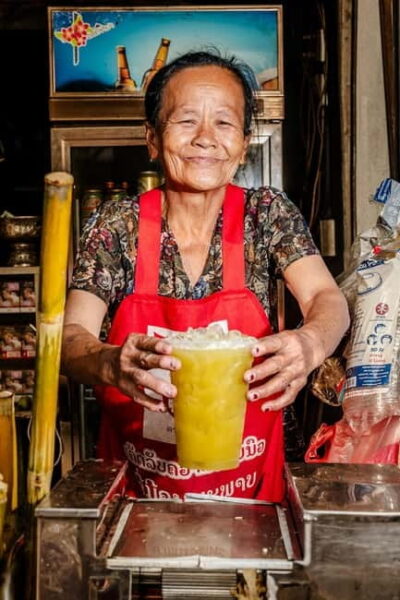
Luang Prabang: Mekong Meals Food Tour with 15+ Tastings
Read our review →
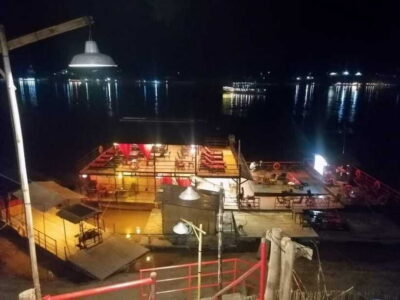
Luang Prabang: Mekong Sunset Cruise & Lao Tasting Dinner
Read our review →
Luang Prabang Street Food Culture, Paper Handicraft Village Tour
Read our review →
Luang Prabang Local Market and Morning Food Tour with Drinks
Read our review →Browse the lists this tour appears in