
Reviewed · CYCLING TOURS
Half-Day Vientiane City Bike Tour | Laos
Vientiane makes a fine city for two wheels. This five-hour ride links the Mekong River with major temples, museums, Pha That Luang, and a Lao textile stop, giving you a useful first look at the capital. I like the private format and the hotel pickup and drop-off, which remove much of the day’s fuss. The main consideration is physical: five hours of cycling and sightseeing call for moderate fitness, and the price is high at $90 per person.
The guides are a major part of the appeal. Vient, praised for his interesting explanations and good bike, and Mr Sak, noted for punctuality, clear English, and a well-planned route, show the value of having a local beside you. Still, the itinerary is full for a half-day, so this suits you best if you want a brisk introduction rather than a slow temple morning.
In This Review
- Key points to know before you book
- Why Vientiane works well by bicycle
- Wat Si Saket, the oldest surviving temple
- Ho Phrakeo Museum and the Emerald Buddha connection
- Pha That Luang, Vientiane’s national symbol
- Lao Textile Museum and Ban Mixay
- The guides make the difference
- What the $90 price really covers
- Who should choose this half-day ride
- Practical details that shape the day
- Should you book the Vientiane City Bike Tour?
- FAQ
- How long is the Half-Day Vientiane City Bike Tour?
- What time does the tour start?
- Is hotel transportation included?
- Is this a private tour?
- What is included in the price?
- Which places does the tour visit?
- Do I need to be physically fit?
- Can I cancel for a full refund?
Key points to know before you book
- Four major stops in five hours: Wat Si Saket, Ho Phrakeo Museum, Pha That Luang, and the Lao Textile Museum create a broad overview of Vientiane.
- Private cycling with hotel transport: Your group rides alone, while pickup and return transport make the start and finish simple.
- A strong guide can shape the day: Vient and Mr Sak earned praise for clear English, planning, punctuality, and useful background on Laos.
- The temples are more than photo stops: Wat Si Saket and Ho Phrakeo connect Buddhist art with the political story of the old Lao kingdom.
- Pha That Luang receives the most time: Two hours allow room for the country’s most important national monument.
- Moderate fitness is needed: You are not simply being driven between sights. The tour combines cycling, walking, standing, and temple visits.
Why Vientiane works well by bicycle
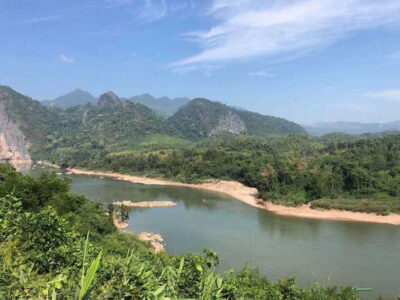
Vientiane is a relatively compact capital, and a bicycle gives you a better sense of its streets than a sealed vehicle does. You can connect the major sights while keeping the city itself in view. The tour also places the Mekong River within the day, adding a natural edge to a route otherwise focused on monuments and museums.
I like this kind of introduction because it gives you several sides of Vientiane at once. You see religious buildings, national symbols, museum collections, local craft traditions, and ordinary city streets. That mix matters. A tour limited to famous monuments can leave you knowing what a place looks like without understanding what matters to its people.
The private setup is another real advantage. Your group is the only group participating, so the pace does not have to match strangers. You can ask for more explanation at a temple, spend less time where you are already satisfied, or make better use of the guide’s local knowledge.
The tour runs in the morning, beginning at 8:30 am, or in the afternoon according to the available schedule. Morning is likely the more comfortable choice for anyone concerned about heat, though the supplied details do not promise a particular weather pattern or riding surface. Either way, bring the attitude of someone taking an active sightseeing day, not a relaxed vehicle excursion.
More City Tours in Vientiane
- Vientiane: Half-Day City Tour with Patuxai and Buddha Park
★ 4.5 · 57 reviews - Vientiane City Highlights Tour with Buddha Park & Lunch
★ 4.7 · 38 reviews - Private Tour: Vientiane City Tour Full Day with Buddha Park
★ 4.5 · 32 reviews
Wat Si Saket, the oldest surviving temple
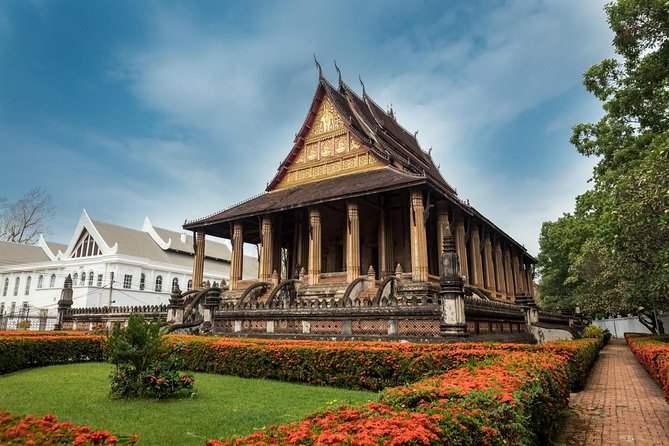
The first major stop is Wat Si Saket, also written as Wat Sisaket. You receive about an hour here, with admission included. The temple is described as the oldest in Vientiane to survive the Siamese war of 1828, which gives the stop unusual weight before you even begin looking at its religious art.
That survival is important because the building is not only a place of worship. It also connects the present city to a difficult chapter in Lao history. Your guide can help put the temple’s age and survival into context, making the visit more useful than a quick circuit with a camera.
An hour is a sensible amount of time for a first temple visit. It gives you room to look carefully, listen, and ask questions without allowing one site to consume the whole morning. Since this is an active bike tour, you should expect to spend time on your feet after riding there.
Wat Si Saket is likely to appeal most if you enjoy old religious buildings and want historical context. If you prefer long, quiet visits at every monument, the schedule may feel tight. Four stops fill the day, and this first hour sets the pace.
Ho Phrakeo Museum and the Emerald Buddha connection
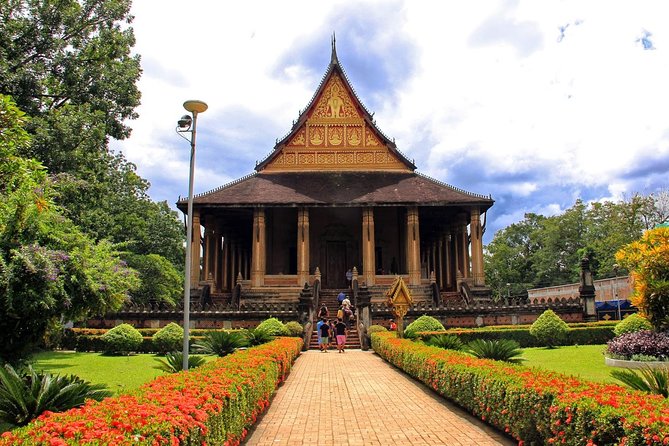
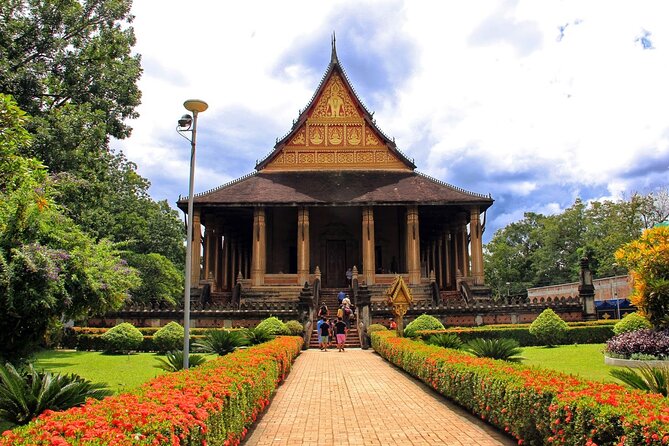
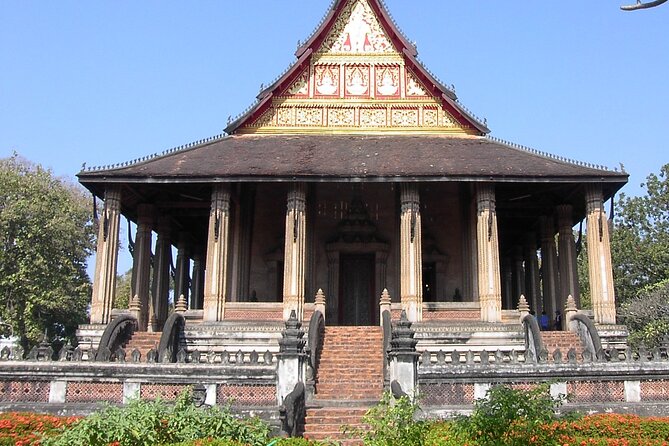
Next comes Ho Phrakeo Museum, with another hour allotted and admission included. Ho Phrakeo was formerly a home-temple for the Emerald Buddha, or Pra Keo, from the early period of the Lane Xang Kingdom through the 18th century. Today, it contains Buddha statues, antiques, and other art.
This stop adds a museum element to the temple visits. Instead of focusing only on architecture, you can examine objects linked to Lao religious and royal culture. The story of the Emerald Buddha also helps explain why a single religious image could carry such importance across kingdoms and centuries.
I would pay close attention to the guide here. Objects in a museum can blur together when labels are brief or unfamiliar, while a good explanation can show you what to notice and why it matters. Mr Sak was praised for explaining the day’s plan in excellent English and for his command of both ancient and recent Lao history. That kind of guide is especially useful at Ho Phrakeo.
The one-hour visit should give you a clear sample of the collection, though not an exhaustive museum study. If your main goal is art rather than cycling, a dedicated museum visit on another day may suit you better. This tour treats the museum as one part of a larger city portrait.
Pha That Luang, Vientiane’s national symbol
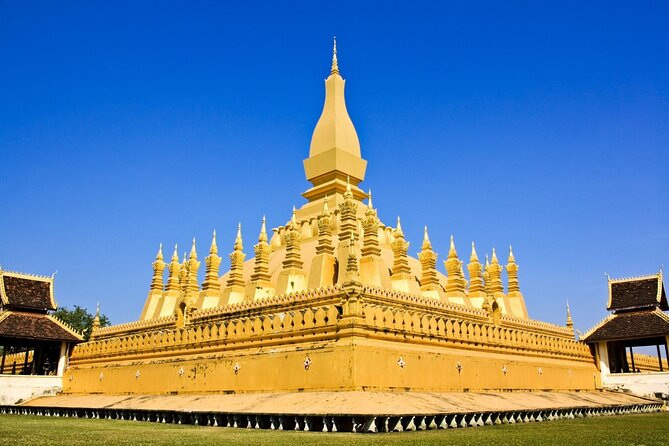
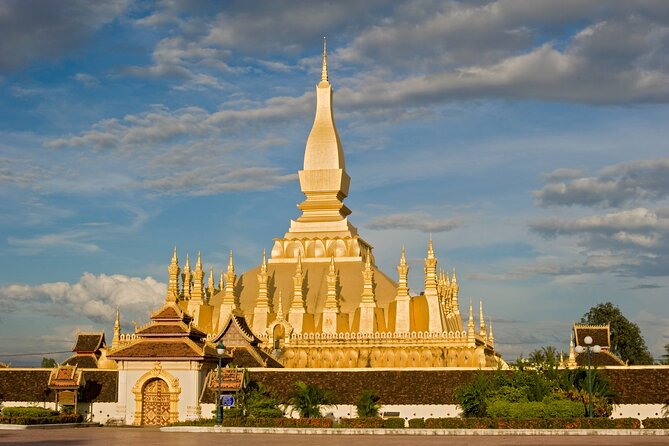
The longest stop is Pha That Luang, also called That Luang Stupa. You have two hours here, twice the time given to the first two locations. That choice makes sense. Pha That Luang is described as the single most important monument in Laos and the country’s main symbolic stupa.
The monument was built to cover an earlier small stupa said to contain a piece of the Buddha’s chest bone. That religious connection helps explain its importance, while its national role makes it more than a site for worship. It is one of the places where faith, memory, and national identity meet.
Two hours allow you to slow the day down. You can listen to the guide, examine the monument, and take a proper break from the bicycle. The longer stop also keeps the schedule from becoming a race through four famous names.
This is probably the emotional center of the tour, but your response will depend on what you want from Vientiane. If you want the city’s most recognizable symbol, it is essential. If you prefer small local streets and less formal monuments, you may find the time allocation generous compared with the textile visit at the end.
Still, I appreciate the balance. The tour does not treat Pha That Luang as a ten-minute photo stop. Giving it two hours signals that the guide expects to explain its role, not just point at its shape.
More Bike Tours:
- Vientiane Day Trip By Bike To Tad Moon Waterfall
★ 4.5 · 3 reviews - From Luang Prabang: Guided Mountain Bike Tour with Lunch
★ 4.7 · 72 reviews - Vang Vieng: Blue Lagoon and Countryside Bike Tour with Lunch
★ 4.0 · 36 reviews - Luang Prabang Mountain Bike Cycling Tour
★ 4.5 · 11 reviews
Lao Textile Museum and Ban Mixay
The final stop takes you to Ban Mixay to explore Lao textile traditions. This adds a different kind of cultural detail after several religious and national landmarks. You finish by looking at craft, design, and local identity rather than another large monument.
The supplied details call this the Lao Textile Museum, and admission is included. You should expect the stop to focus on Lao textiles and the skill behind them, though no specific collection, weaving demonstration, or workshop is promised. That is worth keeping in mind if you are hoping to buy goods or watch cloth being made.
I like the placement of this stop. By the end of the ride, you have seen public monuments and sacred buildings. Textiles offer a more domestic and artistic view of the country. They can help round out your understanding of Laos, even if your main reason for booking is the temples.
You have about an hour here before returning to your hotel. As the last stop, it gives the day a calmer finish than another bike ride to a major sight would. Personal purchases are not included, so budget separately if you find something you want to take home.
The guides make the difference
The tour includes an English-speaking guide, but the strongest available details concern how the guide handles the day. Vient was praised for interesting information at every site, along with providing a good bicycle. Mr Sak was praised for punctuality, a clear plan, excellent English, and strong knowledge of both ancient and recent Lao history.
Those details are not minor. On a cycling tour, the guide handles more than facts. You also rely on that person to set the pace, explain where you are going, and help the half-day feel organized rather than hurried. The tour has four stops, so a guide who communicates well can make the schedule feel manageable.
Because this is a private activity, you have a better chance to shape the conversation. Ask questions about the temples, the Lane Xang period, the Emerald Buddha, or the role of Pha That Luang. The exact guide is not guaranteed in the supplied information, so you should view Vient and Mr Sak as examples of the standard praised by past customers, not as a promise of assignment.
The five-star rating is based on only five reviews, so I would treat it as encouraging rather than definitive proof. The praise is specific, though, and that makes it more useful: punctuality, planning, English, explanations, and bicycle quality are all practical points.
What the $90 price really covers
At $90 per person, this is not a bargain bike rental. It is a guided private excursion with several costs built into one price. You receive the bicycle, an English-speaking guide, bottled water, admission fees, and hotel pickup and drop-off.
That bundle can represent fair value if you want a simple, organized introduction to Vientiane. Admission is covered at all four listed stops, and you do not need to arrange transport between the hotel and the route. A private guide also gives you more attention than a large group tour usually can.
The value is weaker if you are comfortable navigating Vientiane alone, already have a bicycle, or plan to visit the same monuments independently. In that case, the price pays mainly for convenience and interpretation. I would book it for the structure and guide rather than for the bicycle alone.
The average booking point is 40 days ahead, which suggests you should not leave it until the last moment if your dates are fixed. Confirmation arrives at booking. Free cancellation is available until 24 hours before the start time, but changes or cancellations inside that window are not refunded.
Who should choose this half-day ride
I would recommend this experience to you if you want to see Vientiane’s main cultural sights in one organized outing. It suits first-time visitors, active couples, families with older children who can handle moderate exercise, and anyone who values a private guide.
It is also a good fit if you have limited time in the capital. In five hours, you cover four distinct stops and get a look at the Mekong River. The hotel transfer makes the outing easier to fit into a short stay.
You may want a different plan if you dislike bicycles, have limited physical fitness, or prefer to spend a whole morning at one museum or temple. The tour is not available from April 13 through April 16 during Lao New Year, and the fitness note is clear: you should be comfortable with an active half-day.
The itinerary also leaves little room for unscheduled wandering. That is useful for efficiency, but less suitable if your favorite travel moments come from lingering in one neighborhood or stopping whenever something catches your eye.
Practical details that shape the day
Hotel pickup and drop-off are included, but the supplied details do not specify the exact pickup area. Check that your hotel is covered when booking. The start time is 8:30 am, and the tour can be taken in the morning or afternoon when available.
Bikes and bottled water are included, along with entrance fees. Personal expenses are not, so bring money for anything you may wish to buy at the textile stop or elsewhere during the outing.
Wear clothing suited to cycling and temple visits. The supplied information does not provide a detailed dress code, so ask the operator if you need precise guidance. You should also plan for a day that combines riding, walking, standing, and listening.
The route is private, but the tour is not described as accessible or suitable for every mobility level. If you have concerns about cycling or walking, contact the provider before paying.
Should you book the Vientiane City Bike Tour?
Book it if you want a well-planned, active overview of Vientiane and value having a local explain the city as you move through it. The strongest reasons are the private format, included transport and admissions, four varied cultural stops, and the specific praise for guides such as Vient and Mr Sak.
Skip it if $90 feels too steep for a half-day, or if you would rather explore slowly without a fixed route. For the right person, the cost buys more than wheels: it buys a clear introduction to Vientiane, with enough context to make the temples, stupa, museum, river, and textile traditions fit together.
FAQ
How long is the Half-Day Vientiane City Bike Tour?
The experience lasts approximately five hours.
What time does the tour start?
The stated start time is 8:30 am. A morning or afternoon option is described, depending on availability.
Is hotel transportation included?
Yes. Hotel pickup and drop-off are included.
Is this a private tour?
Yes. Only your group participates in the activity.
What is included in the price?
The price includes an English-speaking guide, bicycle rental, bottled water, admission fees, and hotel pickup and drop-off.
Which places does the tour visit?
The route includes Wat Si Saket, Ho Phrakeo Museum, Pha That Luang, and the Lao Textile Museum in Ban Mixay. The Mekong River is also part of the sightseeing route.
Do I need to be physically fit?
You should have a moderate level of physical fitness. The experience combines cycling with sightseeing at several stops.
Can I cancel for a full refund?
Yes, if you cancel at least 24 hours before the experience start time. Cancellations or changes made less than 24 hours before the start are not refunded.
Just added around Vientiane
- Vientiane: Lao Cultural Attire Rental Experience★ 5.0 · 3 reviews
- Vientiane Private Lao Cooking Class with Market Tour★ 4.0 · 3 reviews
- Vientiane Day Trip By Bike To Tad Moon Waterfall★ 4.5 · 3 reviews
- Vientiane: Half-Day City Tour – Morning or Afternoon★ 4.0 · 3 reviews
- Vientiane: Art, Culture, & Inspiration Guided Day Tour★ 5.0 · 3 reviews
- Vientiane Private Walking Tour With A Guide (Private Tour)★ 4.5 · 3 reviews
- Private Tour Vientiane – VangVieng by Express Train★ 5.0 · 4 reviews
- Half Day Exploring the Charms of Vientiane and hotel pickup★ 4.9 · 4 reviews
Cycling Tours, compared.
From Luang Prabang: Guided Mountain Bike Tour with Lunch
Read our review →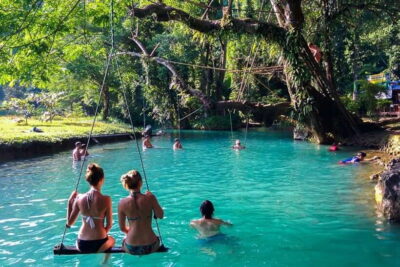
Vang Vieng: Blue Lagoon and Countryside Bike Tour with Lunch
Read our review →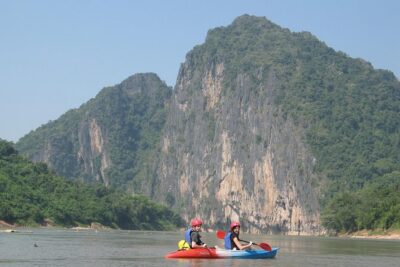
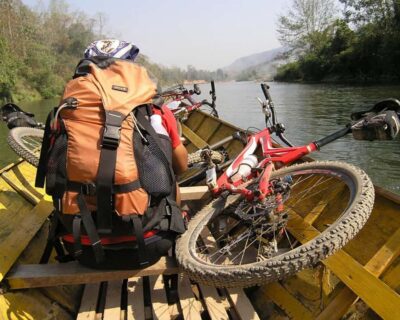
Luang Prabang: Countryside Mountain Bike Tour with Lunch
Read our review →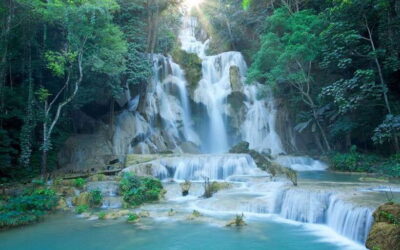
Luang Prabang: Kuang Si Bike Ride & Long-Tail Boat Cruise
Read our review →
Luang Prabang: Pottery Workshop & Wat Chomphet cycling Tour
Read our review →
Vientiane Day Trip By Bike To Tad Moon Waterfall
Read our review →Browse the lists this tour appears in