
Reviewed · PAK OU CAVES TOURS
6-Day Private Laos Tour to Vientiane, Pak Ou Cave, Luang Prabang
Laos rewards a slower pace. This six-day private tour links Vientiane and Luang Prabang with temples, river travel, village visits, and Kuang Si Falls, giving you a well-rounded first look at the country without asking you to arrange every transfer yourself. I especially like the two-hour high-speed train between the cities and the chance to reach Pak Ou Caves by boat rather than by road. The main drawback is the pace: Days 3 and 4 are full, and the package leaves little free time in Luang Prabang.
I also like that guides and drivers are arranged privately, so your schedule is not tied to a large coach group. Past travelers have singled out Emily Xin for careful planning, good hotel choices, and smooth handling of the trip. You should still check the exact hotels and flight times before paying, since the first and last days depend heavily on your arrival and departure schedule.
In This Review
- Key points to know before booking
- What $1,509 buys you in six days
- Day 1: A gentle arrival in Vientiane
- Day 2: Vientiane’s temples and national symbols
- Day 3: The train to Luang Prabang and an evening of temples
- Day 4: Alms, the Mekong, and Pak Ou Caves
- Day 5: Kuang Si Falls and Black Hmong village life
- Day 6: A simple airport departure
- How private touring changes the trip
- Who should book this Laos tour?
- Should you book it?
- FAQ
- How long is the tour?
- Where does the tour begin?
- Where does the tour end?
- Is the tour private?
- Is the Vientiane to Luang Prabang train included?
- Are meals included?
- Are entrance fees included?
- Is the tour suitable for people over 80?
Key points to know before booking
- Two very different Lao cities: Vientiane offers grand national monuments and historic temples, while Luang Prabang brings a smaller old town, mountain views, markets, and village life.
- The train saves valuable time: The Vientiane to Luang Prabang journey takes about two hours by high-speed train, with a private transfer to and from each station.
- Pak Ou is reached by Mekong boat: The three-hour outing includes Ban Xang Hai Village, lao-lao whisky sampling, and a stop at the famous caves.
- Kuang Si Falls is an active day: Plan on walking in comfortable shoes, with about three hours at the waterfall and two more hours at a Black Hmong village.
- The price covers the main essentials: At $1,509 per person, the package includes hotels, five breakfasts, four lunches, transport, train tickets, guides, drivers, and entrance fees.
- The tour is best for independent-minded comfort seekers: You get private service and cultural stops, but you need to be comfortable with early starts, stairs, walking, and a busy schedule.
What $1,509 buys you in six days
At $1,509 per person, this is not a shoestring Laos trip. The value comes from having most of the major expenses bundled together: accommodation with daily breakfast, four lunches, a private air-conditioned vehicle, professional guides and drivers, entrance fees, and the train ticket from Vientiane to Luang Prabang.
That arrangement matters in Laos. You are not left to find a taxi after a train ride, negotiate every transfer, or work out how to combine a river trip with a village visit. A private vehicle also gives your group more control over stops and timing than a shared coach.
The price does not include international flights, the Laos visa, personal travel insurance, early hotel check-in, or late check-out. Those exclusions are normal, but you should budget for them. If your flight arrives early on Day 1 or leaves late on Day 6, you may have extra waiting time because the hotels do not promise early access or a room after the normal check-out time.
This package makes the most financial sense for two or more people who value convenience. Solo visitors may find the per-person price harder to justify, while families and couples can spread the private transport cost across the group. Group discounts are offered, so it is worth checking the final price for your party.
More Pak Ou caves trips:
- Luang Prabang: Cruise to Pak Ou Caves & Kuang Si Waterfalls
★ 5.0 · 1,769 reviews - Luang Prabang: Cruise to Pak Ou Caves & Kuang Si Waterfalls
★ 4.8 · 1,360 reviews - Half Day Mekong Cruise to Pak Ou Caves (Morning / Afternoon)
★ 4.6 · 290 reviews
Day 1: A gentle arrival in Vientiane
Your guide and driver meet you at Wattay International Airport and take you to your downtown hotel. The listed meeting time is 9:00 a.m., but your actual first-day schedule will depend on your flight arrival and hotel check-in.
The rest of the day is left open. That is useful after a long international journey, though it can also feel like a lost opportunity if you arrive early and want more sightseeing. Use the time to rest, walk near the hotel, or get familiar with Vientiane before the temple visits begin.
Because the hotel name is not specified in the information provided, ask where it is located before booking. A central hotel can make a big difference for an evening walk or meal, especially since no formal sightseeing is scheduled on arrival day.
Day 2: Vientiane’s temples and national symbols
The first full day introduces you to the capital through four major sights. The route is compact and focused, with about one hour at each stop.
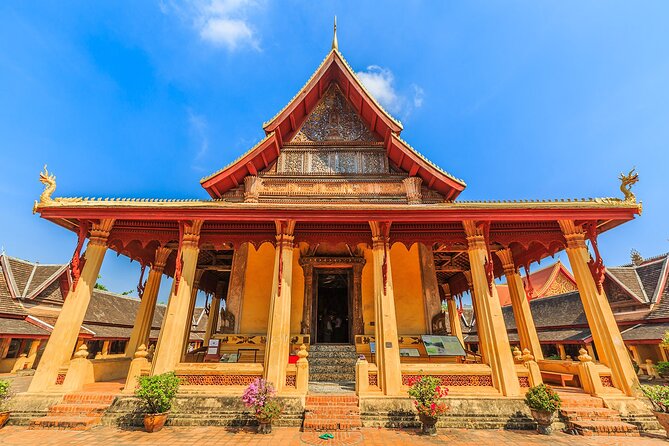
Wat Si Saket is a good place to begin. It is described as Vientiane’s oldest temple and has survived for more than 200 years. Its importance is not just age. The temple gives you a sense of the city’s Buddhist character before the day moves on to larger and more official monuments.
Across the way, Wat Ho Phra Keo once housed the Emerald Buddha, which is now in Bangkok. The stop adds a useful regional connection to the tour. You can see how an object associated with Laos became part of Thailand’s religious and royal story.
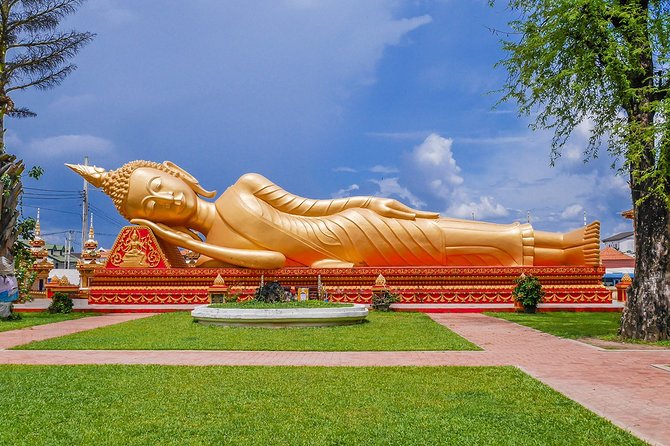
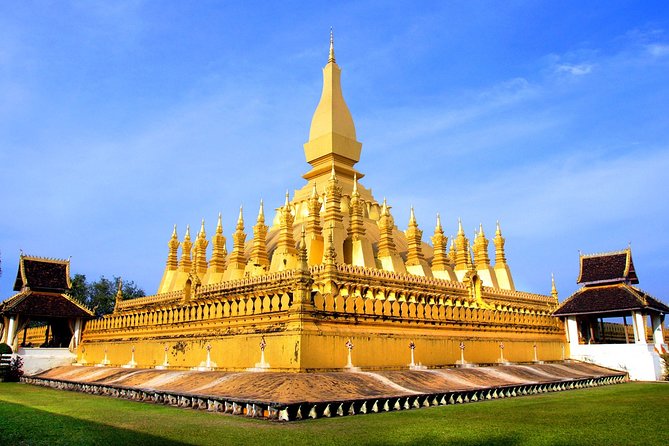
The third visit is Pha That Luang, the great golden stupa. At about 150 feet high, it is one of Vientiane’s defining sights and carries strong national meaning. The nearby sleeping Buddha gives you another brief religious stop, though the hour allotted means you should not expect a long, unhurried visit to every corner.
You finish at Patuxai Victory Monument, a large city landmark built in memory of the abolition of the monarchy in 1975. The monument is a reminder that Vientiane is not only a temple city. It is also the political capital of modern Laos.
This day is easy to understand and efficient, but it may feel somewhat formal. You move from one recognized monument to the next, with less time for ordinary neighborhoods or independent exploration. That is a fair trade if you want an organized introduction to Vientiane.
Day 3: The train to Luang Prabang and an evening of temples
Day 3 is the tour’s busiest cultural day. After breakfast, your guide takes you to the station for the two-hour high-speed train to Luang Prabang. The private transfer is a real advantage, since you do not have to arrange the station connection yourself.
Once you arrive, a local guide and driver take over. The schedule then turns to Luang Prabang’s old royal and religious center.
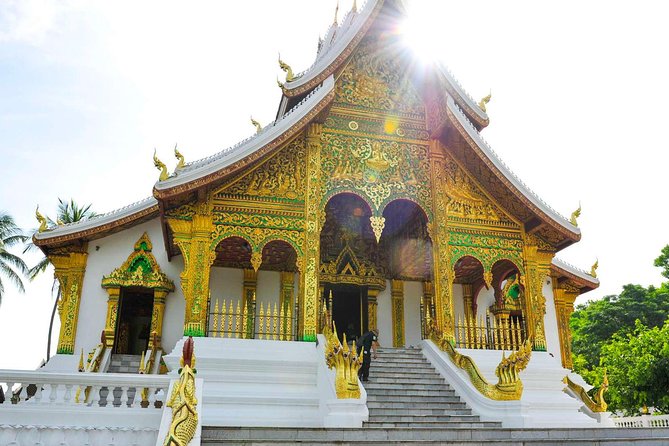
The Royal Palace Museum offers an introduction to the town’s former royal role. Allow yourself time to notice the change in scale from Vientiane. Luang Prabang feels smaller and more intimate, and the palace helps explain why its central district has such a strong sense of place.
At Wat Xieng Thong, look for the mosaic mural known as the Tree of Life. Thirty minutes is a short visit, but the stop is well chosen because the temple is one of the city’s most recognizable religious buildings.
The next three temples, Wat Wisunarat, Wat Aham, and Wat Mai Suwannaphumaham, are each scheduled for about half an hour. Wat Wisunarat is identified as the oldest temple in Luang Prabang. Wat Aham is noted for its bodhi tree, while Wat Mai is known for its five-layered red tile roof.
This temple sequence gives you variety, but the short time at each site means you will need to keep moving. If you prefer quiet observation, ask your guide early in the day where you might trim the schedule. A private tour gives you some flexibility, though the listed timing is clearly designed to cover many sights.
Before dusk, you climb Mount Phousi, which rises about 100 meters, or 328 feet, above the town. The summit offers a broad view of Luang Prabang and its surrounding area. Comfortable walking shoes are essential here. The climb is not the place for flip-flops or a rushed approach.
The day ends at the Luang Prabang Night Market, located along the avenue in front of the Royal Palace. You have about 40 minutes there, enough for a first look and perhaps a small purchase, but not a leisurely evening of browsing and eating. Your guide then takes you back to the hotel.
One detail deserves attention: a past account of a related custom trip praised an evening Mekong sunset cruise, but that cruise is not part of the scheduled six-day plan described here. If that is important to you, ask the operator to confirm it rather than assuming it is included.
More Cave Tours:
- From Vientiane: Vang Vieng Tour with Cave Kayak & Zipline
★ 4.6 · 32 reviews - Vang Vieng: Kayaking & Cave Tubing with Zip Line/Blue Lagoon
★ 4.5 · 410 reviews - Vang Vieng: Namxay Viewpoint, Blue Lagoon 1 & Phoukham Cave
★ 4.6 · 188 reviews - Luang Prabang: Kayak Tour to Pak Ou Caves
★ 4.4 · 115 reviews
Day 4: Alms, the Mekong, and Pak Ou Caves
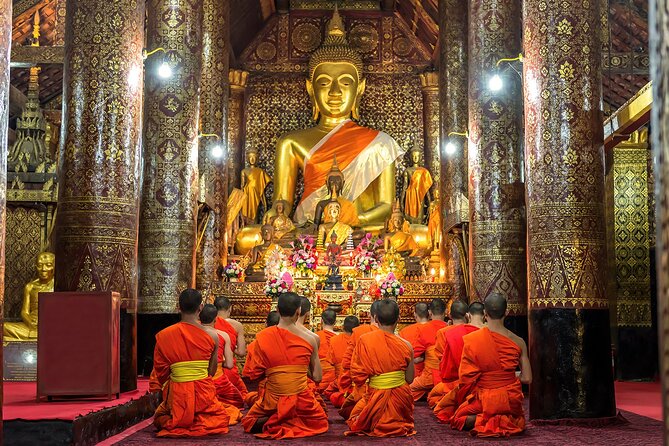
Day 4 starts early with the alms-giving ceremony. This is one of the most meaningful cultural moments in the program, but it requires respectful behavior. Keep quiet, dress modestly, and follow your guide’s instructions about distance and photography.
One past guest described watching the ceremony directly across from the hotel, which suggests that the accommodation may be conveniently located in some departures. Still, hotel placement can vary, so do not count on a particular viewpoint unless it is confirmed in advance.
After breakfast, you walk through the Morning Market. This gives you a useful contrast with the previous evening’s market. The morning market is tied more closely to daily shopping, while the Night Market is aimed more at visitors and evening browsing.
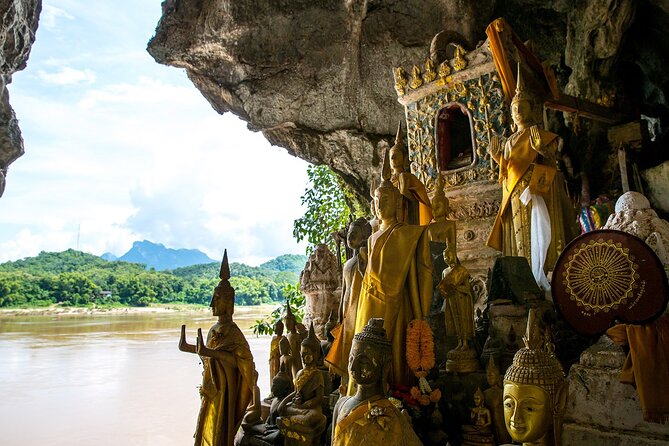
The main outing is a boat ride to Pak Ou Caves, lasting about three hours. The journey itself is part of the appeal. You see the Mekong from the water and reach a religious site that would feel less special if treated as a quick road transfer.
The boat stops at Ban Xang Hai Village, where you can sample local lao-lao whisky and learn about its production. This is a practical village visit, not just a photo stop, because it connects food and drink with local work. Sampling alcohol is optional in spirit, so tell your guide if you do not want to participate.
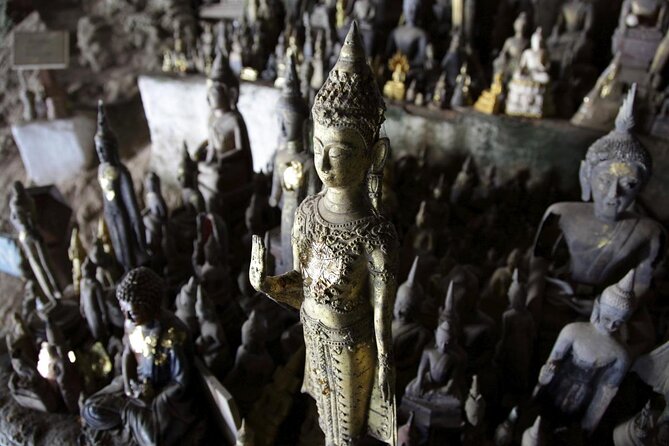
Pak Ou Caves are the day’s main destination. The caves are associated with Buddhist images and offer a very different setting from the polished temples in town. The information provided does not specify how much time is spent inside the caves or the exact walking conditions, so wear shoes with a good grip and ask your guide about the route.
On the return journey, you stop at Ban Xang Khong Village to see how saa paper is made. This craft visit is one of the tour’s stronger details. It gives you a look at a traditional material and a local production process, rather than limiting the day to monuments.
The day includes a boat, markets, a village, and caves, but it also asks you to start early and keep to a schedule. If you need a quiet morning, this is not the day for sleeping in.
Day 5: Kuang Si Falls and Black Hmong village life
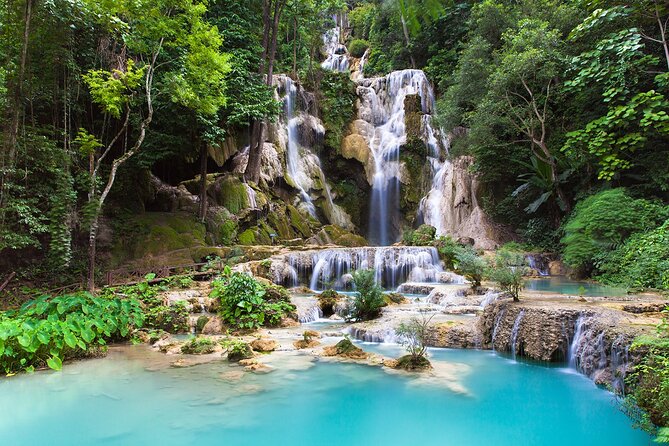
The final full day leaves the temples behind for nature and village culture. Kuang Si Falls is scheduled for about three hours. The falls are made up of several smaller cascades that form a white stair-like series, giving the site its distinctive appearance.
You should expect walking around the falls rather than simply stepping out for a quick photograph. The tour specifically advises comfortable walking shoes, and that advice applies especially here. The exact swimming arrangements and facilities are not stated, so ask your guide what is practical on the day.
The waterfall stop is followed by about two hours at a Black Hmong ethnic village. The purpose is to learn about everyday life, adding human context to the natural scenery. This is a valuable pairing. You see not only one of Luang Prabang’s best-known natural attractions but also a community with its own traditions and daily routines.
Village visits require sensitivity. Listen first, ask before taking photographs, and remember that people are not part of a display. A private guide can help explain what you are seeing and how to behave respectfully.
This day is likely to suit you if you want a change from temples. It may be less appealing if you dislike outdoor walking or prefer a completely unstructured day after the packed schedule in Luang Prabang.
Day 6: A simple airport departure
After breakfast, your driver takes you to Luang Prabang International Airport. The listed transfer takes about 30 minutes and includes no sightseeing.
That short final day is sensible. You do not need to worry about finding a taxi or carrying luggage through town, but you should confirm the pickup time against your flight. Late hotel check-out is not included, so a late departure could leave you with several hours between leaving the hotel and boarding your flight.
How private touring changes the trip
The private format is the central selling point. Only your group participates, and you have a private guide, driver, and air-conditioned vehicle. That setup is especially useful for the airport transfers, the train connection, Kuang Si Falls, and the village stops.
It also gives you someone to explain religious customs and local practices. The alms-giving ceremony, lao-lao tasting, saa paper production, and Black Hmong village visit all benefit from context. Without a guide, you might see the same places but understand less of what they mean.
Private touring does not remove every inconvenience. You still have early starts, repeated hotel transfers, climbing at Mount Phousi, and a demanding Day 3. The program is organized for coverage, not for long stretches of free time.
Who should book this Laos tour?
I would recommend this trip to first-time visitors who want to see both Vientiane and Luang Prabang in less than a week. It suits couples, families, and small groups who prefer private service and want the main arrangements handled in advance.
It is also a good choice if you value culture over nightlife. The strongest parts are the temples, the alms-giving ceremony, Pak Ou Caves, local crafts, and the Black Hmong village. The waterfall and Mekong boat ride keep the trip from becoming a temple-only itinerary.
You may want a different plan if you prefer slow travel, independent exploration, or several free afternoons. Luang Prabang deserves extra time, and this schedule gives you only one open arrival afternoon before a full series of guided visits.
The tour is not suitable for people over 80 according to the stated conditions. Anyone else should consider their comfort with walking, stairs, early mornings, and outdoor visits before booking.
Cancellation is free up to 24 hours before the start time for a full refund. Changes or cancellations inside that window are not accepted or refunded. Confirmation is normally immediate, though bookings made within seven days of departure may take up to 48 hours and remain subject to availability.
Should you book it?
Book this six-day Laos tour if you want an efficient first visit with private transport, a train connection, strong cultural coverage, and little planning work. The most praised elements are the smooth organization, well-chosen sights, good food and hotels, and helpful coordination associated with Emily Xin and the AgateTravel team.
I would book it with two requests: ask for the exact hotel names and confirm how much free time you will have in Luang Prabang. If you accept the brisk schedule, the $1,509 price offers solid convenience and a broad introduction to Laos. If you want a slower, more personal stay, use this route as a framework but add extra nights in Luang Prabang.
FAQ
How long is the tour?
The tour lasts approximately six days.
Where does the tour begin?
It begins with pickup at Wattay International Airport in Vientiane, Laos. The listed start time is 9:00 a.m.
Where does the tour end?
The tour ends with a transfer to Luang Prabang International Airport on Day 6.
Is the tour private?
Yes. Only your group participates, with a private guide, driver, and air-conditioned vehicle.
Is the Vientiane to Luang Prabang train included?
Yes. A high-speed train ticket from Vientiane to Luang Prabang is included, and the train journey takes about two hours.
Are meals included?
Accommodation with daily breakfast is included, along with four lunches. Other meals are not listed as included.
Are entrance fees included?
Yes. Entrance fees for all mentioned sights visited are included.
Is the tour suitable for people over 80?
No. The stated conditions say the tour is not suitable for people over 80 years old.
Just added around Vientiane
- Vientiane: Lao Cultural Attire Rental Experience★ 5.0 · 3 reviews
- Vientiane Private Lao Cooking Class with Market Tour★ 4.0 · 3 reviews
- Vientiane Day Trip By Bike To Tad Moon Waterfall★ 4.5 · 3 reviews
- Vientiane: Half-Day City Tour – Morning or Afternoon★ 4.0 · 3 reviews
- Vientiane: Art, Culture, & Inspiration Guided Day Tour★ 5.0 · 3 reviews
- Vientiane Private Walking Tour With A Guide (Private Tour)★ 4.5 · 3 reviews
- Private Tour Vientiane – VangVieng by Express Train★ 5.0 · 4 reviews
- Half Day Exploring the Charms of Vientiane and hotel pickup★ 4.9 · 4 reviews
Pak Ou Caves Tours, compared.
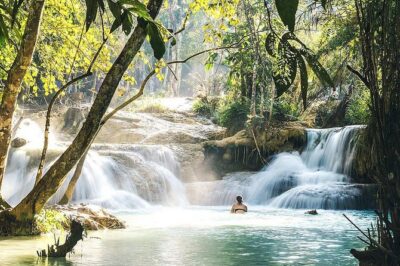
Luang Prabang: Cruise to Pak Ou Caves & Kuang Si Waterfalls
Read our review →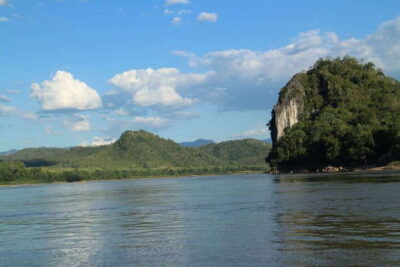
Half Day Mekong Cruise to Pak Ou Caves (Morning / Afternoon)
Read our review →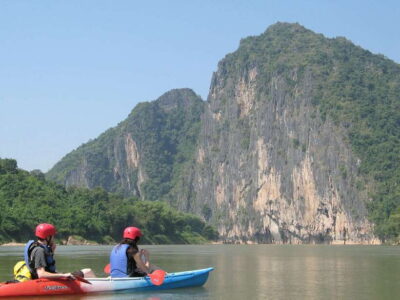
FULL DAY – Kuang Si Waterfall, Kayak on the Nam Ou / Mekong River, Pak Ou Caves
Read our review →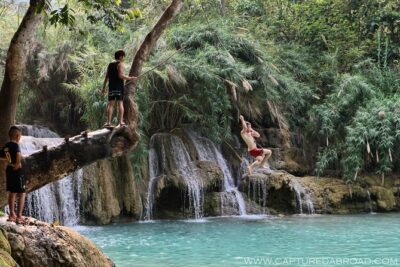
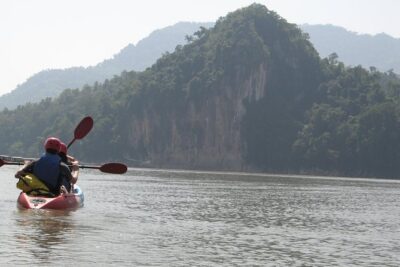
Full day / Half Day Kayaking and Pak Ou Caves with optional sunset cruise
Read our review →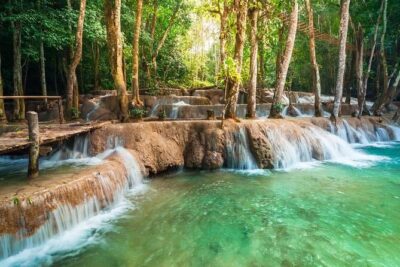
Private Tour: Pak Ou Cave and Kuang Si Waterfall Tour from Luang Prabang
Read our review →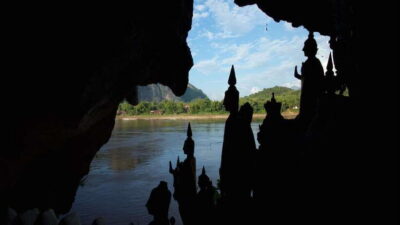
Luang Prabang: Pak Ou Caves & Kuang Si Falls Day Trip
Read our review →Browse the lists this tour appears in